

Maria Sazonova ‘ 26

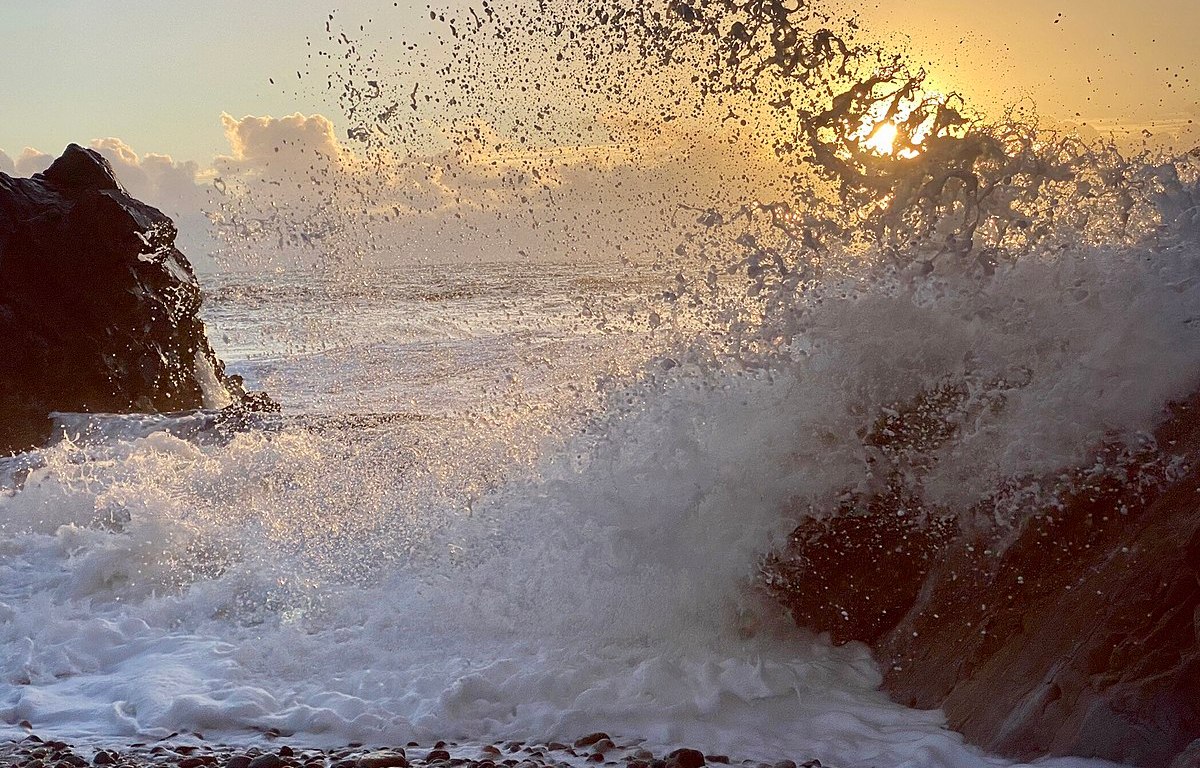
Figure 1: Ocean sea spray containing SSA particles at sunset
Evaluating ice nucleation kinetics in cloud formation is essential for enhancing our understanding of aerosol-cloud interactions, as well as speculating on the larger effects of SSAs, sea spray aerosol particles, on climate change. SSA ambient particles are a constant natural source of atmospheric aerosol and a recognized source of ice-nucleating particles (INPs). They are generated by winds blowing over the ocean surface, bursting salt spray bubbles, and subsequently transporting the released organic compounds high into the atmosphere. A research team at the SoMAS Aerosol Research Laboratory at Stony Brook University, led by Daniel Knopf and Josephine Aller, sought to examine the importance of SSA particles in atmospheric ice particle production in cloud formation.
The researchers produced sea spray aerosol particles (SSAs) using phytoplankton in sealed laboratory tanks that simulated ocean conditions with artificial seawater. They collected the SSA bubbles that were made by the secretion of this phytoplankton. The experimental SSA particles, composed of the metabolic products of microorganisms such as phytoplankton from the ocean surface, were collected from the South Shore coast of Long Island. Over a period of two weeks, ice was slowly sublimated and the composition of individual SSA particles was extensively examined using high-magnification x-ray microscopy technology at Lawrence Berkeley National Laboratory. Single INPs, essential ice-nucleating agents in SSA particles, were manually identified using image sequences as the polysaccharides and proteins released by microorganisms. The researchers were able to pin down the exact organic matter that triggers ice nucleation and provide strong evidence in support of the prediction that ice formation is affected by marine sources.
This study presents the first comprehensive model that describes the ice and cloud formation process, predicted based solely on temperature, humidity and SSA particle size. It can assess the impact of ice-crystal-containing clouds in larger climate models and can significantly help to reduce uncertainties when predicting warming rates and processes in the Arctic. Some future research possibilities include application of this model to regions afflicted by global warming and identification of possible harmful particles that decrease the ice-nucleating effects of SSA particles and subsequent action to reduce the percentage of such particles.
Works Cited
[1] P., Alpert, et al., Ice-nucleating agents in sea spray aerosol identified and quantified with a holistic multimodal freezing model. Science Advances, 8 (2022).
Doi: 10.1126/sciadv.abq6842
[2] Image retrieved from: https://commons.wikimedia.org/wiki/File:A_moment_in_time_-_seaspray_%28geograph_6703546%29.jpg
 Young Investigators Review
