

Kaylie Huang, Class of 2027
Creepy crawly insects are not commonly regarded as appetizing and are often avoided at first glance. However, insects are considered a delicacy in many parts of the world. Proteins from animal sources are becoming increasingly limited, causing a shift towards insects as a possible alternative. Insects are rich in nutritional value, including proteins, fats, fiber, vitamins, and minerals, and even health-promoting bioactive compounds such as polyphenols.
Although insect-based foods hold significant promise, European consumers are hesitant to incorporate them into their diets because of cultural and societal norms, food neophobia (or reluctance to try new foods), disgust, and perceived health risks. Research in Italy, led by Dr. Roberta Tolve, sought to hone in on the specific sociological factors that influence Italian consumers’ food neophobia and acceptance of insect-based foods.
The survey used in this study was split into three parts: sociodemographic information, the Food Neophobia Scale (FNS) questionnaire, and an entomophagy—or the practice of insect consumption—questionnaire. The FNS scale is a standard method for measuring food neophobia, consisting of five neophilic situations and five neophobic situations to be considered. Each situation is rated on a 7-point agreement scale (Likert scale), ranging from “strongly disagree” to “strongly agree.” Then, the entomophagy questionnaire aimed to assess knowledge of entomophagy and how willing they would be to partake in it.
Notably, specific demographics had different responses to insect consumption. 17.6% of participants were found to be neophilic (open to trying new foods), 64% were neutral, and 16.7% were neophobic, with most neophobic respondents being older, lower income, or having only a high school diploma. Of the 67% of respondents who were willing to try insect-based foods, men were more accepting of entomophagy than women, and younger participants and those with higher education were more likely to partake in entomophagy. Disgust trumped other reasons for rejecting insect-based food, with 60% of respondents reporting this as their main concern, followed by the non-traditional nature of the food (16%) and hygienic concerns (19%).
This study demonstrates a relationship between food neophobia and sociodemographic factors (age, income, and education), although most of the reasons for rejection came from disgust. In order to move forward with the possibility of insect consumption as an alternative to animal-based foods, food producers should incorporate insects in more appealing, processed forms, such as pasta or snack bars. Increasing education and awareness about the nutritional benefits of insects may contribute to this potential shift in what is commonly consumed, progressing towards a more sustainable future.

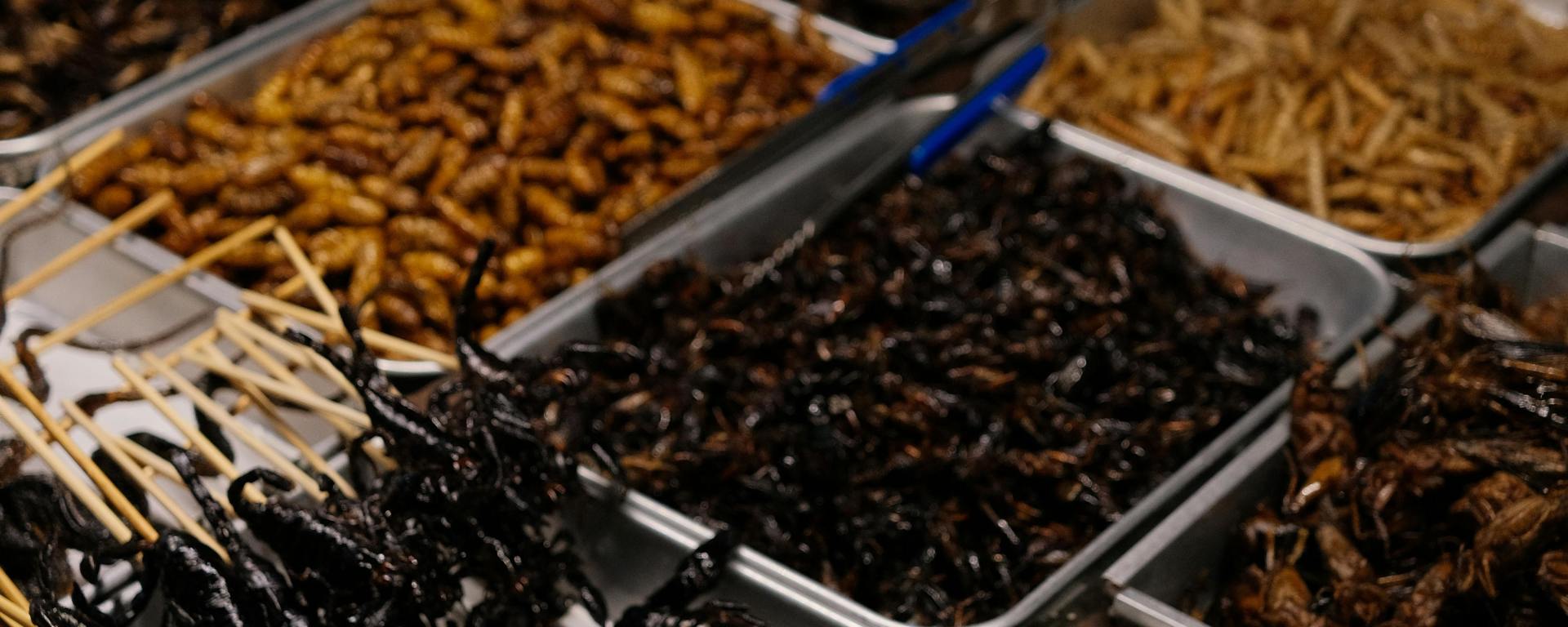
Figure 1: Skewered insects at a street food market
Works Cited:
[1] Roberta Tolve, Matteo Zanoni, Lucia Sportiello, Simone Musollini, Fideline Laure Tchuenbou-Magaia, Fabio Favati, From fear to fork—exploring food neophobia and the inclination towards entomophagy in Italy, International Journal of Food Science and Technology, Volume 60, Issue 1, January 2025, vvae047, https://doi.org/10.1093/ijfood/vvae047
[2] Image retrieved from: https://www.pexels.com/photo/a-display-of-food-items-at-a-market-27940577/
 Young Investigators Review