


Asher Agarwal, Class of 2027
The circadian rhythm regulates many physiological processes via transcriptional feedback loops involving proteins such as Bmal1 and Clock. Circadian rhythm is closely tied to cell-cycle progression, and disruptions in one can affect the other. Hypoosmotic stress causes water to rush into a cell, triggering changes in gene regulation to adapt to the stress. Caveolae, protein invaginations in the cell membrane, allows a cell to withstand mechanical or osmotic stress by flattening and increasing the cell’s membrane surface area. Upon deformation, a protein called cavin-1 is released and translocates to the nucleus to influence gene transcription.
Previous research has shown that hypoosmotic stress can disrupt the circadian rhythm and halt cell cycle progression. Researchers from Worcester Polytechnic Institute and the McKinnon lab at Stony Brook University hypothesized that caveolae deformation may cause this disruption by altering gene expression related to circadian rhythm regulation.
Researchers exposed rat smooth muscle cells to hyperosmotic conditions for varying durations of 5 minutes, 12 hours, and 24 hours. RNA sequencing was used to identify alterations in gene expression via changes in mRNA levels. The proteins related to circadian rhythm regulation (Bmal1 and Clock), and the cellular levels of cavin-1 were analyzed using Western blot and immunofluorescence. To further analyze the role of cavin-1 in osmotic stress response, siRNA was used to knock down cavin-1 levels in smooth muscle cells in vitro. Lastly, Bmal1 was tagged with a fluorescent antibody to track its localization within the observed cells.
mRNA analysis showed that hypoosmotic stress altered the transcription of many circadian rhythm genes, which were downregulated at 12 hours and increased after 24 hours. Reducing cavin-1 levels disrupted the link between osmotic stress and the circadian gene changes found earlier, suggesting cavin-1’s role in those transcriptional shifts. Additionally, downregulation of cavin-1 resulted in Bmal1 localization in the cytoplasm at 12 hours and allowed relocalization in the nucleus at 24 hours, indicating a temporary disruption of circadian function, consistent with the RNA sequencing results.
In this study, caveolae deformation and cavin-1 nuclear translocation caused by hypoosmotic stress were found to temporarily disrupt the transcription of circadian rhythm genes, which regulate many bodily functions. This connection could be critical for furthering our understanding of diseases such as cancer that disrupt cell-cycle rhythm and progression. Future studies could find the molecular pathways via which cavin-1 affects gene regulation, how these effects may influence various disease pathologies, and test on other cell types to investigate varying sensitivities and differences.
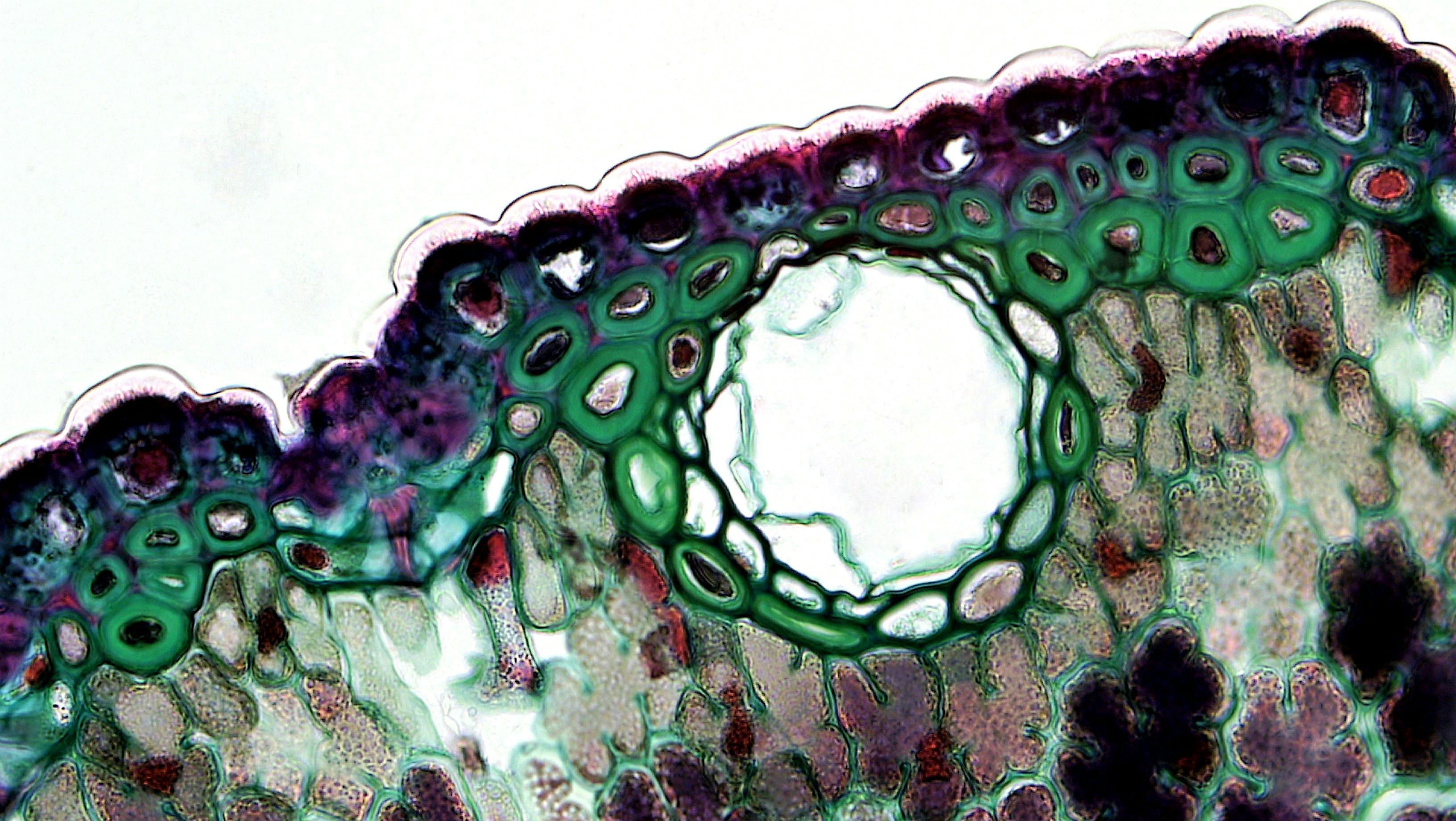
Figure 1: A cell membrane.
Works Cited:
[1] A. Qifti et al., “Hypoosmotic stress shifts transcription of circadian genes.” Biophysical Journal 124, 565-573 (2025). doi: https://doi.org/10.1016/j.bpj.2024.12.027
[2] https://www.pexels.com/photo/cell-seen-under-microscope-11198493/
 Young Investigators Review