


Vignesh Subramanian ‘ 24
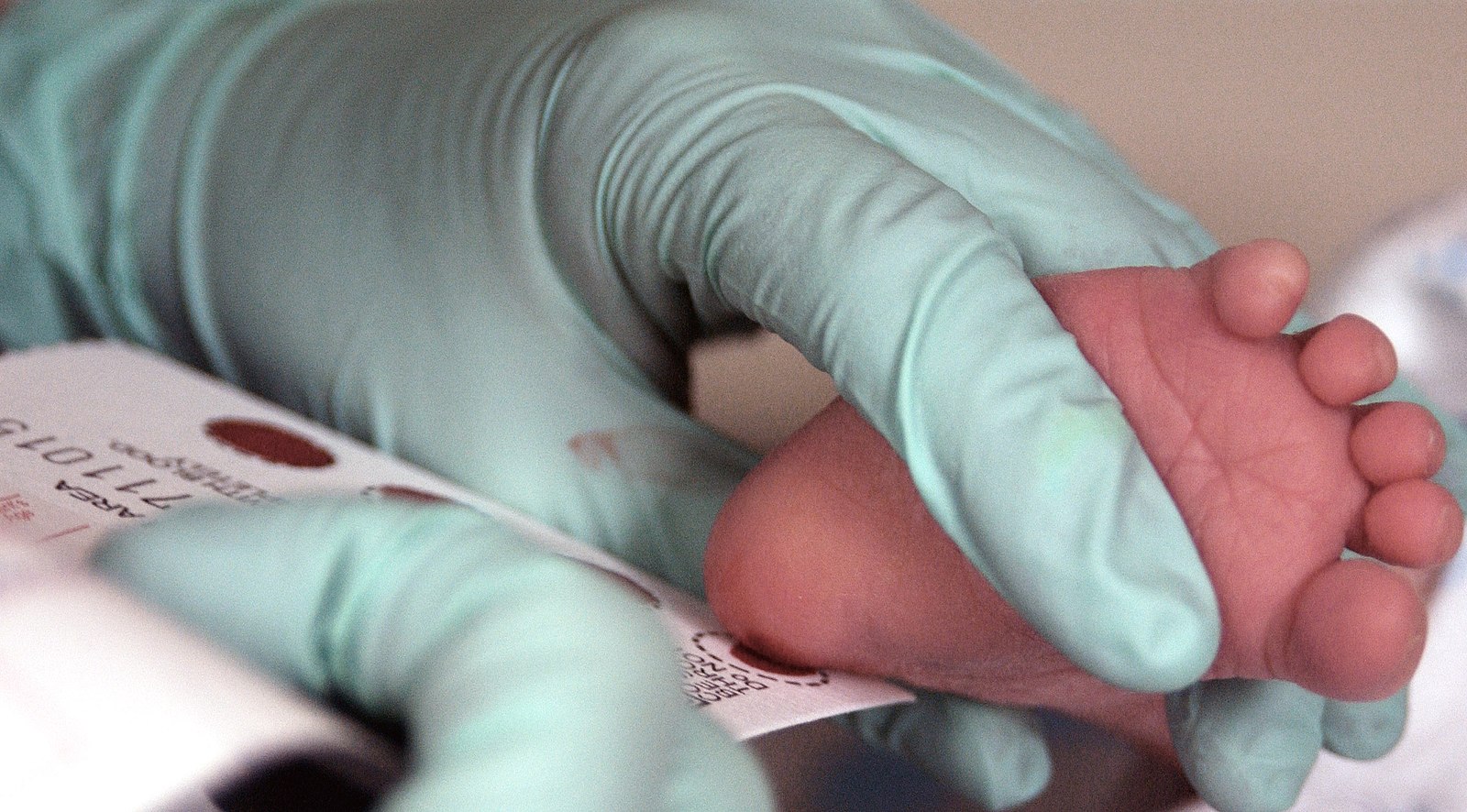
Figure 1: The heel prick of an infant’s foot, which often induces momentary pain for the infant.
The early psychophysical development of newborns relies heavily on having strong emotional bonds with caregivers. Compared to other animals, human infants are born highly dependent on their parents, undergoing a prolonged period of extensive neural organization and brain development that requires greater parental sensitivity to their affective needs. These needs include recognizing and responding to the infant’s early pain and stress experiences, which may overwhelm their limited capacity to regulate these sensations. Parents’ ability to empathize with their infants’ pain and understand what their baby finds distressing or may be thinking is physiologically reflected by increased activation of specific brain regions in parents’ brains. The cerebral response to infants’ emotional reactions is notably heightened in birth mothers, who often synchronize with or mirror their infants’ physical expressions of these emotions.
Researchers led by Dr. Stefano Bembich of the Italian Burlo Garofolo Pediatric Institute aimed to determine whether mothers’ empathetic cortical responses to their babies’ pain, in particular, are in sync with the infants’ reactions to painful stimuli. The researchers enrolled 16 mother-newborn pairs in their study, monitoring maternal and neonatal cortical activity via optical topography, or OT (tracking cortical hemoglobin to establish regional neuronal activation). Then, during the newborns’ heel pricks (a standard part of neonatal care that allows their blood to be tested for metabolic diseases), near-infrared spectroscopy (NIRS) and OT monitored shifts in cerebral blood flow – and thus cortical activation – in the newborns and their observing mothers during the disinfection and painful stimulus phases of the pricking procedure. The OT recordings from each pair were then subjected to wavelet transform coherence (WTC) analysis to identify correlations in the perception of pain.
The changing hemodynamics captured by OT indicated that while no significant neuronal activation was detected in the disinfection phase, both the mothers and their newborns demonstrated significant activation in the same three cortical channels during the actual prick (the painful stimulus phase). WTC analysis revealed significant interpersonal brain synchronization between regions of the mother’s parietal cortex and the newborn’s motor/somatosensory cortex, with the timing of the maternal cerebral response indicating that it initially anticipatorily led and then followed the neonatal response. These findings provide the first evidence of functional synchronization between maternal and neonatal brains under emotionally charged conditions. The researchers suggest that future studies exploring hyperscanning techniques – which measure the similarity of brain activity in multiple individuals – beyond EEG, fMRI, and NIRS are likely to produce similar outcomes.
Works Cited:
[1] S. Bembich, et al., Empathy at birth: mother’s cortex synchronizes with that of her newborn in pain. European Journal of Neuroscience 55, 1519-1531 (2022). doi: 10.1111/ejn.15641.[2] Image retrieved from: https://commons.wikimedia.org/wiki/File:Phenylketonuria_testing.jpg
 Young Investigators Review
