

Author: Sean Krivitsky ‘26
Pancreatic cancer stands out as one of the most severe forms of cancer, accounting for the third most cancer-related deaths. Pancreatic ductal adenocarcinoma (PDA) is a form of pancreatic cancer that involves a high degree of metastasis, which refers to the ability of the cancer to spread. This cancer develops as a result of mutations that result in the activation of a gene that relates to alternative mutations of tumor suppressor genes. However, the epigenetic mechanisms through which PDA metastasis occurs is not well understood. Thus, in order to better understand how progression of PDA occurs and to gain potential therapeutic insights, it is important to uncover the various transcription factors related to this disease.
Recently, the Vakoc lab of Cold Spring Harbor laboratory, in a groundbreaking study, led by Jihao Xu sought to better understand the mechanisms behind PDA for the identification of potential therapeutic targets. This research was done in a newly developed model of PDA in mice whose cells allow for in vitro study of the disease. Several important transcription factors were compared between different groups of organoids, which led to the identification of an abnormally expressed transcription factor named Engrailed-1 (EN-1). This data, along with patient data, led to the discovery that EN1 expression is elevated in the later stages of PDA progression. Furthermore, by generating PDA cell lines that overexpressed the EN1 protein, the group was further able to show that increased expression of EN1 leads to more aggressive growth of PDA cells. Their analysis also led to the identification of the targets of EN1 which are believed to be involved in the MAPK/ERK pathway that is strongly implicated in many cases of oncogenesis. This demonstrated how EN1 binding to survival signals in PDA cells helps induce metastasis in PDA, thus accelerating the progression of the cancer.
Ultimately, pancreatic ductal adenocarcinoma is a serious, deadly disease that affects hundreds of thousands of individuals in the United States. By identifying transcription factors that are aberrantly expressed and the mechanism by which they act to further progression of carcinogenesis and metastasis, future drug design can be inspired by these significant therapeutic targets for the treatment of this and other diseases.

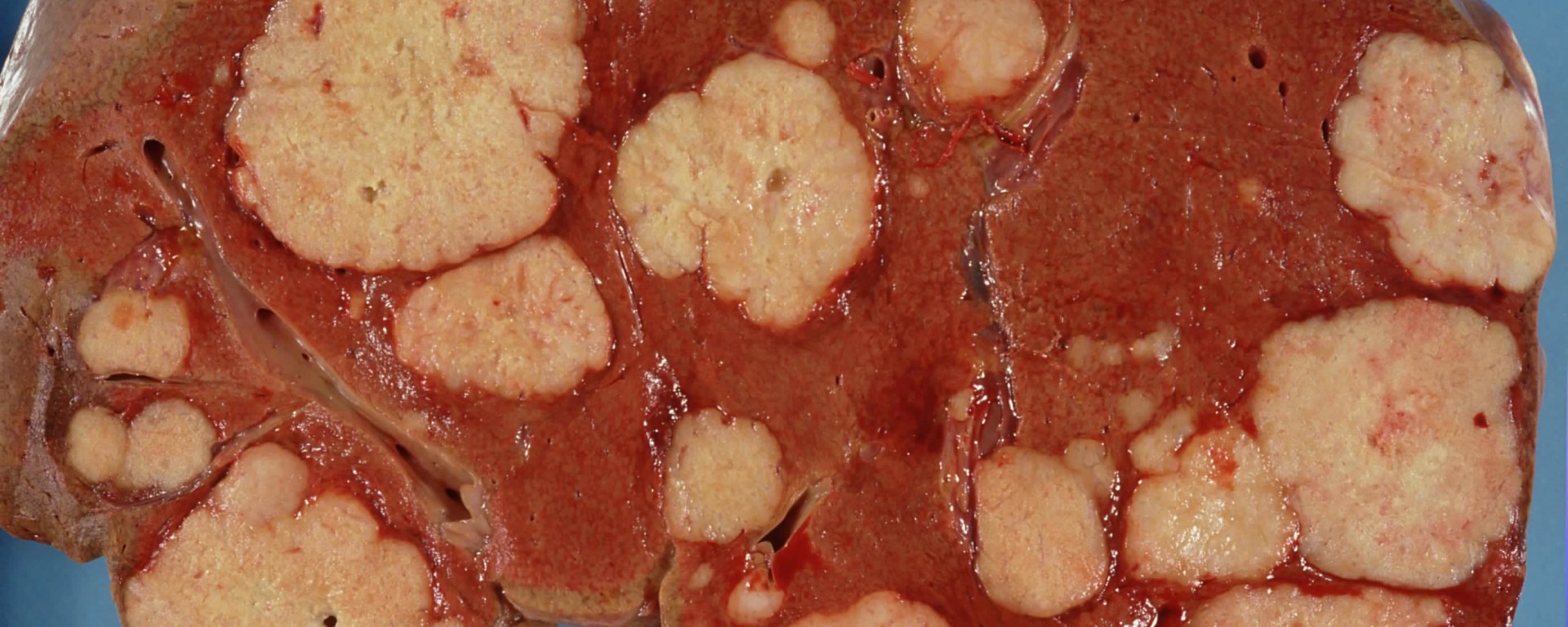
Figure 1. Visualization of tumorigenesis in the human liver as a result of metastatic activity related to pancreatic cancer.
Works Cited
[1] Xu, J., Roe, J., Lee, E., Tonelli, C., Ji, K. Y., Younis, O. W., Somervile, T. D. D., Yao, M., Milazzo, J. P., Tiriac, H., Kolarzyk, A. M., Lee, E., Grem, J. L., Lazenby, A. J., Grunkemeyer, J. A., Hollingsworth, M. A., Grandgenett, P. M., Borowsky, A. D., Park, Y., … Hwang, C. (2023). Engrailed‐1 promotes pancreatic cancer metastasis. Advanced Science, 11(6). https://doi.org/10.1002/advs.202308537
[2] Image retrieved from: Wikimedia | Secondary Tumor Deposits In the Liver From Primary Cancer of the Pancreas
 Young Investigators Review
