

Tiffany Ang, Class of 2025
Neuroplasticity is defined as the brain’s ability to create and reorganize neural connections in response to learning and or following injury. This reorganization can be structural or functional, resulting from learning or brain damage respectively. Virtual reality (VR) offers an integrative approach to enhance neuroplasticity by producing controlled yet engaging environments that imitate real-life experiences and promote realistic patterns of neural activity. These environments can be tailored to manipulate stimuli based on individual needs, such as enhancing visual or motor skills, to name a few. VR can be combined with brain-computer interfaces (BCIs) using electroencephalography (EEG) to monitor neural activities in real time. VR can be further individualized using neurofeedback, feedback received from BCIs, which further enhances its effectiveness by promoting permanent neural adaptations.
External stimuli can promote or reduce synaptic density, and in the latter case, neuroplasticity helps the brain compensate for damage so that individuals can preserve cognitive function. This process is known as functional reorganization or cortical remapping, where nearby brain regions take on the tasks of compromised regions. This process, also known as cross-modal plasticity, further demonstrates the brain’s ability to undergo functional reorganization.
Dr. Drigas and Dr. Sideraki at the National Center for Scientific Research Demokritos observed that VR stimulates neuroplasticity through synaptic plasticity, dendritic remodeling, and the synchronization of neural oscillations, which occurs when brain waves generate a rhythmic pattern. Brain waves were synchronized within a frequency range known to enhance cognitive functions, such as episodic and working memory. Additionally, they observed an increase in the amplitude of theta-wave activity, associated with improvements in visual perception. They also observed an increase in the amplitude of gamma-wave activity known to enhance auditory discrimination and speech comprehension. A combination of VR and BCI approaches has shown significant improvements in motor recovery in patients undergoing physical rehabilitation and has also aided upper limb rehabilitation in post-stroke patients. Thus, significant neuroplasticity was observed in the hippocampus, prefrontal, and motor cortex along with enhanced memory retention, improved spatial memory, and executive functioning.
VR’s combinatorial BCI system interventions promote increased synaptic plasticity by promoting synaptic growth and reinforcing permanent neural connections through increased dendritic branching and neurogenesis in the hippocampus. Additionally, VR’s multimodal approach to neuroplasticity incorporates a gamified feature, which enhances patient compliance and enhances cognitive function. For future experiments, Dr. Drigas and Dr. Sideraki emphasized the need to extend the BCI’s user-friendliness and accessibility for everyday usage.
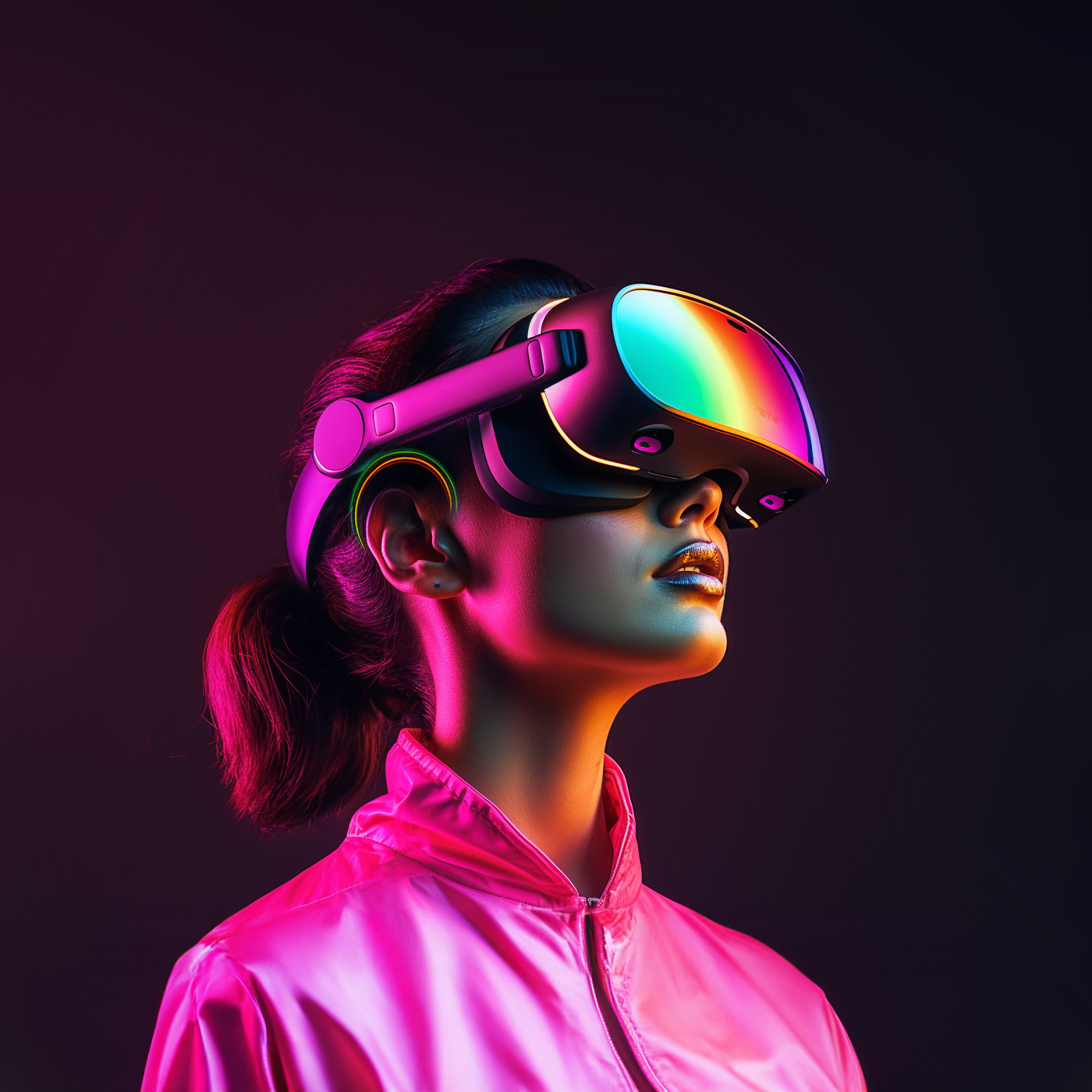
Figure 1: A representation of a user immersed in virtual reality using a headset.
Works Cited:
[1] A. Drigas and A. Sideraki, Brain neuroplasticity leveraging virtual reality and brain-computer interface technologies, Sensors (Basel), 2024 Sep 3;24(17):5725, doi: 10.3390/s24175725. PMID: 39275636; PMCID: PMC11397861.
[2] Image retrieved from: https://commons.wikimedia.org/wiki/File:VR-AR-XR_Headset.jpg
 Young Investigators Review
