

Kaylie Huang, Class of 2027
The role of artificial intelligence (AI) in healthcare is one of curiosity and contention, as studies have shown its potential in early detection and prevention through near-perfect analysis of medical images. Researchers from the Department of Radiology at Stony Brook University Hospital (SBUH) investigated the accuracy of AI interpretations of CT head angiograms, or imaging of the brain’s blood vessels, to gauge the reliability of this up-and-coming resource.
Over three months, radiologists gathered a random sample of 140 CT head angiograms from SBUH from adult patients who had different clinical indications. Using a federally approved neuroimaging AI software named RapidAI, the angiograms were analyzed on four neurovascular parameters: blood vessel density, large vessel occlusion, acute hemorrhage, and perfusion deficits. AI interpretations were subsequently compared to those of neuroradiologists whose experiences spanned over 20 years. The cases that showcased divergence of neuroradiologist and AI interpretations were then categorized into the four neurovascular parameters, from which a detailed root cause analysis was performed on five specific cases to pinpoint clear differences.
Although the AI software exhibited accuracy in the majority of cases (72%), the remaining over a quarter of the cases that did not agree with the neuroradiologists (28%) is a cause for concern. For the specific neurovascular parameters, 18 cases had a discrepancy with blood vessel density analysis, 14 cases with large vessel occlusion analysis, 12 cases with bleeding analysis, and 4 cases with perfusion analysis. The five common clinical indications dissected for detail analysis were diffuse anoxic ischemic injury, cortical laminar necrosis, colloid cyst, right STA-MCA bypass, and subacute bilateral subdural hematomas. In these analyses, it was found that AI detected deformities as either acute or normal.
The inaccuracies uncovered in AI interpretation signify that AI still has a long way to go before physicians can fully rely on them for diagnoses and integrate them into the clinical space. To train AI software further, utilizing machine learning algorithms such as reinforcement learning may yield positive results, as AI struggles to discern complex patterns with subtle distinctions between different indications. Moreover, providing AI with more patient background information, such as medical history and laboratory results, can increase inaccuracy. All in all, AI’s intersection with healthcare can bear valuable fruit with its potential capabilities of aiding physician diagnoses, and this development may arrive sooner than expected with its constant innovation.

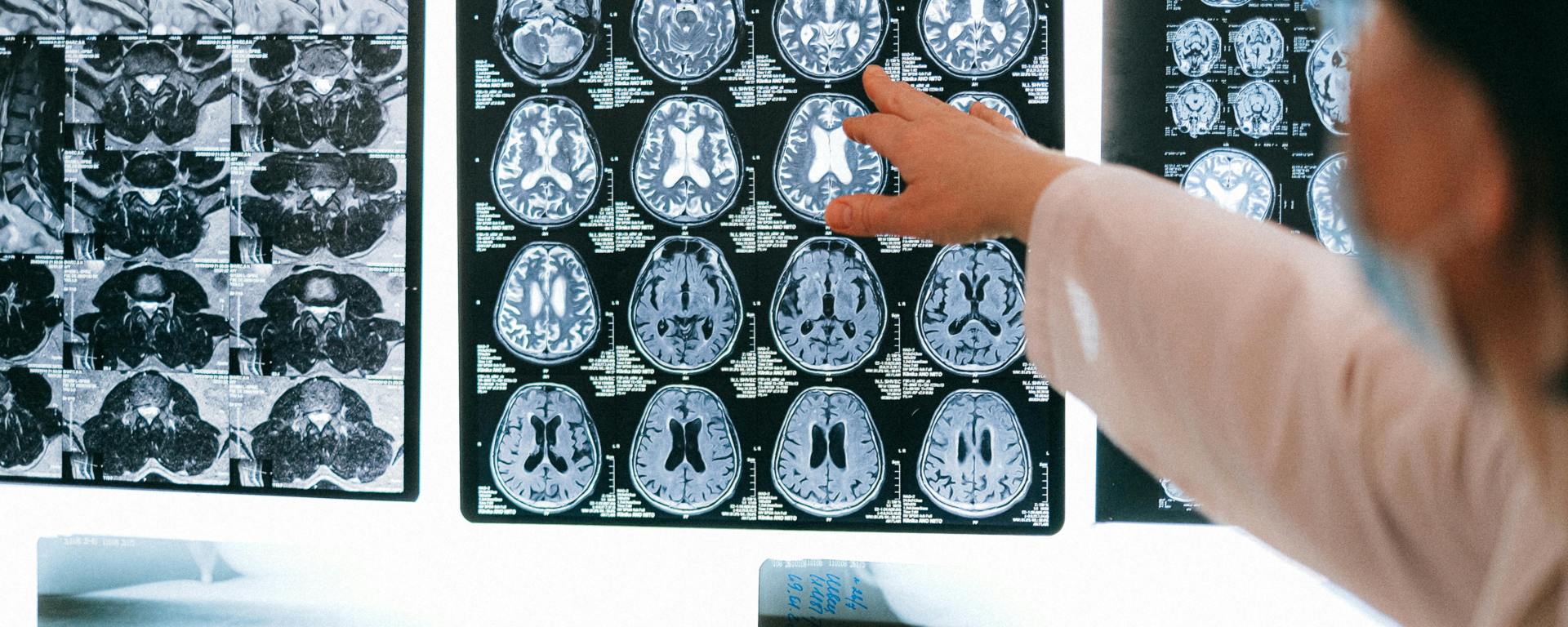
Figure 1: A radiologist pointing out the results of a brain MRI scan
Works Cited:
[1] Young, A., Tan, K., Tariq, F., Jin, M. X., & Bluestone, A. Y. (2024). Rogue AI: Cautionary Cases in Neuroradiology and What We Can Learn From Them. Cureus, 16(3), e56317. https://doi.org/10.7759/cureus.56317
[2] Image retrieved from: https://www.pexels.com/photo/close-up-shot-of-mri-results-4226264/
 Young Investigators Review