

Author: Sean Krivitsky, Class of 2026
Many have been led to believe that DNA contains all the information we need, but the regulation of the expression of genes encoded in DNA is also incredibly important. This differentiates humans from, for instance, gorillas, which otherwise share more than 98% genetic identity to humans. One level of regulation is at the level of chromatin, which results from the wrapping of DNA around histones, forming nucleosomes. How tightly the DNA is wrapped within chromatin impacts the ease by which genes are expressed, with one mechanism of regulation being histone methylation.
Researchers led by Vladyslava Sokolova in the Tan lab at SBU sought to investigate a protein called heterochromatin protein 1𝛼 (HP1𝛼), which is capable of maintaining heterochromatin, the tightly-wrapped, transcriptionally repressed form of chromatin. They sought to do so by a structural approach, using cryogenic electron microscopy (cryo-EM) to capture atomic-level images of HP1𝛼 binding to one of its nucleosome targets. However, given the flexibility of HP1𝛼, they also used molecular dynamics (MD) simulations to predict the positions of atoms in a simulation and refine the quality of the cryo-EM protein structure that they obtained.
This cryo-EM structure of the HP1𝛼-nucleosome complex first revealed that HP1𝛼 is capable of dimerization. This is made possible by a region of the protein called a chromoshadow domain (CSD), which provides an interface for two HP1𝛼 proteins to interact. This dimerization helps enable the functionality of HP1𝛼 by forming a hydrophobic binding site that can aid histone interactions. This HP1𝛼 dimer imaged with cryo-EM demonstrated asymmetric binding to the nucleosome. It uses its two chromodomains (CDs) to interact with the surface of the nucleosome. One such site is on histone 2B H2B, regardless of histone 3K9 H3K9 methylation state, which was previously viewed as important to CD-mediated binding.
Mechanistically, the researchers observed that this binding promotes compaction of chromatin by increasing the flexibility of the termini of DNA bound to histones, which is counterintuitive to the tight winding of DNA in typical heterochromatin. However, it also restricts the accessibility of core DNA regions, helping to maintain the structure of heterochromatin and, thus, supporting gene silencing. This study provides key insights into how HP1𝛼 can regulate gene expression, which can later be targeted to therapeutically adjust levels of gene expression.
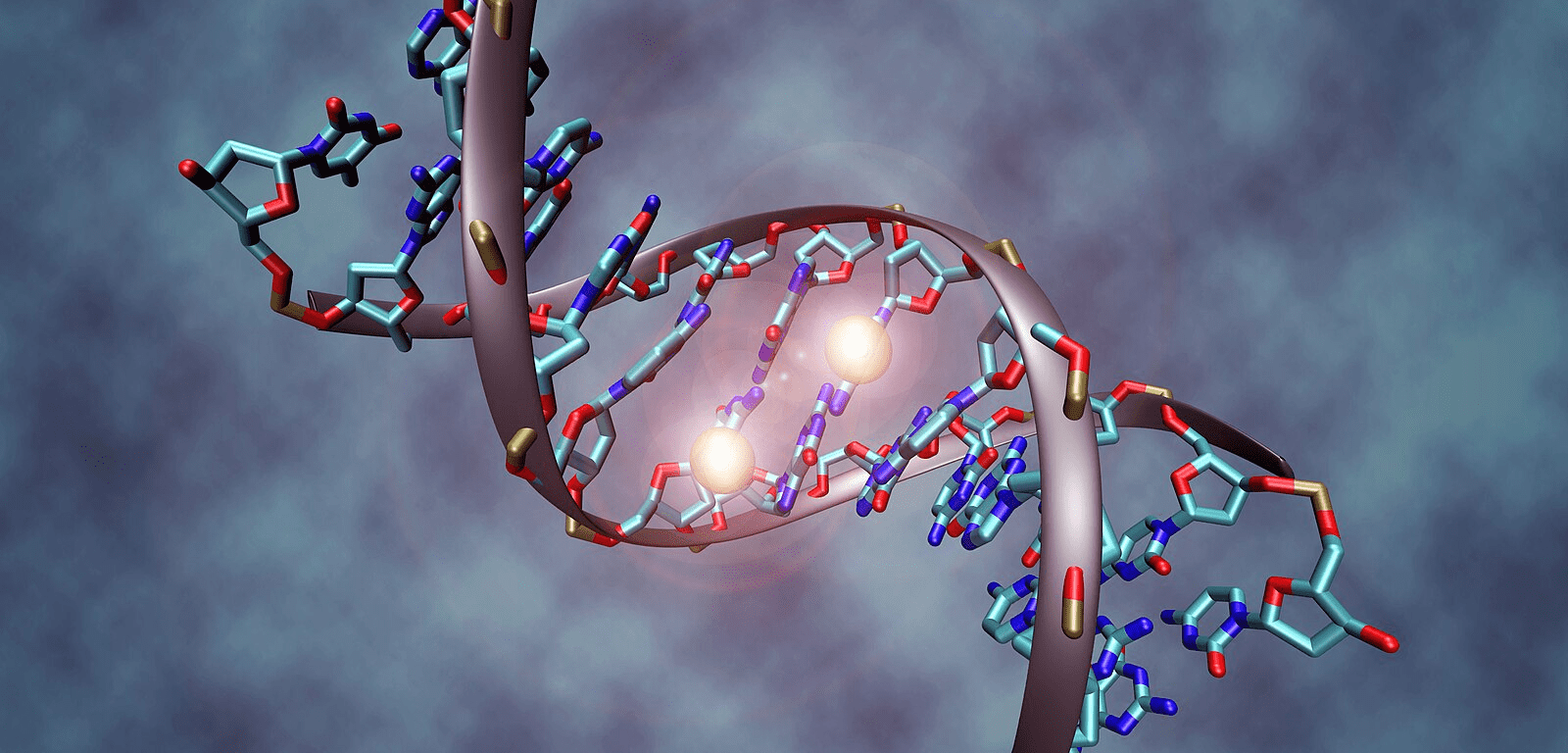
Figure 1: Three dimensional structure of a DNA molecule fragment
Works Cited:
[1] Sokolova, V., Miratsky, J., Svetlov, V., Brenowitz, M., Vant, J., Lewis, T. S., Dryden, K., Lee, G., Sarkar, S., Nudler, E., Singharoy, A., & Tan, D. (2024). Structural mechanism of HP1⍺-dependent transcriptional repression and chromatin compaction. Structure, 32(11). https://doi.org/10.1016/j.str.2024.09.013
[2] Image retrieved from: https://commons.wikimedia.org/wiki/File:DNA_methylation.jpg
 Young Investigators Review
