Social Interactions Possibly Linked to Cerebellum

By Mariam Malik ‘22 The cerebellum, a five-centimeter wide part of the hindbrain, was initially thought of as having one major function: coordinating motor functions and balance. But new research on mice from the Albert Einstein College of Medicine in New York City shows that the remarkable cerebellar cortex may play a part in our social interactions as well. Kamran Khodakhah and colleagues were aware … Continue reading Social Interactions Possibly Linked to Cerebellum

Cancer Cells Hijack Immune Cells

By Allan Mai ‘20 A sure sign of the progression of cancer occurs when tumor cells from the initial site of development breaks off and enters the bloodstream, invading other healthy tissue. A recently published study conducted by Barbara Szczerba and her team from the Cancer Metastasis Lab at the University of Basel found that circulating tumor cells (CTCs) are associated with white blood cells, … Continue reading Cancer Cells Hijack Immune Cells

Global Disease Outbreaks Linked to El Niño

By Allan Mai ‘20 El Niño is a complex series of weather patterns that occurs off the coast of South America. While the last El Niño occurred three years ago, the unusually warm weather and nutrient-poor water caused a series of events that continues to affect plant and animal and life, especially those that are responsible for transmitting a disease from one organism to another. … Continue reading Global Disease Outbreaks Linked to El Niño

The Unlikely Relation Between Gut and Brain

By Allan Mai ‘20 With the high selectivity of the blood-brain barrier, it appears unlikely that microorganisms in the stomach could ever be able to reach the brain. However, past studies that have suggested major correlation between depression and specific gut bacteria and even correlation between social behavior and the activities of certain gut bacteria have sparked intense research regarding the “gut-brain” axis. Among these … Continue reading The Unlikely Relation Between Gut and Brain

Protecting You from Yourself: The Function of Interleukin-22 Against Genotoxic Stress

By Riya Gandhi ‘22 Genotoxic stress is defined as an agent that disrupts or impairs genetic information within a cell and leads to mutations. If not repaired, these mutations often develop into cancer. Within epithelial stem cells, for example, there is a pathway called the DNA damage response (DDR) that halts the cell cycle and induces DNA repair or destruction of impaired cells through apoptosis. … Continue reading Protecting You from Yourself: The Function of Interleukin-22 Against Genotoxic Stress

Potassium’s Role in Stem Cell Proliferation

By Riya Gandhi ‘22 Human cells multiply at high speeds to maintain proper functioning of the human body. Even when occur and cancerous growths appear, the cell cycle does not cease; as a result, the number of malignant cells rapidly increases. One aspect in the chemistry of cell proliferation is clear: monovalent ions contribute to the cell cycle. The specifics of their role, however, are … Continue reading Potassium’s Role in Stem Cell Proliferation

Mind the Gap! Nanoparticles Increase Endothelial Leakiness

By Riya Gandhi ‘22 Although recent advancements in the field of nanomedicine are elucidating potential novel therapies for cancer, researchers have uncovered one major drawback called gap growth. Under the leadership of principal investigator Fei Peng, a recent study at the National University of Singapore discovered that the introduction of nanomaterial into animal bodies may result in micro-sized gaps in the endothelial lining, which can … Continue reading Mind the Gap! Nanoparticles Increase Endothelial Leakiness

Fibrinogen Plays a Neurodegenerative Role in Alzheimer’s Disease

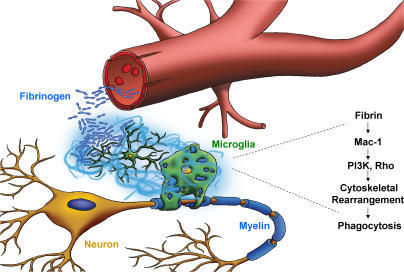
By Natalie Lo ‘21 Alzheimer’s Disease (AD) is characterized by the formation of β-amyloid plaques Aβ, microglial activation, and inflammation in the brain. Microglia are immune cells found in the central nervous system (CNS). In AD, the blood-brain barrier is disrupted, which leads to bleeding, vascular damage, and an increase in blood proteins. Currently, there is an unknown relationship between vascular dysfunction, proteins like fibrinogen … Continue reading Fibrinogen Plays a Neurodegenerative Role in Alzheimer’s Disease

Different Gut Microbiota for Patients with Hepatocellular Carcinoma

By Natalie Lo ‘21 Hepatocellular Carcinoma (HCC) is a common form of liver cancer and is possibly related to an infection of hepatitis B virus (HBV) since it can result in cancer formation through activation of oncogenic proteins, inflammation, and cirrhosis. Through a symbiotic relationship, microorganisms in the gut interact with organs in humans, such as the liver, and play an important role in nutrition … Continue reading Different Gut Microbiota for Patients with Hepatocellular Carcinoma

Coenzyme Q10 Has Protective Effects in Alzheimer’s Disease

By Natalie Lo ‘21 Alzheimer’s Disease (AD) is the most prevalent type of dementia with links to memory impairment and behavioral issues in those diagnosed. Although the cause of AD is unknown, molecular characteristics of the disease include the growth of β-amyloid oligomers, which form plaques that result in brain atrophy. Previous studies have shown that oxidative stress plays a role in the pathogenesis of … Continue reading Coenzyme Q10 Has Protective Effects in Alzheimer’s Disease

Metabolic Reactions Activated During 58-hour Fasting

By Ellie Teng ‘21 Fasting is an ancient component in numerous religions and cultures. Individuals seeking weight loss often practice fasting, making it a prominent topic in the nutrition field. A team of scientists from the Okinawa Institute of Science and Technology Graduate University and Kyoto University recently found that fasting comes with innumerable health benefits. Blood samples from four healthy individuals who fasted for … Continue reading Metabolic Reactions Activated During 58-hour Fasting

Fruit and Vegetable Consumption and Well-being

By Ellie Teng ‘21 Fruits and vegetables have always been linked to good physical health, but results from the UK Household Longitudinal Survey demonstrate a positive association between fruits and vegetables, and psychological well being. Controlling for diet, health, and lifestyle, researchers found a clear relationship between the amount of fruits and vegetables consumed and mental state. In conducting the survey, researchers identified the three … Continue reading Fruit and Vegetable Consumption and Well-being