Meta-Analysis of the Effects of Prenatal Stress on Offspring Glucocorticoid Levels

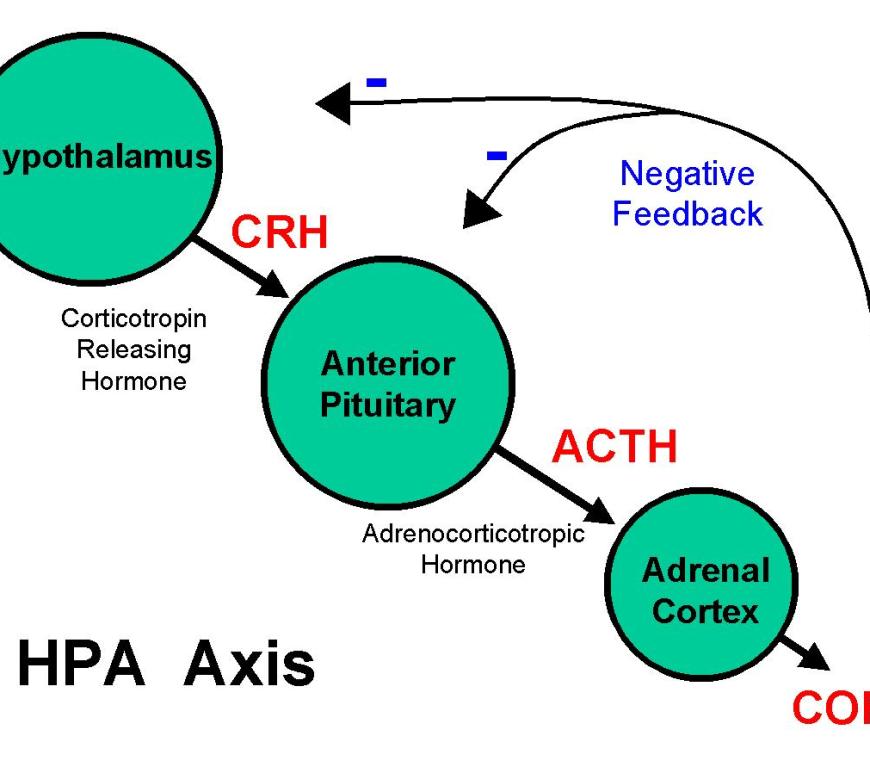
By Maryna Mullerman’20 The Hypothalamic Pituitary Adrenal (HPA)-axis is an important pathway that mediates the relationship between prenatal stress and later offspring development. Glucocorticoids—the final steroid hormones in the HPA-axis released by the cortex of the adrenal gland — are closely associated with prenatal stress in humans. To investigate the strength of this association among different animal species, Zaneta M. Thayer and researchers from Dartmouth … Continue reading Meta-Analysis of the Effects of Prenatal Stress on Offspring Glucocorticoid Levels

FGF21 Is Associated with Cognitive Impairments in Non-Elderly Patients

By Maryna Mullerman ’20   Patients with metabolic syndrome (MetS), associated with cognitive decline, often express elevated levels of fibroblast growth factor 21 (FGF21), an endocrine hormone for metabolic regulation. Arintaya Phrommintikul and researchers from Chiang Mai University in Thailand investigated the link between FGF21 and cognitive decline in elderly and non-elderly patients. They hypothesized that FGF21 levels corresponded with cognitive performance in younger and … Continue reading FGF21 Is Associated with Cognitive Impairments in Non-Elderly Patients

School Type Does Not Determine Individual Academic Success

By Maryna Mullerman ’20 It is generally thought that students graduating from selective schools have a greater chance at higher levels of academic achievement. A study conducted by Emily Smith-Woolley and researchers from King’s College London investigated the roles of genetics and school selectivity in pupils’ academic success. The study compared the General Certificate of Secondary Education (GCSE) test scores of students from state-funded non-selective, … Continue reading School Type Does Not Determine Individual Academic Success

Further Into the Atom with Ultrafast Light

Neomi Lewis ‘21 A great deal of modern atomic physics seeks to plumb the hidden depths of the atom, particularly the dynamics of inner-shell electrons about which not much is known. Attosecond, or 1×10-18 of a second, laser technology used by the Laboratory for Attosecond Physics, run by both LMU Munich and the Max Planck Institute of Quantum Optics, has recently been able to create … Continue reading Further Into the Atom with Ultrafast Light

Novel Water-Repellent Materials Coming to You Soon

Neomi Lewis ‘21 While water-repellent surfaces already exist, these surfaces usually gain this property by modifications including coatings, paints or solvents. A team of physicists at the University of Rochester is attempting to change the surface of metals with high power lasers to create super water-repellent surfaces without the use of traditional coating methods. It is an ambitious project that is expected to last six … Continue reading Novel Water-Repellent Materials Coming to You Soon

Star Neighbor’s Unusual Day

Neomi Lewis ‘21 Analysis of observations taken by the Atacama Large Millemeter/sub millimeter Array, a radio telescope, shows that last March, Proxima Centauri, the closest star to the Sun, experienced significant stellar flares. This alarming behavior casts further doubt into the habitability of the Solar System’s nearest exoplanetary neighbor, Proxima b, which orbits Proxima Centauri. Stellar flares occur when electrons accelerate at very high speeds, … Continue reading Star Neighbor’s Unusual Day

Mudrocks and Plants: A Shared History

Gene Yang ‘19 Billions of years ago, during the Precambrian, mudrocks were considered a rare sedimentary deposit in rivers. Then, the colonization of land by plants coincided with an increase in mudrocks, resulting in a significant change in the composition of river sedimentary deposits. While this relationship between mudrocks and plants has been well-established, less is known quantitatively, and even less about why these two … Continue reading Mudrocks and Plants: A Shared History

Predicting Heart Transplant Rejection Before It Happens

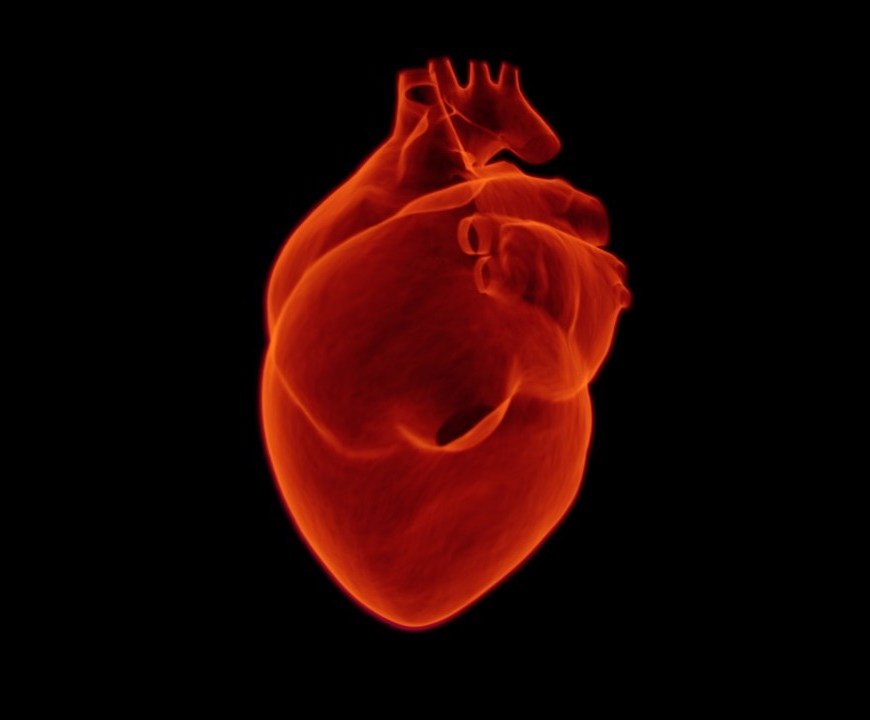
Gene Yang ‘19 After a heart transplant surgery, heart tissue biopsies must be done multiple times to survey for signs of transplant rejection. Although this heart biopsy is currently the gold standard for the detection of acute rejection, this procedure is both risky and invasive. Scientists from Huazhang University of Science and Technology, China, through their research with T lymphocyte-targeted nanobubbles, suggest a potentially non-invasive … Continue reading Predicting Heart Transplant Rejection Before It Happens

The Search for Blood-Based Cancer Detection

Gene Yang ‘19 A large number of cancer diagnoses are made when the cancer has metastasized and is no longer curable. In order to aid in preventing this from occuring, researchers are currently working on methods of early cancer detection. One such method, CancerSEEK, was created by scientists at John Hopkins University and other institutions. CancerSEEK is a liquid biopsy—a test done on a sample … Continue reading The Search for Blood-Based Cancer Detection

Innovative Sensors Track the Link Between Diet and Health

By Meenu Johnkutty ‘21 Researchers from the Tufts University School of Engineering are leading the way with a new sensor that collects real time data on diet straight from the mouth itself. The research team, led by Dr. Peter Tseng, is set to publish their research in the journal Advanced Materials. The sensor looks almost too futuristic to be a part of our time. Approximately … Continue reading Innovative Sensors Track the Link Between Diet and Health

The State of the Great Pacific Garbage Patch

By Meenu Johnkutty ‘21 Almost two trillion pieces of plastic are currently floating in the Pacific Ocean. Nestled between Hawaii and California, the Great Pacific Garbage Patch is unrivaled in size — three times the size of continental France, to be exact. New findings published by the Ocean Cleanup Foundation reveal the latest updates on the state of this plastic monstrosity, and the findings are … Continue reading The State of the Great Pacific Garbage Patch

Social Jet Lag Tied to Poor Academic Performance

By Meenu Johnkutty ‘21 Placing a night owl in an 8 A.M. lecture may explain tiredness and result in a lack of attentiveness during class, but can it justify poor grades? The University of California-Berkeley recently published research that provides compelling evidence pointing to the consequences of scheduling classes out of sync with biological rhythms. The researchers, led by Dr. Benjamin Smarr and Dr. Aaron … Continue reading Social Jet Lag Tied to Poor Academic Performance