Using Hunger to Suppress Pain

By Marcia-Ruth Ndege ‘21 Much is known about how the brain communicates needs such as thirst, hunger, pain, and fear. However, little is known about how the brain prioritizes such needs. In the context of pain, researchers must examine both acute and inflammatory pain. Acute pain is a reflexive response, while inflammatory pain is mediated by central mechanisms. In research funded by the University of … Continue reading Using Hunger to Suppress Pain

New Findings in Telomerase Activity and the Potential for Immortality

By Marcia-Ruth Ndege ‘21 The telomerase enzyme catalytic cycle limits the telomerase enzymes’ ability to synthesize specific DNA segments of six nucleotides called repeats. These repeats, known as telomeres, are protective caps that prevent the destabilization of the genome by lengthening the ends of chromosomes. However, these protective caps shorten every time a cell divides. A cell’s telomere length, therefore, determines when a cell will … Continue reading New Findings in Telomerase Activity and the Potential for Immortality

Anti-Cancer Drug Mitigates Autism’s Social Deficits

By Marcia-Ruth Ndege ‘21 Autism Spectrum Disorder (ASD), better known as autism, is a developmental disorder characterized by a tendency to engage in repetitive behaviors and to have trouble communicating both verbally and nonverbally. While there is no known cure for autism, current treatments include a variety of therapies as well as antipsychotic drugs such as quetiapine and risperidone, which reduce psychiatric effects such as … Continue reading Anti-Cancer Drug Mitigates Autism’s Social Deficits

Intelligence in the HTT Gene

By Daniel Walocha ‘19 Huntington’s Disease is caused by a trinucleotide repeat of the HTT gene. The wild type has a repeat ranging from 10 to 35, but beyond 39 repeats causes the disease characterized by significant impairments in the basal ganglia and neurodegeneration. The CAG repeats in the HTT gene cause the production of an abnormally long Huntington protein, which impairs the function of … Continue reading Intelligence in the HTT Gene

Long Non-Coding RNA NEAT1 Analysis

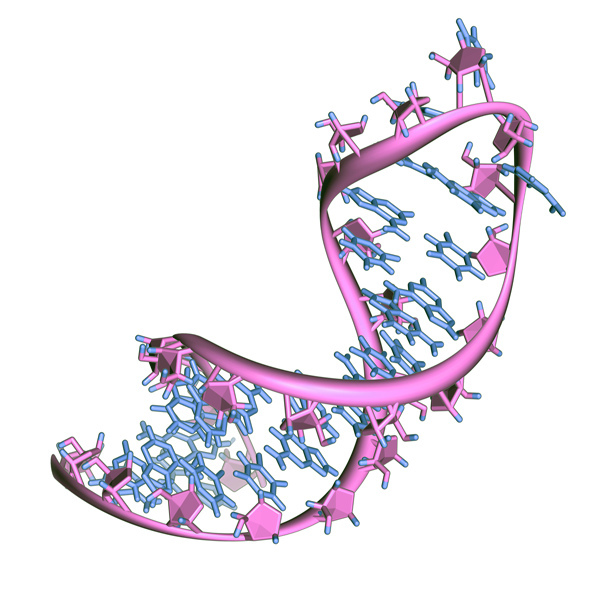
By Daniel Walocha ‘19 Long non-coding RNAs (lncRNAs) serve normal cell functions in growth, differentiation, and controlled cell death. The lncRNA’s are modulated in cancer cells to provide a pro-survival, oncogenic role in many different types of cancer. However, lncRNA’s have also been seen, when unchanged, to provide tumor suppressive activities in normal cells. Nuclear paraspeckle assembly transcript 1 (NEAT 1) is a lncRNA that … Continue reading Long Non-Coding RNA NEAT1 Analysis

CD133’s Role in Esophageal Cancer Cells

By Daniel Walocha ‘19 CD133 is a biomarker for cancer stem cells (CSC) in esophageal squamous cell carcinomas (ESCC). Cancer cells have remarkable resistance to drugs and therapies, so discovering a potential therapeutic target to make the CSCs in ESCC more susceptible to treatment is of particular interest. Dr. Wen Xu et al. from Columbia University looked to elucidate the pathway for CD133 and associated … Continue reading CD133’s Role in Esophageal Cancer Cells

Telomere Length Considerations Can Be Used for Hospital Patient Treatments

By Fatin Chowdhury ‘19 Telomeres are regions of repeated nucleotide sequences at the ends of chromosomes; while they are valuable for protecting chromosomal ends from deterioration or fusion with the ends of neighboring chromosomes, their roles among medical treatments have been mainly unknown. A recent study led by Dr. Jonathan K. Alder of The Johns Hopkins School of Medicine analyzed telomere length value and aimed … Continue reading Telomere Length Considerations Can Be Used for Hospital Patient Treatments

Tackling Perisurgical Hyperglycemia Complications with a Simple Solution

By Fatin Chowdhury ‘19 As major surgery techniques have been developed and refined, better standards of practice before, during, and after surgery have also been established. Researchers in a recent study led by Dr. Barrett A. Kielhorn explored how the ingestion of a small amount of maltodextrin and citrulline solution — before surgery — would impact patients after colectomy or enterectomy surgery. This change was … Continue reading Tackling Perisurgical Hyperglycemia Complications with a Simple Solution

A Forest Pest Aids in Bat Survival

By Fatin Chowdhury ‘19 Although invasive pest species are often associated with threats to biodiversity, new research may indicate that the bark beetle I. typographus creates a conducive environment for the survival of an endangered European bat. A team lead by Dr. Mareike Kortmann of the University of Würzburg recently undertook a project examining the interaction of the bat species Barabastella barastellus within a forest … Continue reading A Forest Pest Aids in Bat Survival

The Pathology of Schizophrenia: Action-Outcome Learning Impairments

By Maryna Mullerman ‘20 Schizophrenia is often associated with disconnections between thoughts and actions, as well as slow acquisition of adaptive behavior. Doctor Richard W. Morris and researchers from the University of New South Wales in Australia wanted to establish whether schizophrenia (SZ) patients could distinguish causal consequences from reward values. The researchers aimed to reveal action-outcome (AO) learning impairments in SZ patients. The analysis … Continue reading The Pathology of Schizophrenia: Action-Outcome Learning Impairments

What Dominates in Shaping Human Gut Microbiota?

By Maryna Mullerman ‘20 The human microbiome is thought to be shaped by many factors. Daphna Rothschild and researchers from Weizmann Institute of Science in Israel attempted to find the most important   determinant for the microbial composition of the human gut. They compared genetic and environmental factors that were thought to influence gut composition and utilized statistical measures to analyze them. The study recruited 1046 … Continue reading What Dominates in Shaping Human Gut Microbiota?

Functionally Different Smiles Cause Distinct Physiological Responses in Humans

By Maryna Mullerman ‘20 A smile is often associated with positive feedback and friendly gestures. Jared D. Martin and researchers from the University of Wisconsin-Madison aimed to reevaluate this nonverbal social tool. They suggested that there are three distinct smiles that could be encountered —  reward, affiliation, and dominance — with each smile playing a different role in human society. Verbal communication activates the hypothalamic-pituitary-adrenal … Continue reading Functionally Different Smiles Cause Distinct Physiological Responses in Humans