TIGAR Protein Associated Survival in Viral Carcinogenesis

By Daniel Walocha ‘19 Oncogene overexpression will lead to cancer phenotypes that can accumulate cytotoxic metabolites, reactive oxygen species (ROS), and other apoptosis-inducing factors in the cell. It is therefore necessary for the cancerous cell to eliminate the apoptosis-inducing factors or suppress apoptosis altogether. Dr. Megan Romeo et al. from Richland College has detected a mechanism in which a cooperative pathway utilizes a cellular protein … Continue reading TIGAR Protein Associated Survival in Viral Carcinogenesis

Biological and Cultural Co-Evolution: The Takeover of Specialists

By Maryna Mullerman ‘20 A conventional view that humans acquired language skills solely through biological evolution was challenged by Bart de Boer and Bill Thompson, researchers from the Max Planck Institute for Psycholinguistics in the Netherlands. Their study proposed a mathematical model in which biology and culture played important roles in language acquisition within finite populations. This alternative view argued that biological adaptation changes varied … Continue reading Biological and Cultural Co-Evolution: The Takeover of Specialists

The Microbiome’s Influence on Immunotherapy

By: Gene Yang ‘19 When it was discovered that cancer cells with the protein PD-L1 avoid detection by the immune system, clinical trials involving PD-L1-targeted drugs emerged. These drugs, part of a class known as immune checkpoint inhibitors, block the interaction between the cancer cells’ PD-L1 protein and the immune system’s T cells, which then allows the immune system to detect and attack the tumor. … Continue reading The Microbiome’s Influence on Immunotherapy

Evolution of the Nervous System: Independent or Conserved?

By: Gene Yang ‘19 The question of whether the central nervous system evolved once or multiple times is a subject of much study and debate. Humans and other animals with bilateral symmetry, all of which possess central nervous systems, are known to have descended from a common ancestor. In the past, it was believed that the central nervous system evolved just once in our bilateral … Continue reading Evolution of the Nervous System: Independent or Conserved?

Weight of Rising Sea Levels Causes Ocean Floor to Sink

By Marcia-Ruth Ndege ’21 Over the past few decades, global climate change has become a widely debated issue. Its believability, however, is no longer relevant as we are living through its effects across the globe; whether it be through melting glaciers in the Arctic, droughts and wildfires in California, or decreased rainfall in Ethiopia, the effects of climate change are prominent and devastating. A new … Continue reading Weight of Rising Sea Levels Causes Ocean Floor to Sink

Brain Cells Live and Die in the Process of Learning

By Marcia-Ruth Ndege ’21 For over a century, researchers have pondered the question of how the brain intakes, processes, and retains new information. Researcher Elisabeth Wenger and her team at the Max Plank Institute for Human Development in Berlin, Germany probed deeper into this process by examining the volumetric changes in human grey matter and linking them to the process of skill acquisition in humans. … Continue reading Brain Cells Live and Die in the Process of Learning

Figure 1. Researchers tested the reduction of auditory hallucinations in schizophrenic patients in response to a cognitive therapy where patients interact with digital simulations of their hallucinogenic voices.

New Therapy for Hallucination Caused by Psychotic Disorders

By Meghan Bialt-DeCelie ‘19 Sixty to seventy percent of schizophrenic patients and twenty-five percent of patients diagnosed with psychotic disorders struggle with both visual and auditory hallucinations. Drug and long-term cognitive therapies have been developed to conquer this, but they are often ineffective or only effective for a very select group of patients. Researchers led by Dr. Tom KJ Craig tested the effectiveness of a … Continue reading New Therapy for Hallucination Caused by Psychotic Disorders

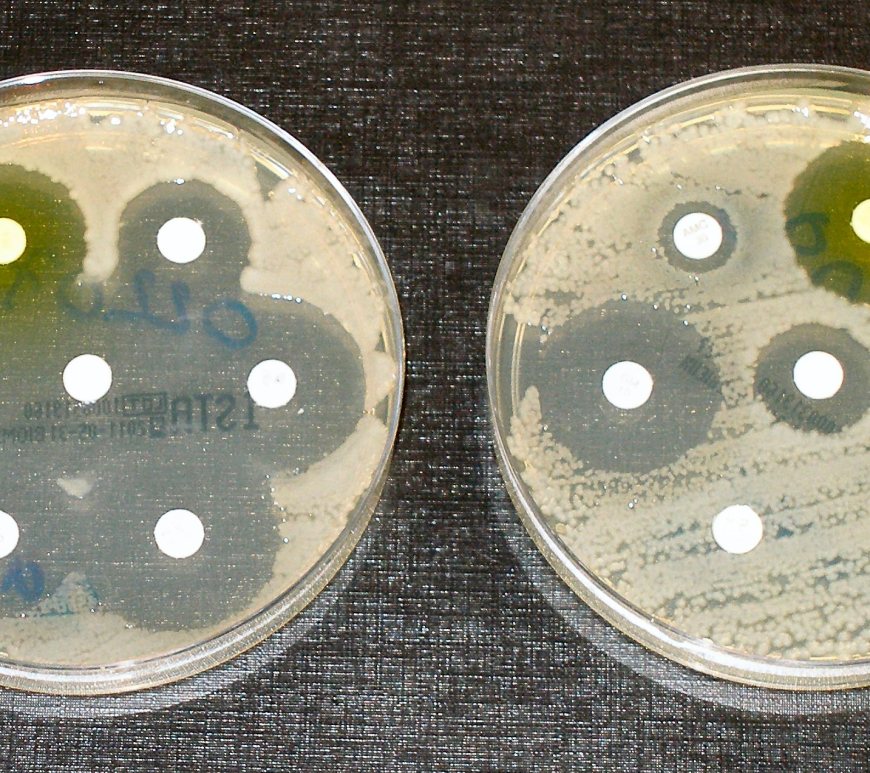
Figure 1. Researchers investigate a new way of preventing the spread of antibiotic resistant genes among bacteria to slow their rapid increase.

Stopping the Transfer of Antibiotic Resistant Genes

By Meghan Bialt-DeCelie ‘19 The overuse of antibiotics is causing rapid increase in antibiotic resistant bacteria. Through a type IV secretion system, bacteria that aren’t killed by the antibiotics share their antibiotic resistant genes with other bacterial cells via bacterial conjugation. Researchers have been looking for a way to slow down the growing resistance. A study led by Dr. Bastien Casu from Université de Montréal … Continue reading Stopping the Transfer of Antibiotic Resistant Genes

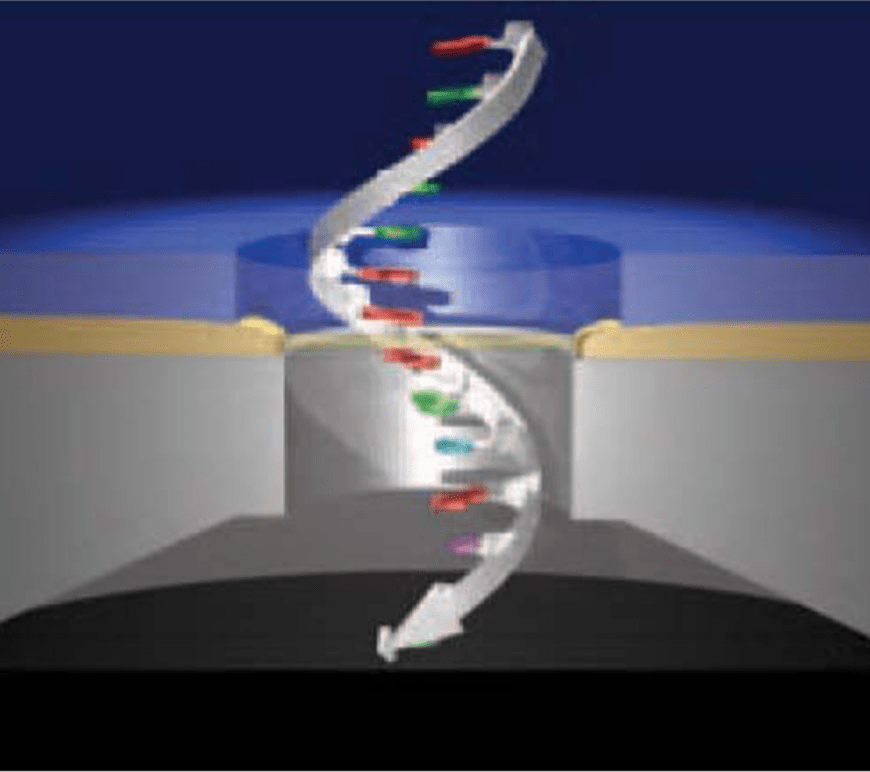
Figure 1. Researchers from Arizona State University found conductive properties in human integrin protein using Scanning Tunnel Microscopy. The image depicts this technique with a single strand of DNA.

Finding Conductive Proteins Using Scanning Tunnel Microscopy

By Meghan Bialt-DeCelie ’19 Single molecule detection techniques are used to understand the behaviors of a specific biological molecule and have applications in medical and pharmacological research. This can be critical for understanding how an individual biological molecule, such as a specific protein, functions, as well as its role in a biological pathway. Researchers led by Stuart Lindsay, PhD from Arizona State University found high … Continue reading Finding Conductive Proteins Using Scanning Tunnel Microscopy

Figure 1. Researchers from University of California Los Angeles found that microstimulation of the right entorhinal region of the brain improved memory specificity of epileptic subjects.

Electrical Stimulation Improves Memory in Epileptic Patients

By Meghan Bialt-DeCelie ‘19 For many animals and humans, a major region of the brain involved in memory formation is the hippocampus. Learning and memory is done through a neural process called long-term potentiation (LTP), and past research has shown that electric stimulation to the hippocampus can promote this process. Researchers led by Ali Titiz, PhD from The University of California Los Angeles found a … Continue reading Electrical Stimulation Improves Memory in Epileptic Patients

Figure 1. Human brain is the most metabolically demanding organ in the body.

The Selfish Brain: A Trade-off Between Cognitive And Physical Performance in Humans

By Maryna Mullerman ’20 The brain metabolizes more glucose — a simple and widely accessible sugar — than any other organ in the human body. Daniel Longman and researchers from the University of Cambridge in the United Kingdom explored the trade-off involving the brain and muscles, or physical performance, in people. The study investigated how mental and physical activities are affected when they are performed … Continue reading The Selfish Brain: A Trade-off Between Cognitive And Physical Performance in Humans

Figure 1. Caffeine affects heart rate variability in the first five minutes of recovery after physical exercise.

Running on Caffeine

By Maryna Mullerman ’20 Caffeine is a stimulant often found in coffee, energy drinks, and medicine. Many researchers have analyzed its physiological effects, but caffeine’s impact on post-exercise recovery is not widely understood.  Doctor Luana Almeida Gonzaga and researchers from São Paulo State University in Brazil conducted a study focusing on cardiovascular parameters, such as heart rate (HR), blood pressure (BP), respiratory rate (RR), and … Continue reading Running on Caffeine