

Vignesh Subramanian ’24

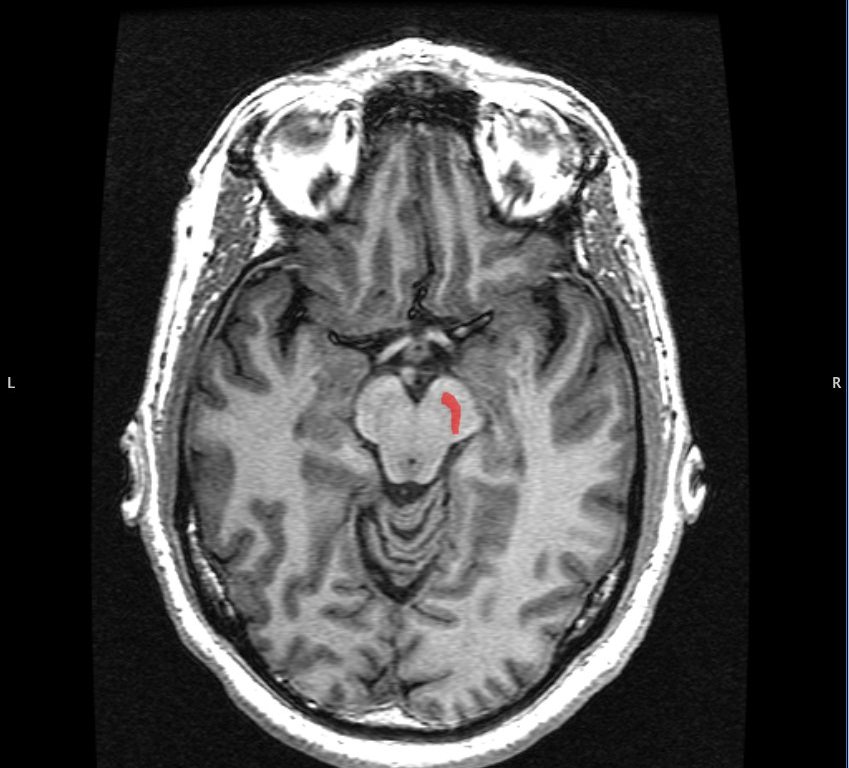
Figure 1: The substantia nigra (SN) nucleus in the midbrain.
Parkinson’s disease (PD) is an age-related, neurodegenerative movement disorder that causes a progressive loss of motor control. The disease is characterized by a loss of dopaminergic (DA) neurons in the substantia nigra (SN), a midbrain nucleus that modulates movement and reward functions. The SN is one of five subcortical nuclei that make up a network called the basal ganglia (BG). This network is in turn connected to other regions of the brain, including the cerebellum, thalamus, and primary motor cortex (M1), that together form the motor pathway responsible for our voluntary movements. The M1 is the output center of this pathway: it signals commands to muscles after its pyramidal neurons receive excitatory DA inputs from regions like the BG, and is regulated by surrounding inhibitory cells in the pathway known as parvalbumin-expressing (PV+) cells. Previous studies have shown reduced activation of M1 in PD patients, prompting questions about the impact of changes in M1’s input-output function.
Researchers at Stony Brook University, led by Dr. Olivia Swanson, aimed to determine whether a loss of midbrain dopamine directly affects thalamocortical excitation of M1 and to characterize the synaptic mechanisms responsible for this dysfunction. The researchers first administered neurotoxin injections to male and female mouse models to destroy DA neurons and performed craniotomies to extract cortical slices for fluorescent imaging. The researchers then performed whole-cell electrophysiological recordings of M1 pyramidal neurons and PV+ interneurons to examine synaptic transmission in the Mthal pathway (a part of the motor pathway from specific thalamic nuclei to M1) they optogenetically stimulated. Statistical analyses of the proportions and firing frequencies of thalamocortical radiations were conducted to identify frequency-dependent changes in Mthal-evoked responses.
Following dopamine depletion upstream, researchers observed reduced thalamocortical drive, both in terms of decreased baseline strength and slower current decay, of Mthal-M1 synapses onto L2/3 pyramidal neurons, but not L5 or PV+ neurons. These findings indicate that midbrain dopamine loss does indeed diminish excitation of M1 and that this impact is layer- and cell-specific. Given that L2/3 pyramidal neurons primarily receive input from sensory cortices, the researchers concluded that their reduced excitation indicates they have a specific role in integrating sensory cues into motor response. The fact that the Mthal-evoked output of M1 pyramidal neurons was still preserved further suggests that the impact of midbrain dopamine loss is more accurately characterized as an imbalance of M1’s input-output signaling and alteration of inhibitory synaptic drive, which these findings present the first evidence of.
Works Cited:
[1] O. Swanson, et al., Altered thalamocortical signaling in a mouse model of parkinson’s disease. Journal of Neuroscience 43, 6021-6034 (2023). doi: 10.1523/JNEUROSCI.2871-20.2023.
[2] Image retrieved from: https://en.m.wikipedia.org/wiki/File:Substantia_Nigra.jpg
 Young Investigators Review
