


Sean Krivitsky ‘27
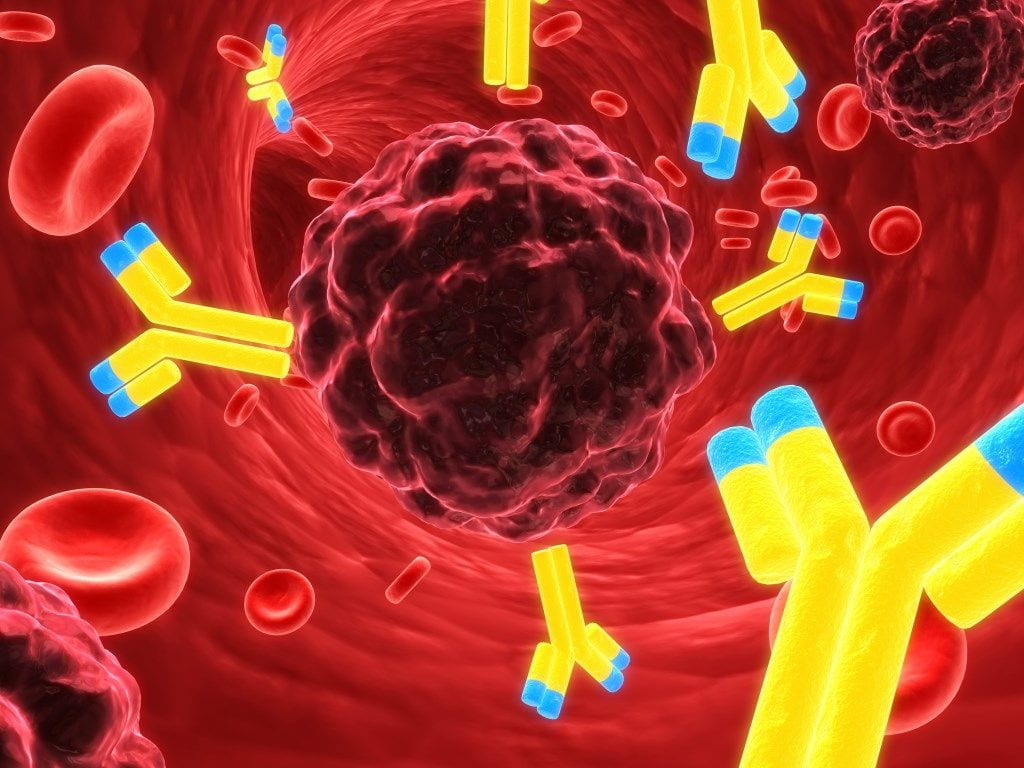
Figure 1. Antibodies traveling through the bloodstream.
Protein tyrosine phosphorylation is a reversible process in which a phosphate group can be added or removed from tyrosine residues of various proteins by protein tyrosine kinases (PTKs) and protein tyrosine phosphatases (PTPs), respectively. This type of post-translational modification is responsible for regulating many signal transduction pathways in the cell. The activity of a specific type of PTP, PTPRD, has been implicated in tumorigenesis through its potential to promote metastasis and upregulate the activity of SRC, a known proto-oncogene. Upon dimerization, however, this PTP is inhibited, thus establishing the promotion of PTPRD’s dimerization as a therapeutic approach to potentially treating cancer. The most recent work by Dr. Nicholas Tonks’ lab, conducted by Zhe Qian, at Cold Spring Harbor Laboratory investigated PTPRD and developed antibodies capable of targeting extracellular portions of PTPRD to promote its inhibition and degradation.
In order to develop the monoclonal antibodies capable of targeting the extracellular segment of PTPRD, segments of this protein from cells were used to generate many monoclonal antibody (mAb) clones capable of binding the PTPRD antigen. From here, a variety of different methods for validating these mAb clones were employed. Namely, flow cytometry, immunofluorescence staining, and immunoblotting were used. Using these techniques, they were able to characterize the mechanism by which SRC and PTPRD are related, finding that PTPRD dimerization as being capable of causing PTPRD inhibition and degradation, and decreasing SRC activation. Then, they were able to identify a specific antibody they generated named RD-43 as being capable of inhibiting SRC activity and causing the degradation of PTPRD, specifically by inducing PTPRD’s dimerization. From this point, they were also able to use additional cell-based assays to demonstrate that treating cancer cells with RD-43 decreased their cancer-related abilities such as cell invasion.
Ultimately, the identification of RD-43 as an antibody capable of inducing PTPRD dimerization is extremely valuable and has significant therapeutic potential in the treatments of many types of cancer. Furthermore, this research opens further avenues of exploring the potential benefits of using RD-43 as PTPRD has also been found to impact other signaling pathways that have been implicated in carcinogenesis such as the STAT3 pathway.
Works Cited
[1] Qian, Z., Song, D., Ipsaro, J. J., Bautista, C., Joshua‐Tor, L., Yeh, J. T., & Tonks, N. K. (2023). Manipulating PTPRD function with ectodomain antibodies. Genes & Development, 37(15–16), 743–759. https://doi.org/10.1101/gad.350713.123
[2] Image retrieved from: Animated : Regina Reynoso and, immunology HD wallpaper | Pxfuel
 Young Investigators Review