

Author: Sean Krivitsky, Class of 2026
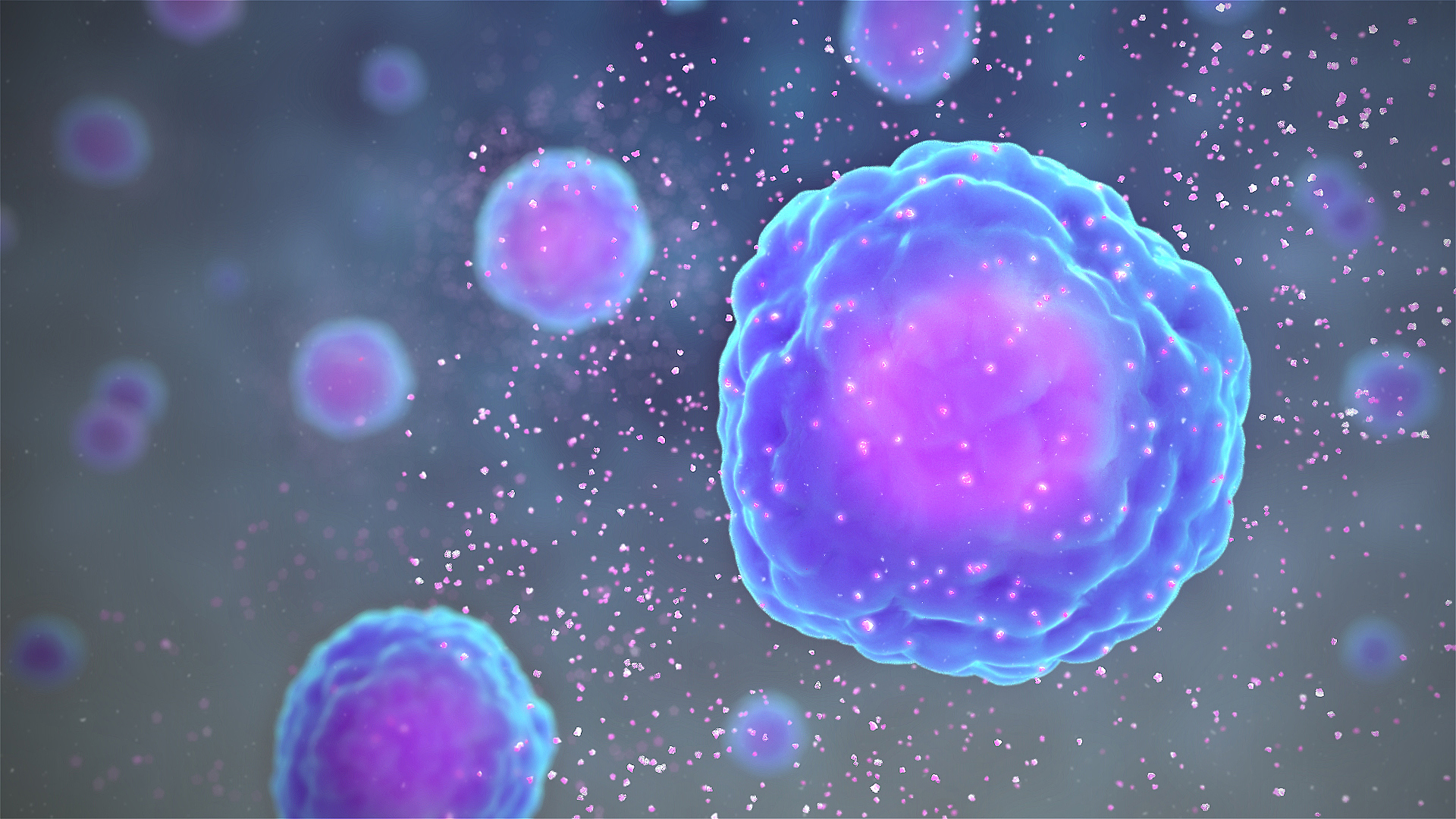
Figure 1. Animated representation of the release of cytokines in the extracellular environment.
Cancer is a disease that wreaks devastation on the bodies of the patients it afflicts. Cancerous tumor cells lead to the sickness observed in cancer patients in a variety of ways, but one of the primary causes of cancer-related sickness and death is referred to as cachexia. Cachexia is a wasting syndrome associated with cancer that can cause symptoms like weight loss, muscle atrophy, and anorexia. This further aggravates the inevitable weakness, fatigue, and inflammation also experienced by cancer patients. Researchers believe that dysregulation of cancer patient metabolism is partially induced by tumors, involving reprogramming of how sugars are metabolized and synthesized; however, the precise mechanism of this development is poorly understood.
Recent research performed by Ying Liu and the Janowitz lab at Cold Spring Harbor Laboratory investigated the mechanism of this metabolic reprogramming by using fly and mouse models of cancer cachexia. Their methods included single-nuclei sequencing, macromolecule level measurements, behavioral analysis in animal models, and cytokine analysis. They focused these analyses on hyperglycemia, a state involving increased blood glucose levels that contribute to symptoms of cancer cachexia, which is typical of the metabolic dysregulation and can either be attributed to elevated hepatic glucose production or the secretion of a protein, namely ImpL2, that represses insulin signaling and thus, proper glucose metabolism.
The researchers found expression of this protein in cancer cachexia animal model tumors, and they observed an upregulation of cytokines, Upd3, and its human homolog IL-6, involved in the synthesis of glucose. Additionally, this pathological cytokine signaling underlying hyperglycemia in cancer cachexia is also associated with induced expression of a protein called Pdk3, which inhibits cellular metabolism and leads to some of the common consequences of insulin resistance: decreased synthesis of fatty acids, increased synthesis of glucose, and a decrease in metabolic energy production.
Ultimately, these findings by the Janowitz lab reveal a novel mechanism for the hyperglycemia typical of cancer cachexia: the upregulation of cytokine signaling induces the expression of a key enzyme responsible for various consequences of insulin resistance. The resulting hyperglycemia, one of the earliest signs of metabolic dysregulation observed in cancer cachexia, plays a significant role in the severe symptoms experienced by patients of the disease. As cancer-induced cachexia complicates treatment, recovery, and resistance to cancer, using these newly identified therapeutic targets can not only minimize the suffering of cancer patients but also improve patient prognosis.
Works Cited
[1] Liu, Y., Dantas, E., Ferrer, M., Liu, Y., Aram Comjean, Davidson, E. E., Hu, Y., Goncalves, M. D., Janowitz, T., & Perrimon, N. (2023). Tumor Cytokine-Induced Hepatic Gluconeogenesis Contributes to Cancer Cachexia: Insights from Full Body Single Nuclei Sequencing. BioRxiv (Cold Spring Harbor Laboratory). https://doi.org/10.1101/2023.05.15.540823
[2] Image retrieved from: https://commons.wikimedia.org/wiki/File:Cytokine_release.jpg
 Young Investigators Review
