


Author: Asher Agarwal, Class of 2027
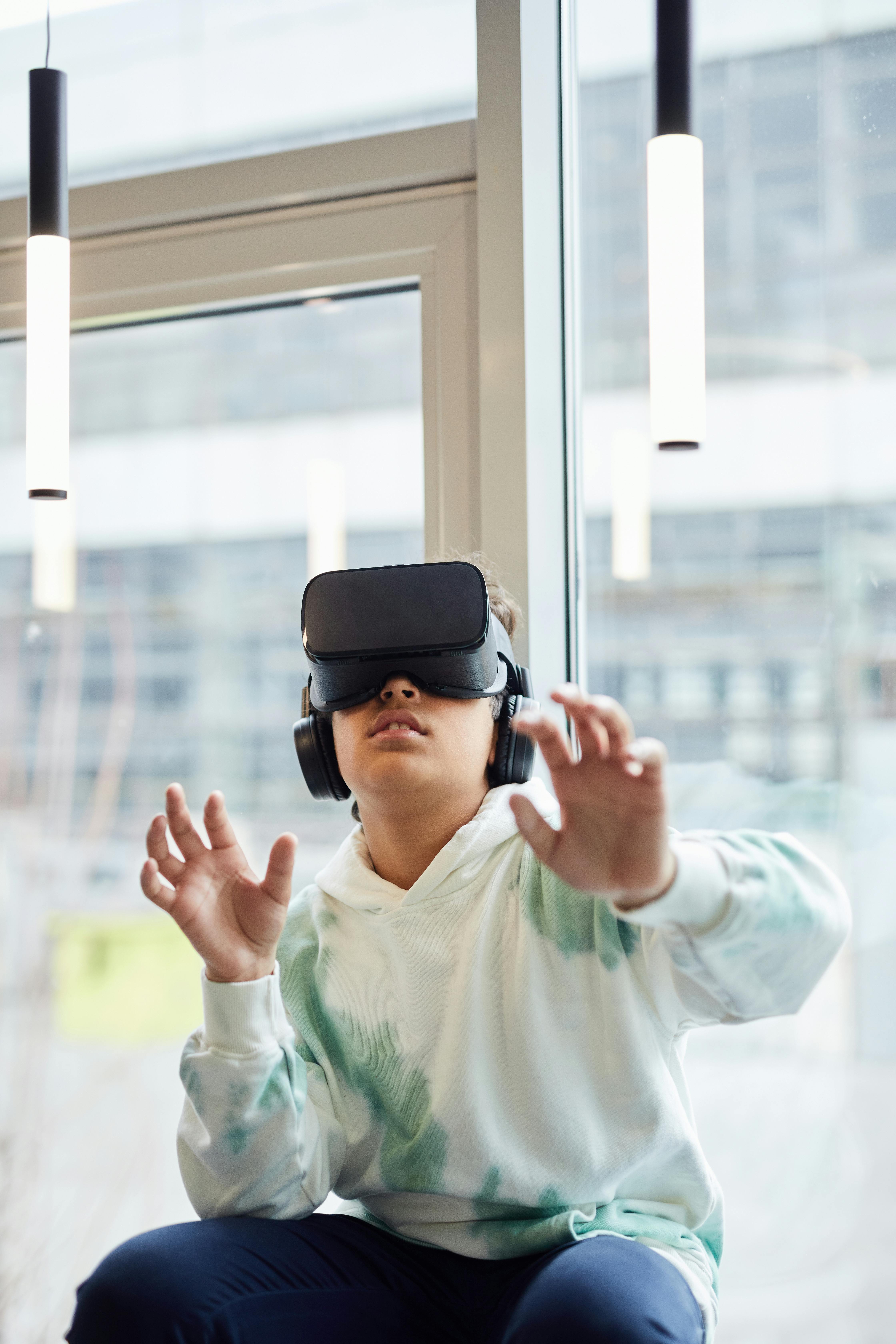
Figure 1. A child playing a game with a VR headset, reaching out for something in-game.
Patients with ataxia present with poor balance and impaired motor coordination and control. Genetic ataxia (GA) is rare and varies greatly as many gene mutations can be responsible for it. Virtual reality has shown promising results as an enjoyable and effective rehabilitation method for GA patients. Researchers at the University of Sao Paulo set out to address how different interfaces of virtual reality, webcam, and touchscreen, may be effective at treating GA. They hypothesized that the touch screen game, due to the sensory feedback patients receive from their fingers, would lead to better performance, and that the webcam game, due to its complexity, would provide better transfer of improvement to simpler, touch tasks.
17 participants with GA, ranging from 21 to 84 years of age, as well as 16 age-matched controls were used for this experiment. GA and non-GA participants were split equally between two treatment groups. The first group played the touchscreen game followed by the webcam game, while the second group played the webcam game first, then the touchscreen.
Analysis of performance showed that GA participants in both experimental groups performed worse than the control group. GA participant performance, interestingly, was better in accuracy than precision. GA patients tended to reach their intended target but had inconsistent distances from it. In both experimental groups, GA participants performed better in the touchscreen task than the web screen task, demonstrating the benefit of tactile feedback, which provides more guiding information for movement. This, in turn, helps GA patients as their visual and bodily awareness is impaired. Additionally, touchscreen-first groups showed a significant difference in performance compared to webcam-first groups. For the patients with ataxia only, those who practiced the webcam game first had better performance on the second task, likely because the webcam task required more neural effort, making subsequent tasks easier.
This experiment brings up a novel finding: giving GA patients a virtual reality task without tactile feedback, although more challenging, increases their ability to perform a feedback-rich motor task afterward. This could allow for optimized rehabilitation for GA patients using specific virtual reality treatment. However, the validity of the experiment is limited by the small, indiscriminate (all sexes and various phases of disease progression) participant group due to the rarity of GA in the population. A longitudinal study that includes a larger and more homogenous participant pool, as well as more virtual reality interfaces, would result in a better understanding of how virtual reality can best be adapted to GA rehabilitation.
Works Cited:
[1] Z. Graciani, et al., The effect of different interfaces during virtual game practice on motor performance of individuals with genetic ataxia: A cross-sectional study. PLoS One (2024). doi: 10.1371/journal.pone.0312705.
[2] Image retrieved from: https://www.pexels.com/photo/anonymous-boy-experiencing-virtual-reality-headset-7869447/
 Young Investigators Review