

Author: Kang Lai, Class of 2026
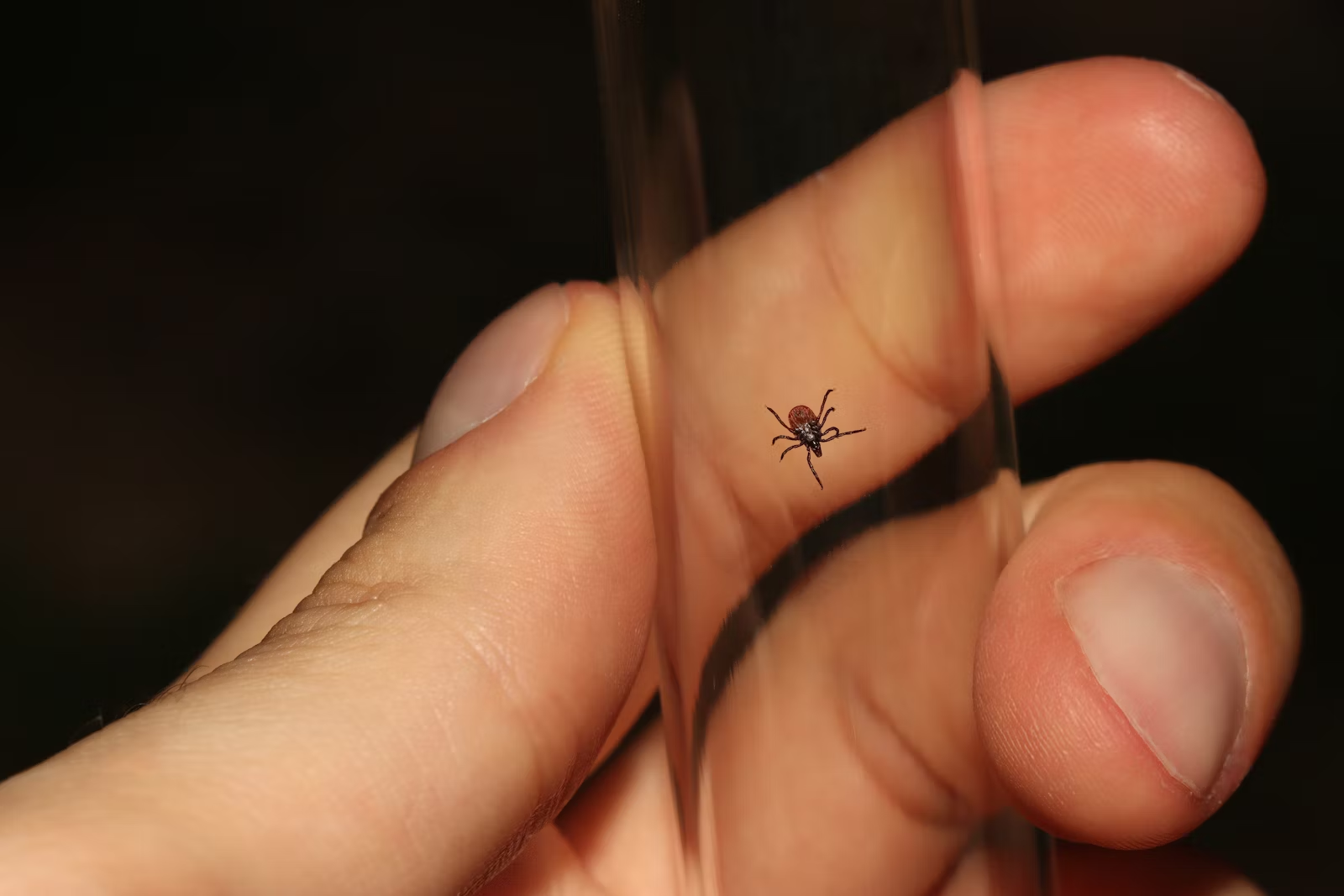
Ticks are commonly known vectors that transmit pathogens from one host to another. The genus of bacteria known as Rickettsia contains a hemolysin factor that causes disease progression through lysis of red blood cells. Several strains of Rickettsia are analyzed to deduce the key virulence factor behind its epidemiology of the Spotted Fever pathogenesis.
Bacterial hemolysins are toxins that weaken the body’s innate immune system defenses through forming pores in host cell membranes and disrupting receptor interactions. In Rickettsia–a genus of gram-negative ɑ-proteobacteria–the spotted fever group (SFG), transmitted mainly through ticks, and the typhus group (TG), transmitted by lice or fleas, both share a conserved hemolysin protein called TlyC, which are hypothesized to play a role in its unique hemolysis activity and disease progression.
At Stony Brook University, Dr. Hwan Keun Kim and colleagues aimed to elcucidate the role of TlyC in Rickettsia pathogenesis and its involvement in the vascular inflammation in rickettsiosis (a vector-borne disease). Researchers cultured R.cornii and R. parkeri (SFG) and R. typhi (TG) in Vero cells–monkey kidney cells used to maintain bacterial stocks. Concurrently, a mutant strain of Rickettsia conorii (HK27) lacking TlyC was generated. Human Dermal Microvascular Endothelial cells (HDMECs) were used to model natural infection in a human host cell.
Hemolysis assays were performed by incubating red blood cells (RBCs) from various species (human, cow, rabbit, sheep, etc) with wild-type (WT) and mutant Rickettsia for 1, 12, and 24 hours. Hemolysis was quantified through spectrometric analysis of hemoglobin release. Plaque assays assessed bacterial growth, while western blotting of cellular components determined TylC location in the outer membrane. Finally, mice models infected with WT R. conorii or HK27 were analyzed for body weight, mortality and antibody responses.
Initially, it was hypothesized that only TG Rickettsia would exhibit hemolytic activities; however through hemoglobin detection of various incubation periods, comparable hemolytic activities were observed in both SFG Rickettsia and TG Rickettsia. The mutant strain HK27 severely reduced hemolytic activity, failing to lyse sheep RBCs 24 hours post-incubation, unlike WT R. conorii. In HDMECs, plaque assays showed WT R. conorii infected HDMECs exhibited bacterial growth and endothelial damage and HK27 infected displayed cell death and smaller plaques, affirming TlyC’s importance in Rickettsial intracellular replication. In mice, WT R.concoii caused significant body weight loss, lower mortality rates, and slower recovery periods.
Dr. Kim’s team identified TlyC as a key virulence factor essential to Rickettsia survival within host cells and the epidemiology of spotted fever pathogenesis. While this study established TlyC as an outer-membrane associated hemolysis essential for its conserved hemolytic activity, further research needs to be done to uncover the molecular pathways of protein secretion and pore forming activity.
Works Cited:
[1] https://unsplash.com/photos/a-person-holding-a-small-bug-M_krTMIPSLg
[2] Helminiak L;Mishra S;Lu I;Kim HK. (2025). TlyC, a conserved hemolysin in Rickettsia, contributes to spotted fever pathogenesis in mice. Microbiology spectrum. https://pubmed.ncbi.nlm.nih.gov/40793754/
 Young Investigators Review