

By: Judy Zhao, Class of 2029
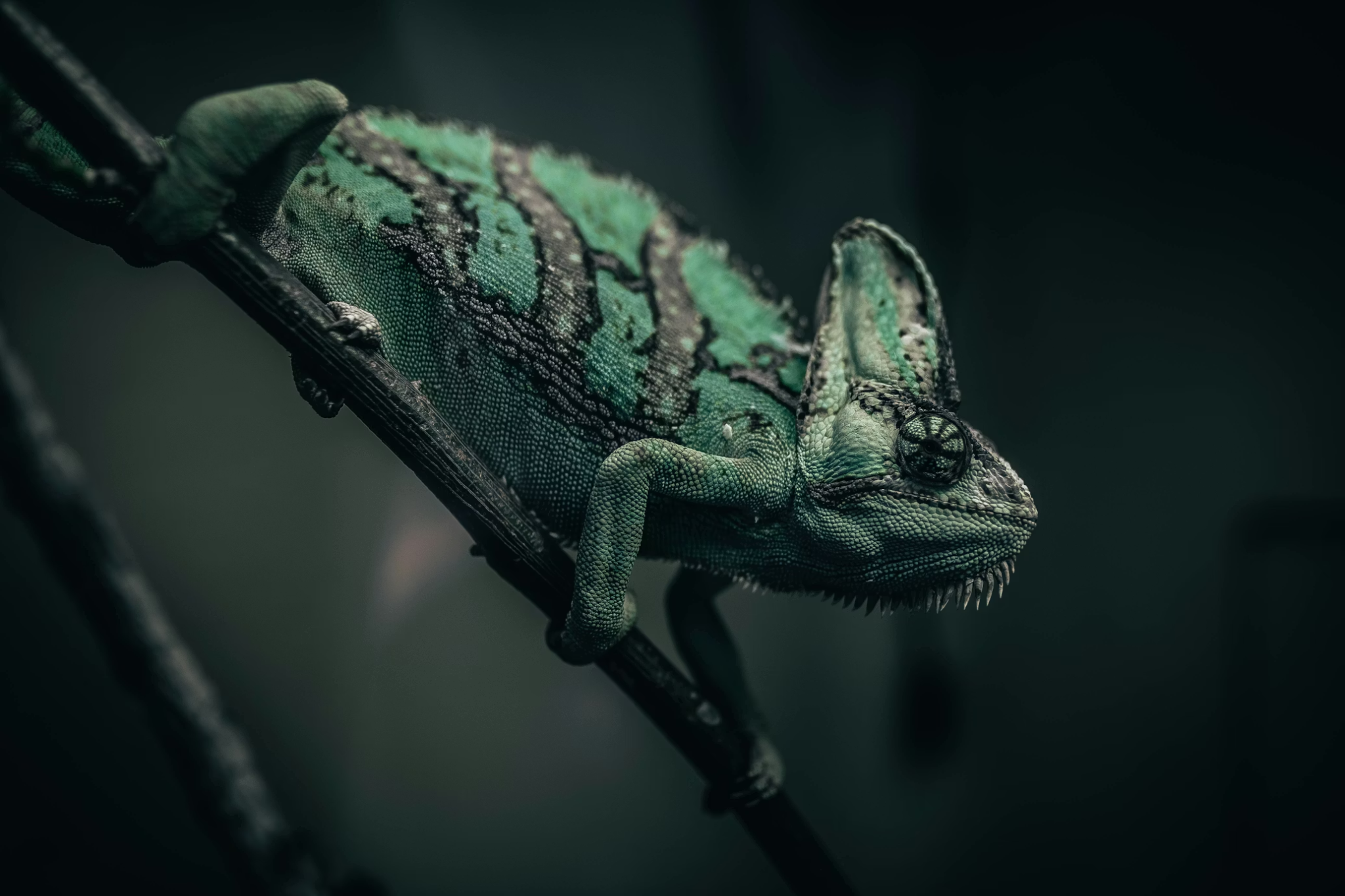
Figure 1. Image of a chameleon on a branch
The very survival of many animals in nature depends on how well they blend into their environment. From chameleons’ shifting hues to cephalopods’ ability to change the pattern of their skin, there are many strategies for camouflaging that material scientists now aim to replicate. This study by Dr. Gong at Hubei Polytechnic University aims to discuss bioinspired structural color, investigating the technologies behind creating dynamic camouflage materials that can shift with the environment.
Traditionally, humans have tried to camouflage using specific patterns and matching the color of their clothes to their surroundings. However, bioinspired structures would produce colors through a wide range of mechanisms, mainly film interference, scattering, diffraction, and photonic crystals. By manipulating light at the nanoscale, color can change depending on the observer’s angle and environmental conditions. For example, the color of a CD or a soap bubble can shift depending on the angle you view it from, due to thin-film interference. Additionally, the environment can alter certain properties of the material, causing it to stretch, compress, heat up, or absorb moisture, mimicking a chameleon’s behavior.
Another approach to these structures would produce colors that one could adjust by controlling the amount of light absorbed and reflected. Through electrical signals, this alternative material would alter how metal structures at the nanoparticle level interact with light, thereby changing what color the observer sees. Applying a certain voltage would deposit or remove a thin metal layer onto the nanoparticles, changing how the electrons around them oscillate and affecting the specific wavelength that is reflected. This alters the structure of the nanoparticles and could make something that originally seemed green reflect red instead.
Current applications of camouflage generally focus on military usage, where both soldiers and vehicles are covered to blend into the environment. However, this new technology could expand into architecture, where energy-efficient buildings could be constructed to reflect heat when it becomes very hot outside and absorb heat when it gets colder. This automatic regulation reduces the need for air conditioning, lowering energy and painting costs, since the color created by nanoparticles does not fade.
Dr. Gong and colleagues’ findings explain how these bioinspired structures can create color by modulating interactions with light, enabling materials to dynamically camouflage rather than relying on static colors. By drawing inspiration from natural systems and optics, the adaptability signifies another step towards intelligent design.
Work’s Cited:
[1] Gong, Y., Wang, H., Luo, J., Chen, J., & Qu, Z. (2024). Research Progress of Bioinspired Structural Color in Camouflage. Materials, 17(11), 2564. https://doi.org/10.3390/ma17112564
[2] Image retrieved from: https://unsplash.com/photos/green-chameleon-on-brown-tree-branch-dTteKzEICoA

