

By Sajia Athai, Class of 2026
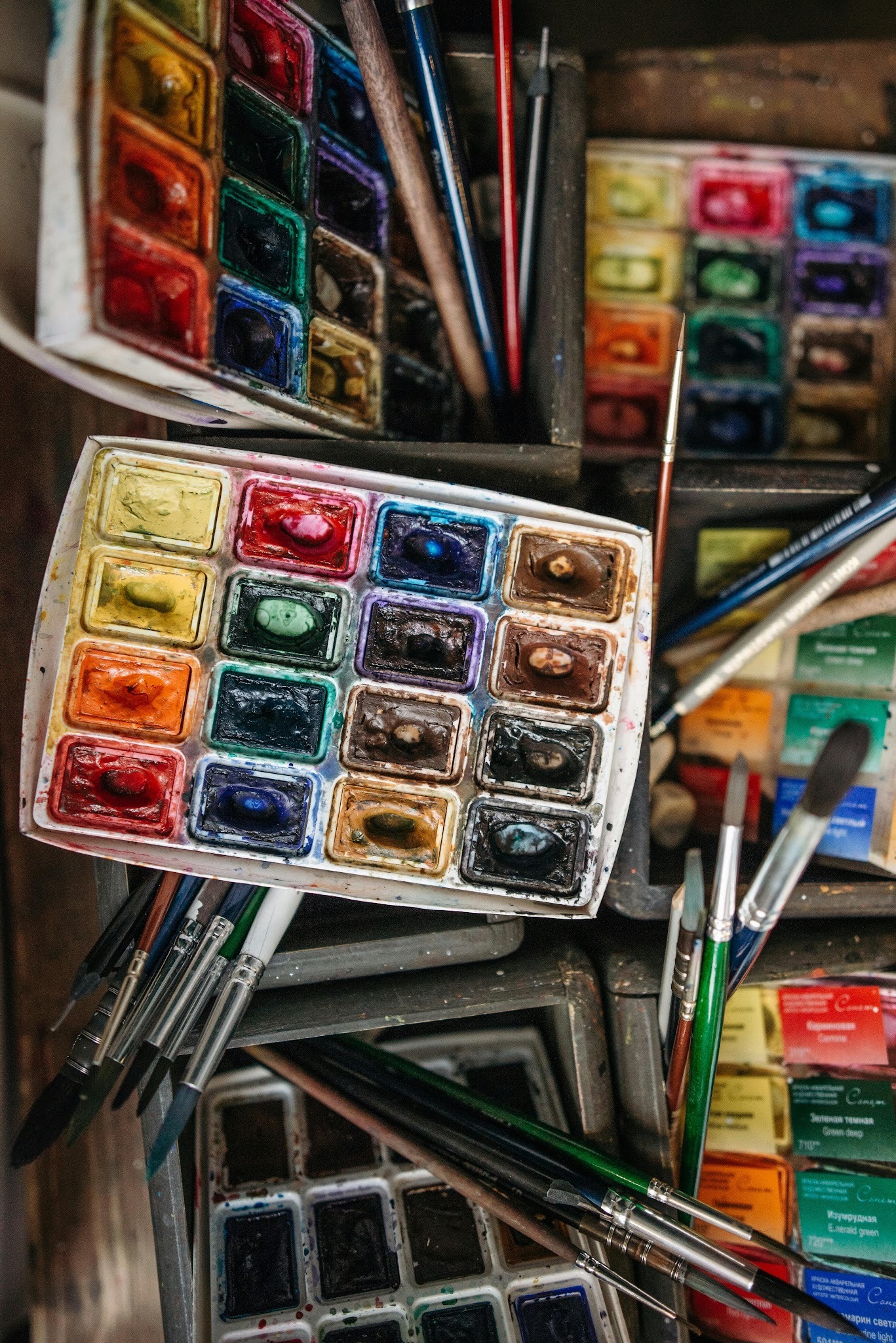
Figure 1 Pigments are mixed to produce new hues across a range of industries. These mixtures are predicted using distinct color coordination systems.
The illusion of mixing paints seems to be simply rooted in visual perception and appearance to the eye. As painters stroke their brushes across a canvas, it is easy for the observer to see how the hues look on the surface. However, it is easy to overlook the line of thinking behind the mixtures. How do artists decide which hues to utilize? How do researchers determine the intermediate color between two distinct colors?
The mixture of paints is referred to as subtractive color. Subtractive color, utilized across a range of subjects and industries, involves models that predict colors based on mixing. Those tools involve human perception systems and the Kubelka-Munk theory, which incorporates a mathematical equation of K/M expressing the ratio of the amount of light absorbed and scattered in a pigment. Researchers, looking for a simpler and more linear method, are exploring a new model based on coordinate system metrics. Previously, color spaces yielded results that curved unexpectedly without a clear explanation. The goal is to predict mixtures with outputs of a straight line. Using linear interpolation, researchers hope that reproducibility of colors can be performed more efficiently.
A team of researchers in the Applied Physics Department at the University of Zaragoza, Spain began the study by creating a large dataset of 8,421 hand-painted samples. Each of these samples was painted on separate canvases, utilizing 43 distinct base pigments. With consistent mechanical stirring and drying at 22 degrees Celsius, 416 pigment–white mixtures, 6,210 pigment–pigment mixtures, and 1,752 intermediate mixtures were formed. A Konica Minolta spectrometer was mainly utilized along with a spectroradiometer for darker hues in order to examine the reflectance of the pigments at 400-700 nm. Measurements were taken numerous times to ensure reliability, yielding a variation of ±1.5%. The data was then input into Python for further analysis of spectra interpolation, reflectance curve formation, and computation of new color coordinates. Grey level (G) was then set to an average standard of light reflection to assess the data in a linear manner. The G levels of each of the pigments were carefully compared to construct and verify the new color system using a base white standard.
This new color system will allow for predictability of colors and pigments across textile dyeing, paint manufacturing, and printing. With the implementation of linear values and software programming, predictions of mixing paints can be made more efficiently and accurately.
Work’s Cited:
[1] C. Wei, et al., Study on the high intensity tungsten alloys with the addition of rhenium metal prepared by microwave sintering. International Journal of Refractory Metals and Hard Materials 133, 107378 (2025). doi: 10.1016/j.ijrmhm.2025.107378,.
[2] Image retrieved from https://www.pexels.com/photo/palette-with-multi-colors-paints-and-brushes-6925021/.

