

By Anthony Barone , Class of 2029
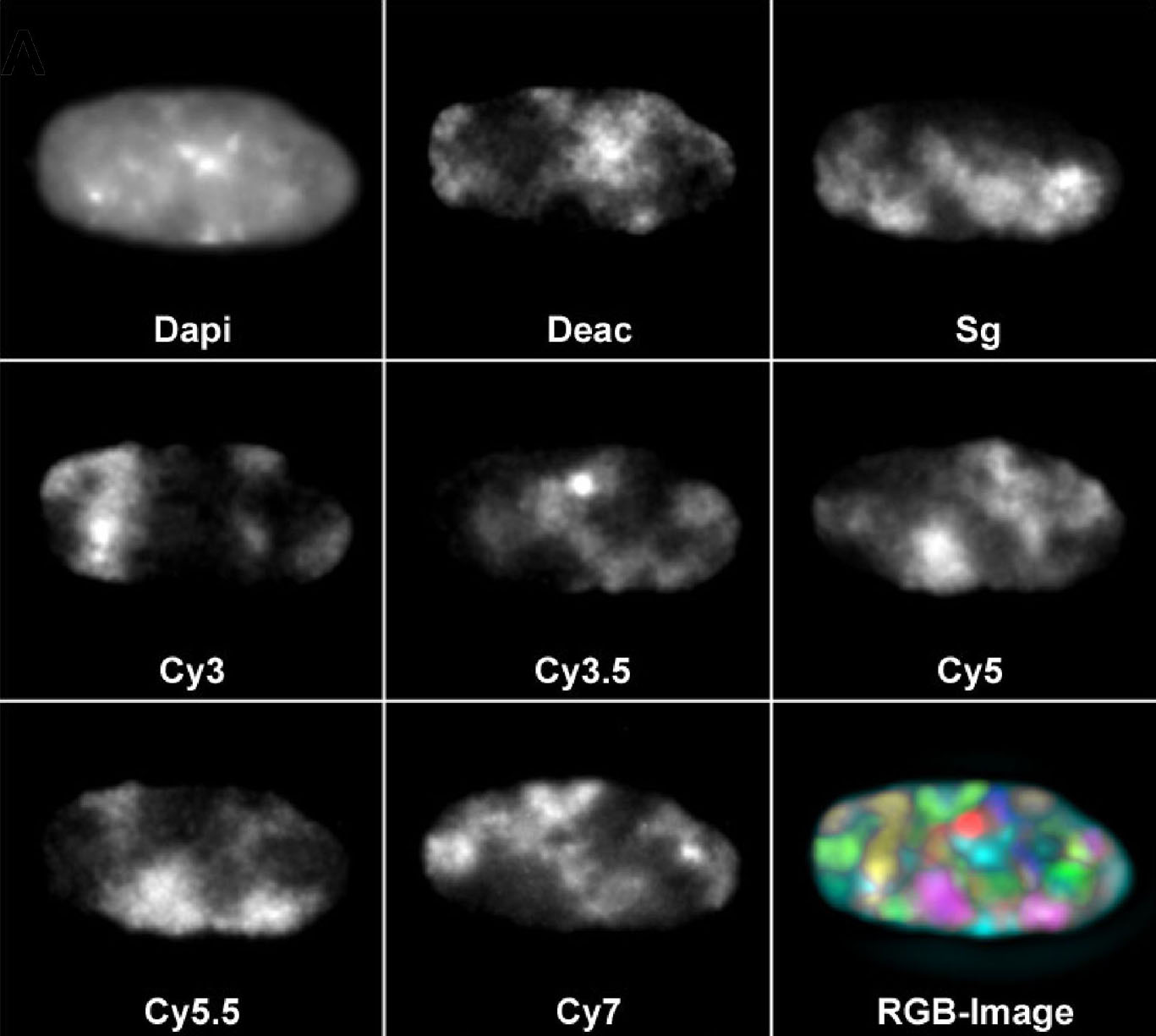
Figure 1. Image of cells marked with different fluorescent dyes
Organic fluorescent dyes have a wide range of uses, including live single-cell imaging and tracking protein movement. Fluorescent dyes allow biologists to observe protein interactions on the cellular level. However, current fluorescent dyes are only visible for tens of seconds before photobleaching, where they are chemically destroyed as a result of light exposure. To solve this problem, Do-Hyeon Kim and his colleagues at the Pohang University of Science and Technology in Pohang, South Korea set out to develop a longer lasting dye for cellular imaging through the use of photoblueing, the process where fluorescent dyes are converted into new species with shorter wavelengths.
To develop this new dye, the team started off by synthesizing tetra-sulfonate Cy5 (TSCy5), a widely used cyanine-based organic dye. The dye then underwent large-scale photoblueing where a laser excites the dye in an oxygen rich environment. The excited dye transfers energy to the molecular oxygen, creating a highly reactive singlet oxygen. This singlet then attacks the dye, substituting a CH2 with an oxygen. The result is a new organic dye the team named Phoenix Fluoro 555 (PF555).
The team tested the photostability of the newly synthesized PF555 against three other common organic dyes (AF555, JFX549, & TMR). Cytoskeletal protein polymers in cells were marked with the dyes and continuously imaged with total internal reflection fluorescence microscopy to determine the photobleaching lifetime. PF555 had a lifetime of 314.4 seconds, more than ten times more photostable than the other dyes: AF555 (23.6 s), JFX549 (9.1 s), & TMR (5.6 s). The brightness of the four dyes was measured with comparative analysis under varying laser wavelengths and it was concluded that PF555 was brighter than AF555 and TMR, but slightly dimmer than JFX549. From these two tests, the researchers concluded that they had successfully synthesized a new viable organic dye for cell imaging that lasted longer and had a competitive brightness compared to other dyes.
With the introduction of a new organic dye, PF555, researchers and biologists alike can monitor longer lasting cellular interactions and track the travel of proteins.
Work’s Cited:
[1] Kim, Do-Hyeon, et al. “Super-Photostable Organic Dye for Long-Term Live-Cell Single-Protein Imaging.” Nature Methods, 15 Jan. 2025, http://www.nature.com/articles/s41592-024-02584-0, https://doi.org/10.1038/s41592-024-02584-0.
[2] Image retrieved from: https://commons.wikimedia.org/wiki/File:Journal.pbio.0030157.g001a.jpg


