

By Julian Namerow, Class of 2026
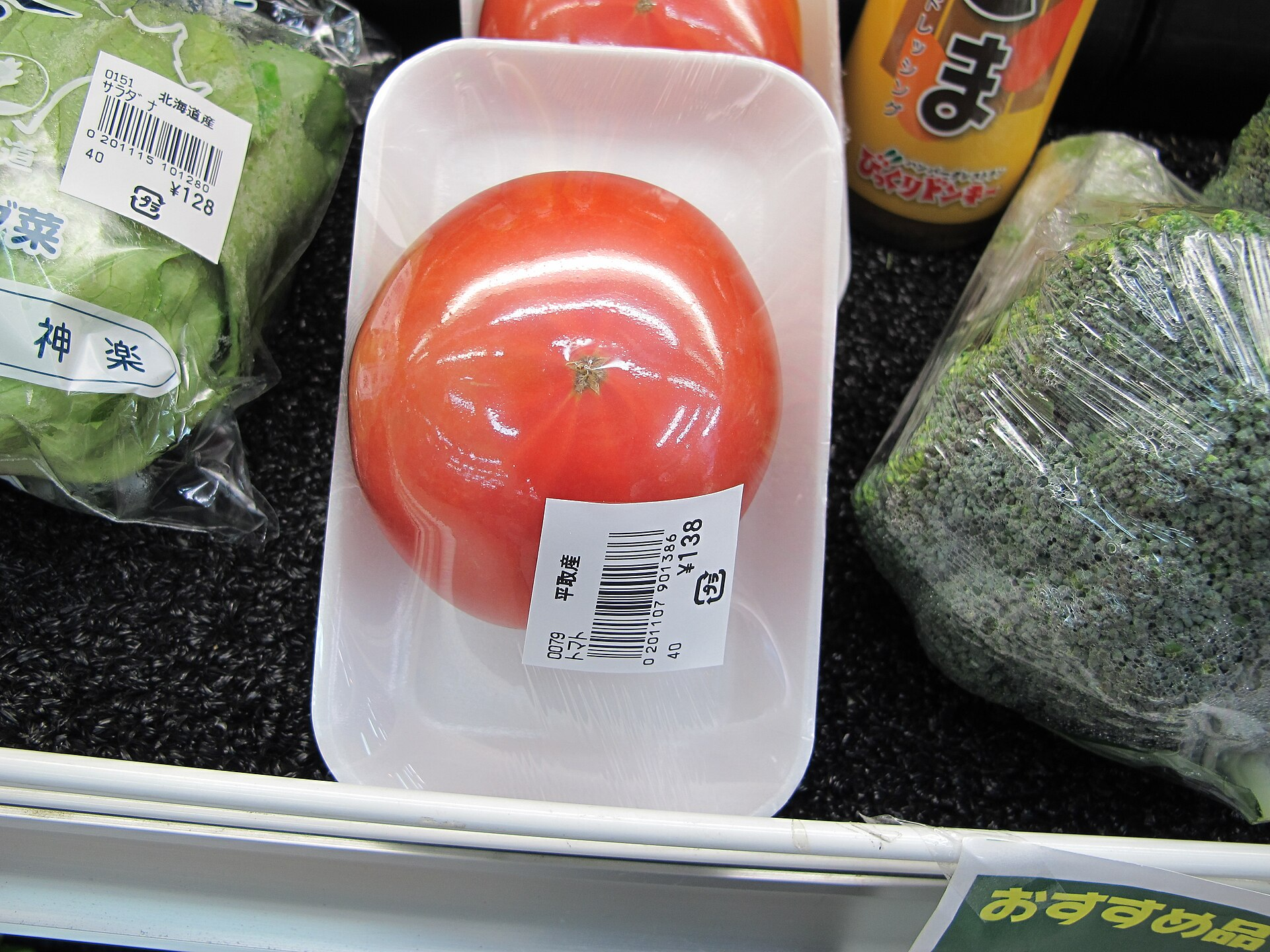
Figure 1:The most commonly found microplastics in food are from the clear plastic wrapping surrounding this red tomato and all other vegetables.
Micro- and nanoplastics are now present in human gastrointestinal tracts, derived primarily from food packaging materials, such as polyethylene terephthalate (PET). PET is essentially what all meat, fruits, and vegetables are wrapped in at grocery stores: the clear plastic covering the poultry. As nano PET particles accumulate in the stomach and damage the gut barrier, they create conditions that allow infectious bacteria such as Salmonella to grow. Ultimately, this weakens the gastrointestinal tract by degrading the beneficial bacteria already present and increasing vulnerability to infections and inflammation.
The researchers found therapeutic effects to the gastrointestinal tract with probiotics; the probiotics have been shown to prevent Salmonella aggregation in the gut and support recovery of cells infected with the bacteria. However, conventional probiotics face two major challenges: 1) since probiotics are living organisms, they are broken down by the acidic environment immediately before they can reach their target, 2) most probiotics aren’t engineered to fight any specific bacteria in the gut and aren’t designed for drug delivery. Dr. Chen engineered Escherichia coli Nissle 1917 (EcN), a probiotic that produces an anti-inflammatory response in infected cells. To protect the probiotics from stomach acid, Dr. Chen encapsulated them with a pH-responsive polymer, Eudragit L100-55. This way, the probiotic can be encapsulated and safe until it reaches the acidic, low pH stomach environment, where it will open and release the probiotics. The probiotic with the specialized capsule is called EcNT@L.
The drug delivery system, using the pH-responsive polymer, EcNT@L, was found to protect the gut cells from inflammation and the infections caused by nano PET. It has also outperformed antibiotics, which are known to kill many and various gut microbes at once. Instead of bacterial death, it has the ability to activate immune responses in the gut microbiota. As well as preventing bacterial aggregation and growth, it significantly eliminates Salmonella within already infected cells. Previously, research has been trying to clear the gut of the nano PET, as well as ways to degrade microplastics safely in the body; however, this is the first treatment that provides comprehensive repair to the cells in the gut and allows regrowth of beneficial gut bacteria, reaching homeostasis. This research offers a holistic approach to protecting the living microbiome in your gut, resulting in significant shifts in the composition of the intestinal microbiota, and increasing beneficial bacteria and decreasing pathogenic strains. Future research will focus on exploring the specificity of probiotics toward different types of plastics.
Work’s Cited:
Chen, W., Guo, Q., Li, H., Chi, X., Ma, X., Tang, Y., Liang, Q., Liu, Z., Liu, Y., & Li, J. (2025). Engineered Probiotics Mitigate Gut Barrier Dysfunction Induced by Nanoplastics. Advanced science (Weinheim, Baden-Wurttemberg, Germany), 12(22), e2417283. https://doi.org/10.1002/advs.202417283
Image retrieved from https://commons.wikimedia.org/wiki/File:Wasteful_Food_Packaging,_Japan.jpg


