
By Ilian Medarov, Class of 2028
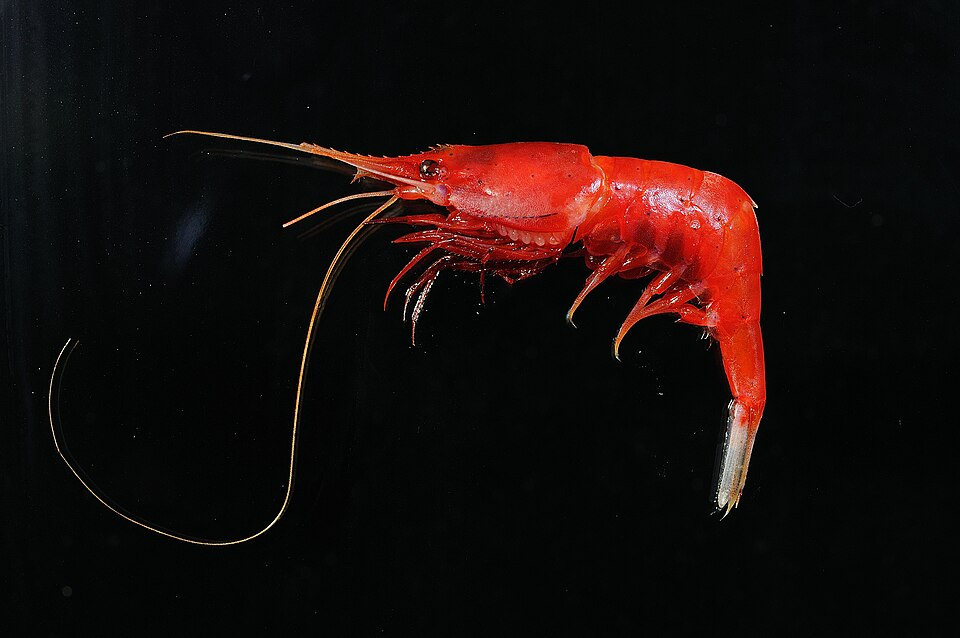
Figure 1: Oplophoridae, Deep-Sea Shrimp
In the deep sea, sunlight fails to penetrate water at depths past a kilometer, and bioluminescence becomes a primary source of illumination. This leaves the organisms living down here to rely on highly specialized visual systems to navigate the dark environments. Researchers decided to investigate how differences in light exposure due to environmental factors and bioluminescent organisms affect the evolution of vision in deep-sea shrimp. They hypothesized that species exposed to more dynamic and variable light conditions, such as those that move vertically more often or produce their own light, would show greater diversity and adaptive evolution in their visual systems and genes.
Florida International University’s researchers, led by Danielle M. DeLeo and Heather D. Bracken-Grimmson, investigated this question by looking at the visual systems that the superfamily of shrimp known as Oplophoridea had. They took tissue samples from their eyes and sequenced their RNA to identify and compare the light-sensitive proteins responsible for vision, called opsins. By performing phylogenetic analyses on the results, they were able to reconstruct evolutionary relationships among species and trace how opsin genes changed over time. They also looked for positive selection, an indicator of adaptive evolution, with some statistical tests. In order to account for environmental factors and link them to genetic findings, they used species with varying migration behaviors and bioluminescent abilities.
It was found that more migratory shrimp species, particularly those that often move to shallower waters with more available and variable light, tended to have greater diversity in opsin genes. Additionally, shrimp species capable of producing their own light with organs known as photophores showed evidence of adaptive evolution in a type of opsin known as a mid-wavelength sensitive opsin (MWS2). This indicates that these species evolved the ability to differentiate between different light sources, such as ambient light or bioluminescent light. This supports the hypothesis that both bioluminescent and environmental light conditions and variation can affect the evolution of visual systems. Specifically, changes in the MWS2 opsin appear to be vital to helping shrimp navigate complex light environments and even communicate with one another.
This study really shows how the environment and the pressures that come with it can influence the sensory systems of organisms down to the genetic level. The evidence that light conditions influenced the evolution of vision in these deep-sea shrimp illustrates one of many ways in which organisms can adapt to live and thrive in extreme environments. Future studies could explore how these visual adaptations affect the organism’s behavior, such as mating or predator avoidance, and whether similar patterns are observed in other deep-sea organisms. Overall, this work shows how, even in the darkest places on earth, light still plays an undeniable role.
Work’s Cited:
[1] DeLeo, D. M., & Bracken-Grissom, H. D. (2025). Bioluminescence and environmental light drive the visual evolution of deep-sea shrimp (Oplophoroidea). Communications Biology, 8, 213. https://doi.org/10.1038/s42003-025-07450-z
[2] Image retrieved from: https://commons.wikimedia.org/wiki/File:Oplophoridae_(MNHN-IU-2013-2251).jpeg


.jpeg)