Discovery of a Paleolithic bird carving at Lingjing Henan, China

Panayiota Siskos ’23 Modernity’s understanding about the history of symbolic behavior has increased during the past two decades, and a gradualist scenario has taken shape from the idea of a symbolic explosion occurring 40,000 years ago in Europe with the appearance of anatomically modern human populations. However, there is evidence that such behaviors are older and emerged from African Middle Stone Age and archaic Europe … Continue reading Discovery of a Paleolithic bird carving at Lingjing Henan, China

The Future of Synthetic Biology

Aditi Kaveti ‘23 Natural genetic processes can lose their function over long-term evolution if that function requires too many resources to continue throughout generations. Scientists have been studying evolutionary reversibility, which is the ability to regain a lost function, in order to repair natural systems that have lost such valuable evolutionary processes. To this end in the field of synthetic biology, researchers employ and manipulate … Continue reading The Future of Synthetic Biology

Alexa, How’s My Heart Rate?

Aditi Kaveti ‘23 While heart conditions including high blood pressure and cardiac arrest are well-known, heart rhythm disorders, such as cardiac arrhythmia, are actually more common. The improper beating of the heart can lead to serious diseases like strokes but can be difficult to diagnose and identify because they do not present a periodic pattern in the data.  Shyam Gollakota, an associate professor in the … Continue reading Alexa, How’s My Heart Rate?

Smartphones and Impaired Attention Control

Ayesha Azeem ‘23 The introduction of smartphones into human lives has transformed how people think, socialize, and entertain themselves. Nowadays, a smartphone is all one needs for immediate access to information, friends, and entertainment. Additionally, smartphones allow individuals to escape from reality, allowing for easily formed smartphone addictions to prevent from focus on real-world tasks, like work. While the impact of smartphones on cognitive function … Continue reading Smartphones and Impaired Attention Control

How Does the Brain Learn Taste Aversion?

Ayesha Azeem ‘23 The gustatory system is the sensory system that allows humans to perceive the sense of taste, or flavor. Humans are able to perceive different flavors via the taste receptors on taste buds, which can be found on the upper surface of the tongue as well as on the epiglottis. Taste perception depends on the chemical characteristics of the stimulus, as well as … Continue reading How Does the Brain Learn Taste Aversion?

Justice Redefined

Wendy Wu ’22 On January 18, 2015, Stanford University freshman Brock Turner was caught sexually assaulting an unconscious woman behind a dumpster. On July 6, 2016, Philando Castile was shot seven times by a police officer for, supposedly, reaching for his wallet. Both cases garnered extensive media coverage and incited public outrage towards the criminal justice system. Nicholas Chagnon and Nickie D. Phillips, Sociology and … Continue reading Justice Redefined

Perception of Emotion in Psychotic Disorders

Wendy Wu ’22 Schizophrenia, a severe mental disorder that alters perception of reality, is marked by deficits in emotional face perception (EFP). While previous research has shown how abnormal activity in certain brain regions correlates with EFP deficits, the significance of the connections between these regions has been understudied. Amri Sabharwal, a postdoctoral fellow in psychology at Stony Brook University, focused on the amygdala, a … Continue reading Perception of Emotion in Psychotic Disorders

D-Serine Infusion Mitigates Neuronal Losses Preceding Temporal Lobe Epileptic Attacks

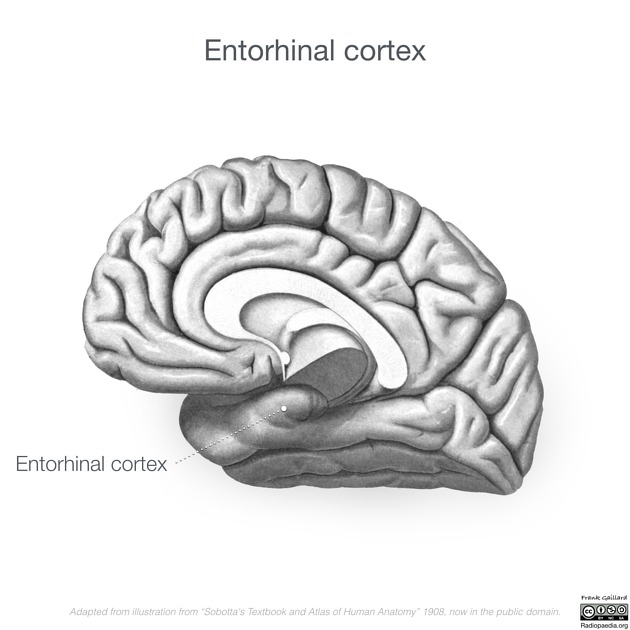
Vignesh Subramanian ’24 Temporal lobe epilepsy (TLE) is the most common form of both focal epilepsy – the recurrence of seizures in one hemisphere of the brain – and drug resistant epilepsy. The disease is characterized by neuronal cell death in Layer 3 (L3) of the medial entorhinal area (MEA), the internal region of the temporal lobe constituting memory and higher-order cognitive functioning. Recent studies … Continue reading D-Serine Infusion Mitigates Neuronal Losses Preceding Temporal Lobe Epileptic Attacks

Presynaptic Inhibition of GABAA Receptors Possible in Thalamocortical Circuits

Vignesh Subramanian ’24 A number of neurodegenerative disease processes, including those of temporal lobe epilepsy, GABA-transaminase deficiency, and traumatic brain injury, involve disruptions to the signalling pathway of gamma-aminobutyric acid (GABA), the chief inhibitory neurotransmitter of the central nervous system. Conventional understanding divides the ability of GABA to block neural signaling into ‘presynaptic inhibition’ – involving suppression of glutamate release,  an excitatory counterpart neurotransmitter – … Continue reading Presynaptic Inhibition of GABAA Receptors Possible in Thalamocortical Circuits

Evolution of avian brain sizes: The uncovered connection with body size

Sooraj Shah ’24 It is a common belief that the cumulative size of an individual’s fists taken together results in an approximate size of that individual’s brain. By this interpretation, individuals with larger hand sizes should thus have bigger brains. On the contrary, towards the end of the Cretaceous era, the relative brain size of both small avians (birds) and massive non-avians (dinosaurs) were the … Continue reading Evolution of avian brain sizes: The uncovered connection with body size

The Origins of Ancient Pterosaurs

Sabah Bari ’24 Pterosaurs were the first flying reptiles with over 150 million years of evolution. The specific anatomy of pterosaurs is what distinguishes them from other Mesozoic reptiles. They are known as Pan Aves, which means dinosaurs. With new fossil discoveries, researchers are now having a better understanding of a dinosaur’s body structure. The origin of pterosaurs is unknown. However, the structure allows archaeologists … Continue reading The Origins of Ancient Pterosaurs

A Once Thought Extinct Species of Mice Repopulates after an Explosion

Sabah Bari ’24 Mount Pinatubo was known for being a quiet volcano located on the most populated Island of Luzon in the Philippines. However, the calmness of Mount Pinatubo came to a halt on June 15, 1991 when the volcano erupted. The destruction of the explosive volcano negatively affected the wildlife on Luzon, except two main species of the Philippine forest mice. Upon the eruption, … Continue reading A Once Thought Extinct Species of Mice Repopulates after an Explosion