Hormone Producing Microbes Protects from Plant Pathogens

By Meghan Bialt-DeCelie ’19 Using microbes is one of the more unique ways of protecting plants from abiotic and biotic stresses of the environment. Researchers from the University of Copenhagen discovered a novel method for bacteria to produce a plant hormone called cytokinin that can biocontrol plants. Cytokinin is responsible for a wide range of functions including cell division, nutrient mobilization, and seed germination. There are … Continue reading Hormone Producing Microbes Protects from Plant Pathogens

Parental phenotype may affect offspring phenotype

By Shannon Bohman ’19 An individual’s genotype, composed of the maternal and paternal’s genomes, is expressed physically as a phenotype.  A team of Netherland geneticists found that the phenotype of an offspring depends partly on the environmental factors experienced by his or her parents. One species in which such transgenerational effects are evident is Arabidopsis thaliana, a plant species whose small genome and short generation … Continue reading Parental phenotype may affect offspring phenotype

A New View of Cancer Cells

By Meghan Bialt-DeCelie ’19 Most scientists study live cancer cell samples by preparing them on a glass slide and coverslip. However, this method often compresses the sample. Since cancer cells are very sensitive to their surroundings, the compression of the slide affects their behavior and may interfere with the results and overall understanding of cancer cell interactions. Researchers from UT Southwestern Medical Center have designed a … Continue reading A New View of Cancer Cells

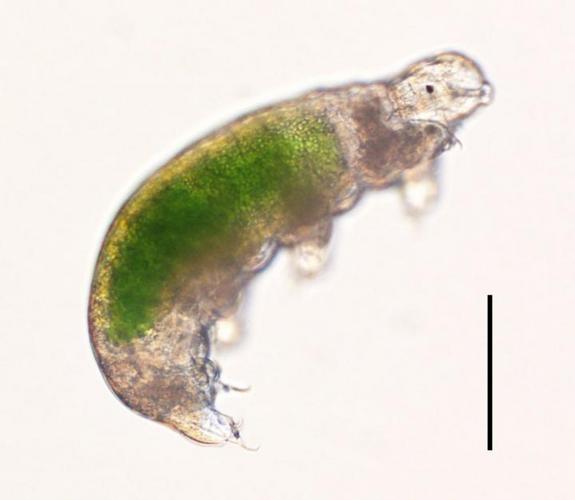
Tardigrades Survive & Thrive After Deep Freeze

By Julia Newman ’19 After thirty years of a frozen, hibernation-like state, two tardigrades have not only “awakened” but have already begun to reproduce. Back in 1983, these microscopic water bears were found living in an Antarctic moss at temperatures as low as -20 degrees Celsius. Scientists that previously knew of the tardigrades’ ability to survive in extreme conditions experimented with two specimen and an … Continue reading Tardigrades Survive & Thrive After Deep Freeze

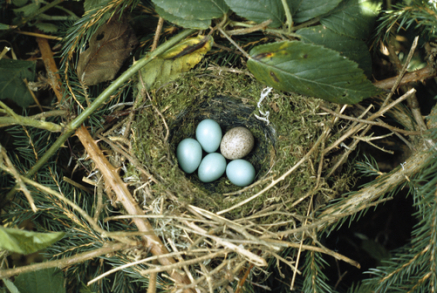
A Cuckoo Bird’s Egg Trick

By Julia Newman ’19 Robins lay blue eggs, sparrows lay speckled eggs, and cuckoos – well, it depends. Cuckoo birds have the ability to lay different colored eggs over time depending on the other common birds in their environment. For example, if robins are abundant in an ecosystem, the cuckoo birds eventually evolve to lay blue eggs.  However, according to studies done at the Norwegian … Continue reading A Cuckoo Bird’s Egg Trick

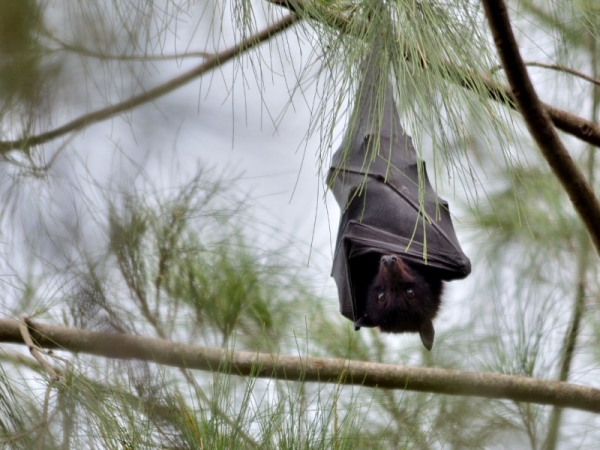
Bat Immune Systems Could Strengthen Our Own

By Julia Newman ’19 Immunologist Dr. Baker, working at the Australian Animal Health Laboratory, has recently discovered something about bats that can protect humans from multiple deadly diseases. Bats are known to be carriers of various diseases such as Ebola and Middle Eastern Respiratory Syndrome.  However, unlike humans, the bats are not affected as carriers, prompting research into their immunological responses. Studies have shown that … Continue reading Bat Immune Systems Could Strengthen Our Own

An Interview with Dr. Harvard Lyman

By Eman Kazi ’15 Professor Harvard Lyman has been a member of the Stony Brook community since 1968.  He’s become a bit of a legend in the Department of Biochemistry and Cell Biology and was the lecturer for the course BIO 310, Cell Biology, for a number of years until he retired in the Spring 2015. 1. Where did you complete your undergrad, graduate school … Continue reading An Interview with Dr. Harvard Lyman

Suppressing Our Sweet Tooth

By Richard Liang ’18 Sugar is something most people cannot live without. Although it can bring happiness to individuals that indulge in its sweetness, it can present a serious problem for diabetics and those suffering from obesity. A study recently published in Cell Metabolism by a research group at the University of Iowa has discovered a hormone that can suppress sugar cravings in mice. Hepatokine … Continue reading Suppressing Our Sweet Tooth

Tegu Lizard Displays Seasonal Endothermy

By Shannon Bohman ’19 Most mammals are endothermic, meaning they generate their own body heat. Some creatures, called ectotherms, are unable to self-sustain a body temperature above the surrounding temperature. However, researchers at the University of Alberta in Canada and the University of Melbourne in Australia have found a particular ectotherm, the tegu lizard, that often displays endothermic characteristics. During their reproductive season, tegu lizards … Continue reading Tegu Lizard Displays Seasonal Endothermy

New Benefits to Lowering Normal Blood Pressure

By Lee Ann Santore ’19 Heart disease is often caused by extended periods of high blood pressure, but its occurrence is not restricted to those individuals with high blood pressure. Traditionally, high blood pressure medications have only been prescribed to patients with systolic blood pressures above the threshold level of 140 mmHg as issued by England’s National Institute for Health and Care Excellence.  However, a … Continue reading New Benefits to Lowering Normal Blood Pressure

The Brain Circuit that Wakes You Up

By Karis Tutuska ’18 A goodnight’s sleep is crucial not only for cognitive function, but for long-term physical health as well, which is why so much effort has gone into studying the mechanisms of sleep. While scientists have long known the key brain circuits that control NREM sleep (non rapid eye movement, associated with light sleep) and REM sleep (rapid eye movement, associated with deep sleep … Continue reading The Brain Circuit that Wakes You Up

New Strain of Infectious Cancer Found in Sarcophilus Harrisii

By Karis Tutuska ’18 Cancer is a scary word, but what is even more frightening is the concept of a contagious cancer. Sarcophilus harrisii, commonly known as Tasmanian devils, are large carnivorous marsupials, savage screechers, and voracious eaters. These organisms are plagued by deadly, fast-acting facial tumors that grow until they prevent the animal from eating and force starvation until death. What is unusual about these … Continue reading New Strain of Infectious Cancer Found in Sarcophilus Harrisii