Investigating the Efficacy of Blue-Light Lenses in Reducing Eye Strain

Robyn Rutgers ’24 Computer usage is integral to daily life; however, prolonged electronic usage is associated with vision-related problems, or “computer vision syndrome.” Symptoms include blurred vision, dry eyes, redness, and headaches. Some have hypothesized that computer vision syndrome is a result of exposure to blue light emitted from computer screens, causing businesses to market blue-light-blocking lenses as a potential solution. However, a lack of … Continue reading Investigating the Efficacy of Blue-Light Lenses in Reducing Eye Strain


High-Fat Diets in Combination With Triclosan Linked to Non-alcoholic Liver Disease

Daphne Siozios ’23 NAFLD, more commonly known as nonalcoholic fatty liver disease, is one of the most prominent chronic liver conditions in the country and is characterized by the accumulation of fat in hepatocytes (liver cells). A cousin of NAFLD, nonalcoholic steatohepatitis (NASH), is a condition that both encompasses the deposition of fat in the liver and inflammation of the organ. Fibroblast growth factor 21 … Continue reading High-Fat Diets in Combination With Triclosan Linked to Non-alcoholic Liver Disease

CaCl2-CaO Mixtures May Decrease Radioactivity Levels in Contaminated Nuclear Wastes

Thumyat Noe ’23 On March 11th, 2011, an earthquake in northeastern Japan caused leakage of radionuclides from the Fukushima Daiichi Nuclear Power plant. Fukushima now stores the radioactive waste in designated locations, but there is an immediate need to decrease the radioactivity levels present in the stored wastes to prevent other accidents. Among the radionuclides present in contaminated wastes, scientists have determined radioactive cesium as … Continue reading CaCl2-CaO Mixtures May Decrease Radioactivity Levels in Contaminated Nuclear Wastes

Building a Better Battery: An Alternative to Lithium Ion Batteries

Robyn Rutgers ’24 Due to the negative effects of nonrenewable energy, scientists and environmentalists are trying to shift to cleaner energy sources, such as wind and solar power. One obstacle that engineers face in designing clean-energy solutions is the inefficiency of storing the generated energy, often resulting in large amounts of wasted energy. However, the development of advanced batteries would allow for more efficient storage … Continue reading Building a Better Battery: An Alternative to Lithium Ion Batteries

Can We Control Our Dopamine?

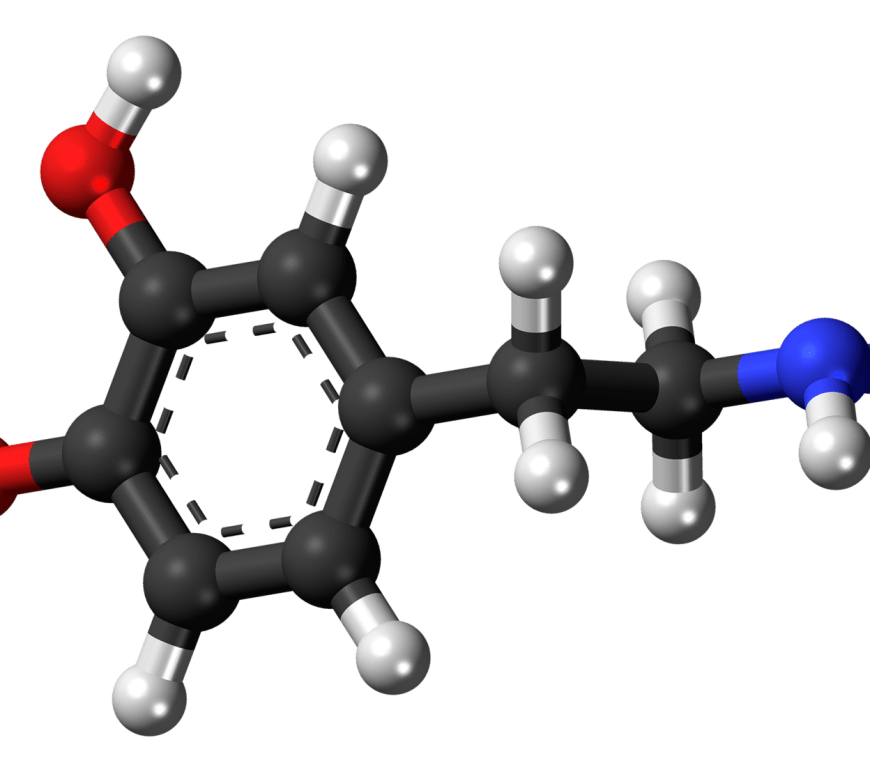
Aditi Kaveti ’23 Dopamine is a notorious molecule, with effects ranging from heightened sense of happiness and increased energy, to anxiety and difficulty sleeping. It is involved in cognitive processing related to reward and pleasure. Research into this molecule offers a wide range of study as scientists attempt to understand the dynamics and neuromodulation that occurs in the brain. Conrad Foo, a graduate student at … Continue reading Can We Control Our Dopamine?

Deep(ly) Learning About Deep Learning

Ishmam Khan ’25 Machine learning is the ability of artificial intelligence to build a model based on previously collected data and use it to identify patterns in a way that simulates human behavior. Many applications branch off from machine learning, such as bioinformatics, the intersection of technology and biology. Recently, researchers at Stony Brook University studied a process called deep learning, a subset of machine … Continue reading Deep(ly) Learning About Deep Learning

Discovery of Mass Tyrannosaurus rex Fossil Sites Indicates Social Interaction Rather Than Isolation

Sooraj Shah ’24 The image of the lone Tyrannosaurus rex fossils sitting in a museum is based on the stereotype that they hunted in solidarity. It has long been debated whether these creatures even had the brain capacity to form communities until recently. A study conducted by Alan Titus, a paleontologist for the U.S. Bureau of Land Management, focused on a new mass grave whose … Continue reading Discovery of Mass Tyrannosaurus rex Fossil Sites Indicates Social Interaction Rather Than Isolation

Lightning Strikes May Have Been a Key Ingredient in the Creation of Life on Earth

Sooraj Shah ’24 It has been long believed that the requirements for life on Earth were set into motion solely by a plethora of meteorites, which contained vital minerals for the foundation of living organisms. While this is true, recent evidence suggests that lightning may have played just as large of a role. A study conducted by Benjamin Hess, a PhD student at Yale University, … Continue reading Lightning Strikes May Have Been a Key Ingredient in the Creation of Life on Earth

The Earliest Human Appearances in the Americas

Yukta Kulkarni ’22 Humans have been populating Earth for hundreds of thousands of years, mainly inhabiting areas in East and South Africa. It was thought that humans had first arrived in the Americas around 15,000 years ago. However, new findings from excavations at Chiquihuite Cave in central-northern Mexico provide evidence that humans could have been present thousands of years earlier than originally predicted, an estimation … Continue reading The Earliest Human Appearances in the Americas

X-ray diffraction provides new gateway to analyze mummies

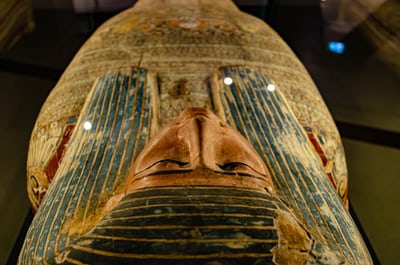
Sooraj Shah ’24 Since the 20th century discovery of the tomb of King Tutankamun, the excitement around discovering mummies has been a topic of controversy, particularly regarding how the mummies are handled once they are discovered. Unwrapping and disrupting the mummies’ final resting place is considered to be invasive. A study by Dr. Stuart Stock, a professor within the cell and molecular biology department at … Continue reading X-ray diffraction provides new gateway to analyze mummies

The Truth Behind the Marie Antoinette Syndrome

Yukta Kulkarni ’22 Before her execution in 1793, French queen Marie Antoinette noticed that her hair was suddenly turning white. Although this story is just folklore, there may be some truth to it in regards to the Marie Antoinette Syndrome, a condition in which one’s hair abruptly turns white. To further explore this syndrome, Zhang et al. designed an experiment measuring the rate of hair … Continue reading The Truth Behind the Marie Antoinette Syndrome

Majority Rule and Minority Rights

Wendy Wu ’22 Humans are social animals; it is in our nature to communicate and to cooperate. We live with the understanding that we not only act in our individual interests, but also in the interests of the community. The problem is that not all members of the group will benefit from community decisions all the time. How, then, should we make collective decisions? Many … Continue reading Majority Rule and Minority Rights