

By Maegan Diep, Class of 2029
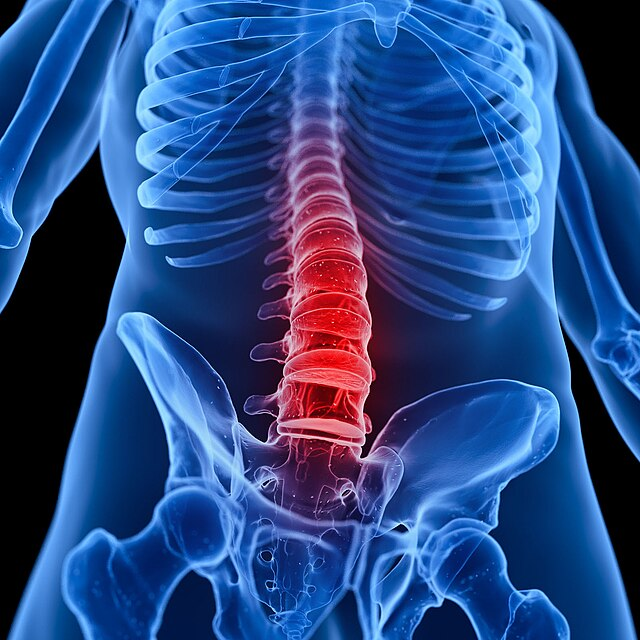
Figure 1. An illustration of pain localized along the lower spine.
Following spinal cord injury, up to 60-70% of patients are affected by spinal cord injury neuropathic pain (SCI-NP). Despite the large population affected, there is a lack of effective treatment plans to combat SCI-NP. Currently, anticonvulsant and antidepressant drugs are typically prescribed to affected patients, but many still experience pain. Without an effective approach to combat SCI-NP, it can become increasingly difficult to manage and may develop into a permanent condition. Thus, researchers at Stony Brook University decided to investigate SCI-NP further to better understand and target it.
Previous research suggests that hyperexcitability, a state of heightened reactions to stimuli, and spontaneous activity (SA) of nociceptors, or specialized sensory nerve endings that detect pain/potential harm to the body, can be responsible for development/maintenance of SCI-NP. It has also been found that T-type calcium channels drive these sensations, potentially giving rise to SCI-NP. Hence, researchers sought to hone in on CaV3.2, a variant of T-type calcium channels, as the driving force behind the neuropathic pain.
In vivo mouse models were used to demonstrate the role of CaV3.2 channels in SCI-NP. Upon anesthetization, mice were surgically induced with SCI and observed post-operation. Researchers first determined that hyperexcitability and increased SA of nociceptors occurred after three to five months of SCI. Then, they identified the underlying mechanisms responsible for these sensations, finding that calcium channels served as a main factor for hyperexcitability and SA. As researchers investigated the three versions of T-type calcium channels (CaV3.1, CaV3.2, and CaV3.3), it was CaV3.2 that was the predominant type of channel present in spinal cord and sensory neurons. Confirming the role of this particular calcium channel in SCI-NP, researchers also performed experiments with drugs targeting CaV3.2 channels and measurements of mechanical sensitivity and spontaneous pain.
The impact of CaV3.2 channels on SCI-NP is significant in improving current treatments and developing future ones. Though a step in the right direction, further research must still be done. Researchers indicated that this study used knockout mice, or mice that were genetically modified to lack the CaV3.2 gene in all of their cells, to better understand the role of the calcium channel in hyperexcitability and nociceptors’ SA. To eliminate the possibility of genetic compensations, or changes in response to the absence of the gene, future research should include mice with CaV3.2 inserted in their genome.
Work’s Cited:
[1] Gunaratna, K., Liu, H., Gupta, J., Sipple, E., & Puopolo, M. (2026). The Increased Activity of CaV3.2 Channels Contributes to Nociceptors’ Hyperexcitability and Chronic Neuropathic Pain Following Spinal Cord Injury in Mice. The Journal of Neuroscience, 46(4), 1-15. https://doi.org/10.1523/JNEUROSCI.1058-25.2025
[2] Image retrieved from: https://commons.wikimedia.org/wiki/File:SFI_skeleton_xray_b0027_pain.jpg


