

By Maegan Diep, Class of 2029
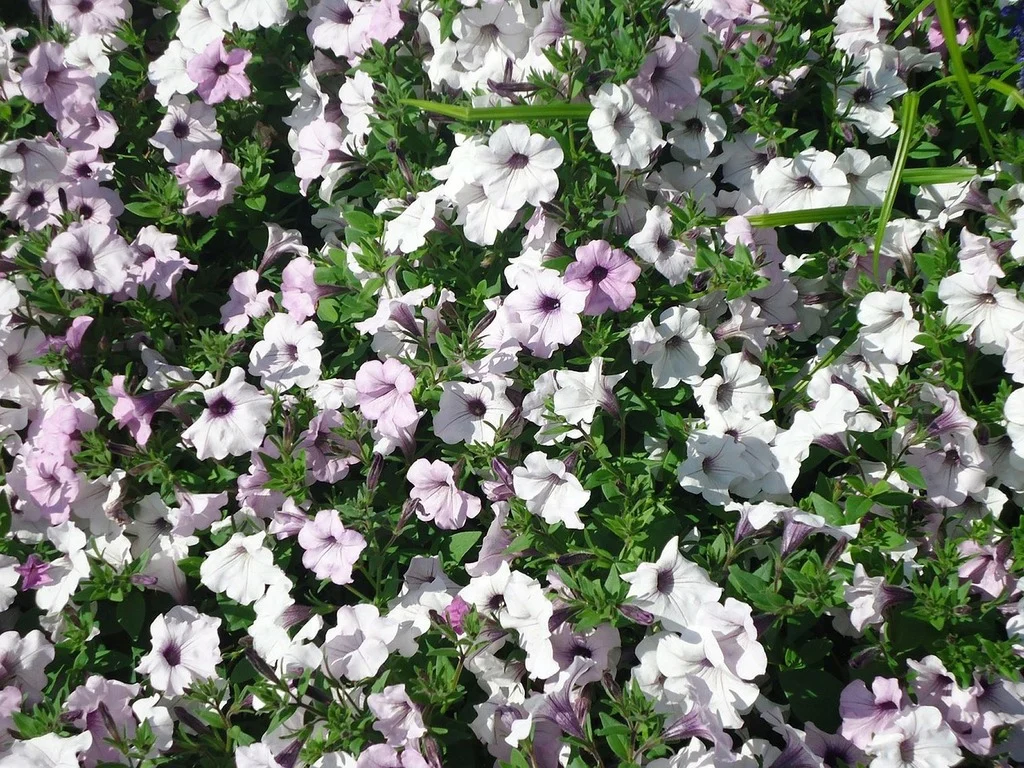
Figure 1. An image of petunia flowers.
A flower’s color is more than what meets the eye. When considering how this variable trait comes into play with the very pigments that give rise to it, little mathematical models exist that explore the theoretically possible colors and its phenotypic limitations. A recent study published in the American Journal of Botany sought to apply theoretical trait-space principles to flower color, which would allow researchers to simulate all possible pigments and their ecological interactions with the environment. To investigate this, scientists turned to wild petunias as a model system.
The model investigated anthocyanin composition—which refers to the plant pigments associated with red, purple, and blue–and flower colors in Ruellia L., or wild petunias. To construct the model, researchers focused on the anthocyanins in 197 collected samples of 123 Ruellia species using high-performance liquid chromatography, a technique that enables scientists to distinguish between pigment extracts from floral tissues. Furthermore, a spectrophotometer was used to measure the light (in wavelengths) reflected by the sampled flowers. Collecting the floral color reflectance spectra is relevant in determining which wavelengths are absorbed and reflected by the pigments, which in turn determines the perception of the wild petunias in relation to the animals around them.
Researchers found substantial evidence for their prediction that petunias would take on the most extreme colors possible granted by their pigments in order to minimize the competition between coexisting species. The model also revealed weak correlations between evolutionary history and biogeographical overlap in regards to floral color variations. In other words, overlapping species displayed less variation in colors.
In linking anthocyanin concentrations to color, it is important to clarify that while the theoretical model successfully predicted variation in blue and red wavelengths, certain parts of the floral reflectance spectra (specifically yellow and green wavelengths) are attributed to other determining pigments—not just anthocyanin. For example, flavones, a compound also involved in plant pigmentations, play a role in the spectral properties of the flower, producing a bluer color. However, there is a limited understanding of the influences of environmental and genetic variation on species that share a common plant ancestor. Future research plans to delve deeper into how plants utilize other factors that influence their phenotype—the way that they are visually perceived.
Work’s Cited:
[1] Watts, J.L., Medina, N., Kiel, C., Luján, M., Smith, S. D., & Manzitto-Tripp, E. A. (2026). Flower occupy color-space extremes: an anthocyanin-derived theoretical floral color-space approach. American Journal of Botany, 113, 1-14. https://doi.org/10.1002/ajb2.70149
[2] Image retrieved from: https://commons.wikimedia.org/wiki/File:Gfp-violets.jpg


