

By Katie Au, Class of 2029
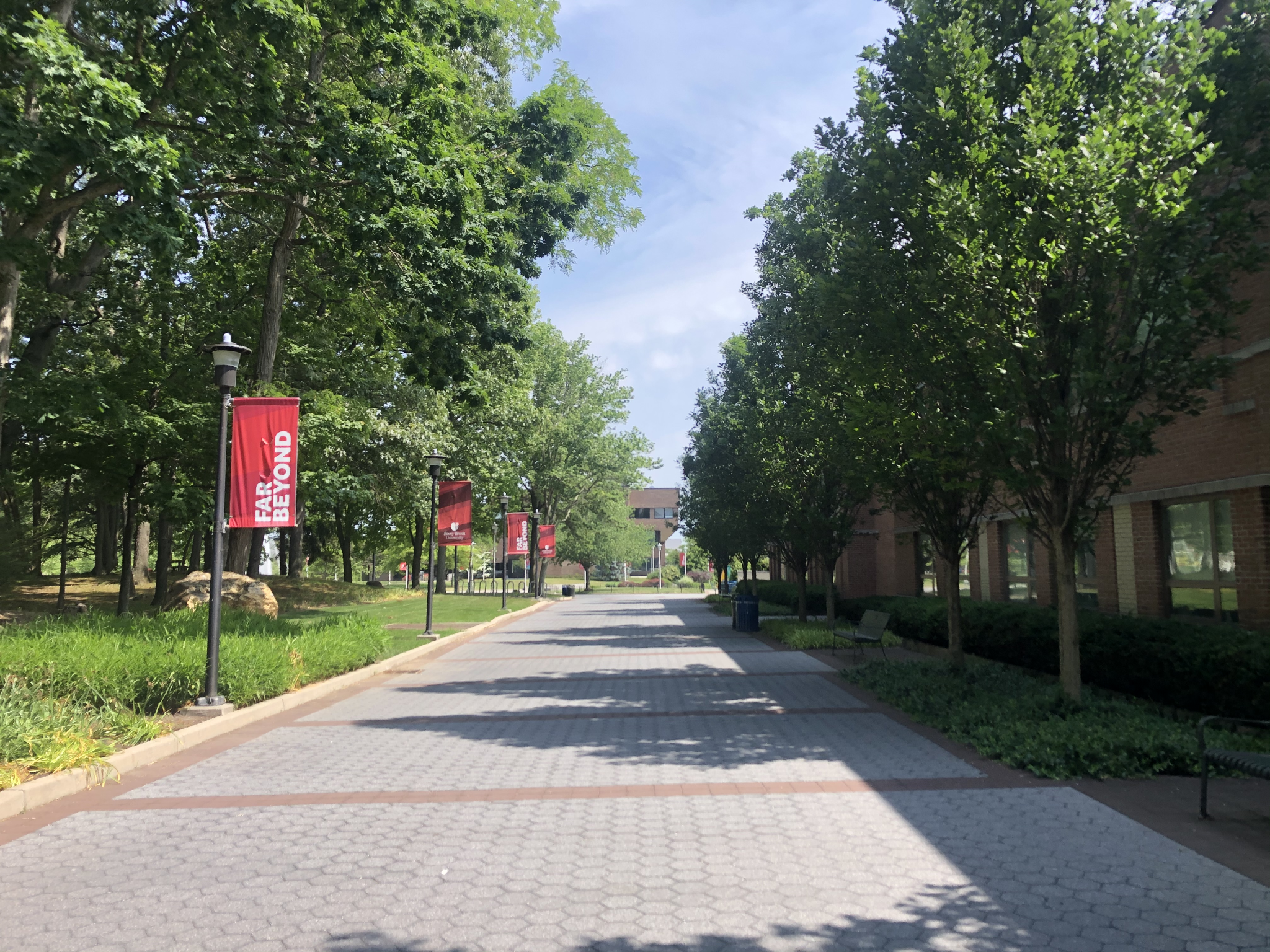
Figure 1. An image of the Stony Brook University campus depicting natural green tones and strong warm colors.
College students experience many changes in their mental and physical health while on campus, and the colors of a campus may directly contribute to their health. Yingjie Li and his colleagues at Shandong Agricultural University and the Shandong Academy of Forestry conducted a study examining how colors in campus outdoor environments may influence physiological and psychological indicators among university students. Using virtual reality to construct three-dimensional scenes and electroencephalography (EEG) to record changes in participant brain waves, Li and his team aimed to understand the impact of campus color elements on human emotions, particularly relaxation levels.
The researchers analyzed the environmental colors of 36 campus locations with photographs from three campuses of Shandong Agricultural University using an image processor and HSV modeling, a color quantifier. These photographs were then viewed by thirty college students while EEG devices collected their brain activity, and questionnaires rating how relaxing each color environment felt were also collected. The EEG data indicated that certain scenes with higher brightness and lower color saturation—especially colors dominated by natural green tones—were associated with increased alpha waves, which are waves typical of relaxed or meditative states. The oldest campus (SDAU-I) had a higher proportion of plant colors and low-saturated green tones, and produced the strongest relaxation responses. Environments with warmer, medium-saturation, or strong colors like red produced lower relaxation levels. The completed questionnaires were consistent with the EEG data, and scenes with softer, less saturated colors being rated as more relaxing. The findings suggest that campus landscapes with brighter and low-saturation color palettes with a strong plant color presence are more likely to prompt emotional relaxation in students.
University students often experience stressful emotions such as anxiety and depression, and Li’s team shows that campus visuals—particularly their colors—play a role in these emotions. Creating campuses with more relaxing color environments could help support students’ mental well-being. Li’s study serves as a guide for architects and campus planners when considering color design. Li and his team have expressed an interest in also investigating other aspects of campus sensations, including spatial layouts and even auditory sensations. Another interesting angle would be to consider if shapes—angular versus round—of campus buildings or artwork can influence student well-being. Studying the different sensory stimuli on campuses can greatly improve how universities approach campus planning and student health.
Work’s Cited:
[1] Li, Y., Yu, Y., Dingmeng, H., Xinyue, S., Wang, T., Liu, K., . . . Zhang, X. (2025). The influence of campus landscape color environment on students’ emotions: A case study of shandong agricultural university. Buildings, 15(23), 4290. doi:https://doi.org/10.3390/buildings15234290
[2] Image retrieved from: https://commons.wikimedia.org/wiki/File:Stony_brook_west_campus.jpg


