

By Samantha Libbey, Class of 2027
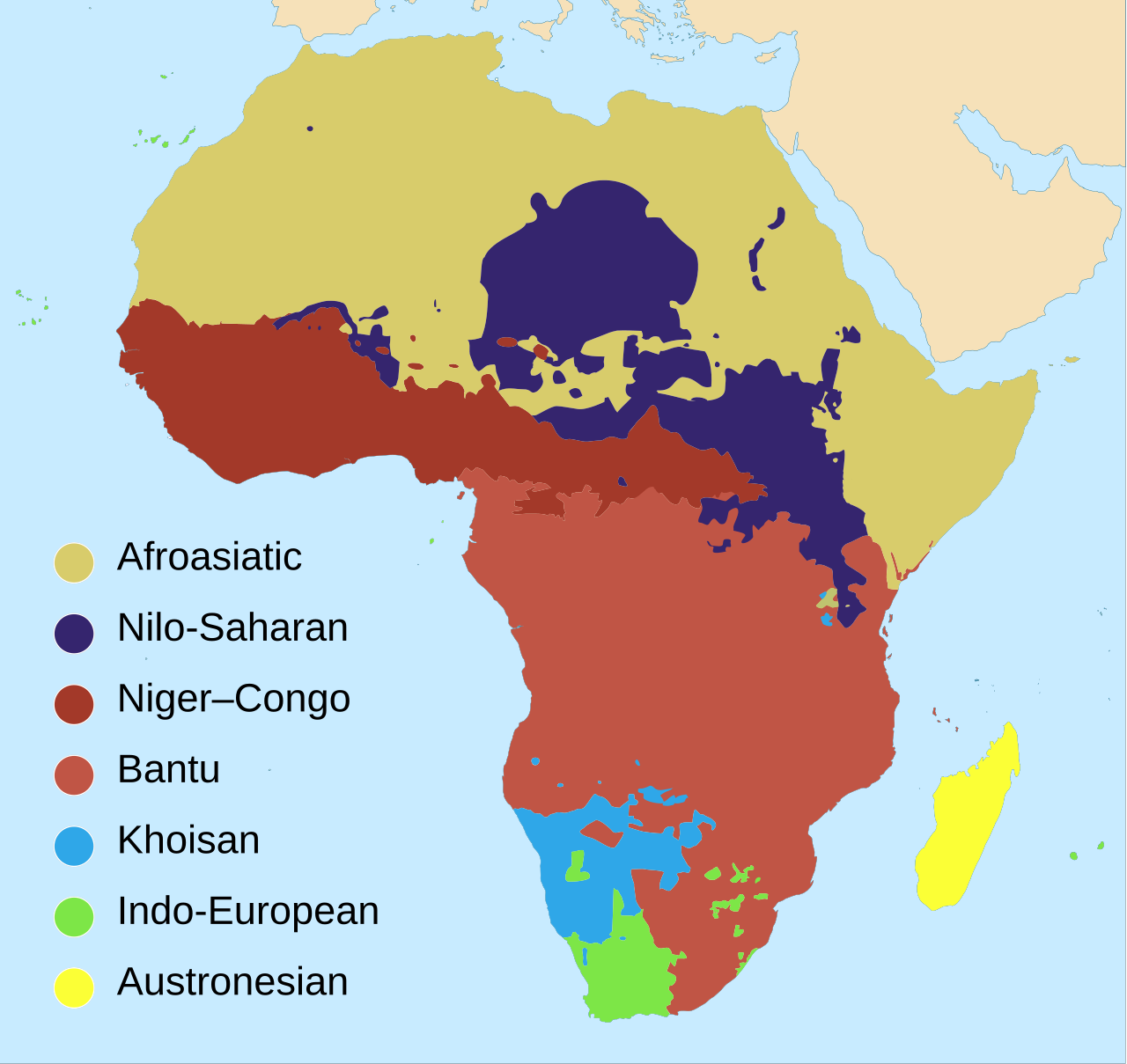
Figure 1: Map of Africa highlighting in blue the region inhabited by the Khoe-San population.
Human fossils have long been used to study evolution and human diversity by comparing anatomical features across populations. One feature of interest among anthropologists is the frontal sinus, an air-filled space found in the forehead. While its exact function is still debated, it is a possible indicator of variation in evolutionary history. While previous studies have been conducted on the frontal sinus size worldwide, sub-Saharan African populations have remained underrepresented—despite containing immense human genetic diversity.
In a study led by Dr. Frederick Grine of Stony Brook University, researchers aimed to better understand the genetic variation in these populations by examining the differences in the frontal sinus size of the Khoe-San people of South Africa. Additionally, the study aimed to investigate whether frontal sinus size differs between males and females, and how these sizes compare to other global populations. The study sampled 102 adult skulls from the Later Stone Age period, dating more than 700 years before European colonization. Sex was determined using pelvic landmarks, and each skull was scanned using computed tomography (CT), to produce a three-dimensional image of the skull, allowing researchers to measure the volume of the frontal sinus. To determine the overall skull size, four skull measurements were taken and combined into a single value, the geometric mean. Researchers then compared both the actual size of the sinus (absolute volume) and the adjusted skull size (scaled volume), using statistical tests.

Figure 2: X-ray visualization of the frontal sinus.
Results showed that the male skulls were significantly larger in size than the female skulls, however, frontal sinus size did not differ between males and females, indicating that the frontal sinus is not a sexually dimorphic feature. The Khoe-San also exhibited notably smaller frontal sinuses in comparison to other populations worldwide, including other sub-Saharan African groups. Interestingly, the researchers suggest that these differences are not well explained by geography, climate, or body size, but rather indicate deeper evolutionary history within the Khoe-San population.
Overall, this study addresses gaps in anthropological research by expanding the data on African populations, highlighting how by observing anatomical variation between different populations, we can increase our understanding of evolution.
Work’s Cited:
[1] Grine F E, Post N W, Greening V, Crevecoeur I, Billings B K, Meyer A, Holt S, Black W, Morris A G, Veeramah K R, and Mongle C S, “Frontal sinus size in South African later stone age holocene khoe‐san.” The Anatomical Record. 308(3), 801–826. (2025) https://doi.org/10.1002/ar.25556
[2] Image retrieved from: https://commons.wikimedia.org/wiki/File:Map_of_African_language_families_ca.svg
[3] Image retrieved from: https://commons.wikimedia.org/wiki/File:Stirnhoehle_frontal.jpg


