
A Novel Approach to Treating Psychopathy Associated with Huntington’s Disease.

By Snigdha Kanadibhotla ‘21 Characterized by uncontrollable and spastic movements, Huntington’s Disease (HD) is a fatal neurodegenerative disorder that is estimated to affect about 1 in 10,000 people in the United States (1). HD has pervasive effects that damage neurons in brain regions associated with mobility, emotion, and intellectual capacity leading to symptoms such as depression, anxiety, and difficulty learning. Despite its complex and varied … Continue reading A Novel Approach to Treating Psychopathy Associated with Huntington’s Disease.

Neurogenesis and its Implications on Brain Development

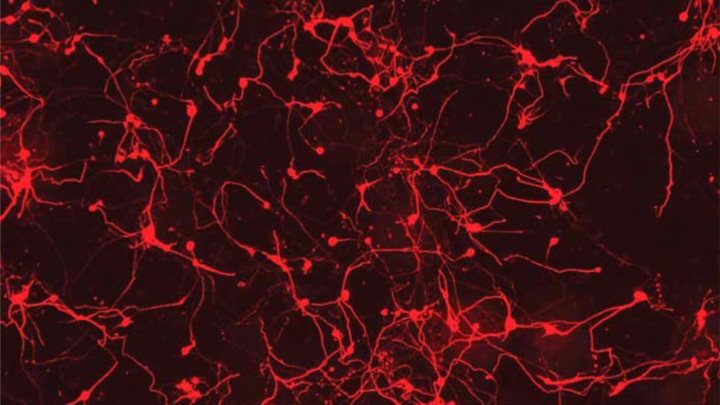
By Snigdha Kanadibhotla ‘21 Conventionally, humans were thought to be born with a fixed number of nerve cells or neurons that steadily deteriorated over their lifetime; as a result, degenerative brain diseases were thought to be untreatable. However, studies involving animal models have challenged this idea by demonstrating that during adulthood, neurogenesis or the creation of new neurons can occur in the hippocampus which isa … Continue reading Neurogenesis and its Implications on Brain Development

Investigating the Link Between Cancer Cells and Embryonic Cells to Treat Cancer

By Snigdha Kanadibhotla ‘21 Fundamentally rooted in a lack of cell cycle control, cancer is predicted to affect 38.4% of Americans within their lifetimes (1). While most healthy cells are regulated by three cell cycle checkpoints, cancerous cells can bypass these regulatory systems, which leads to uncontrolled division and metastasis (the spread of cancer through the body). Considered to be a unique characteristic of cancer, … Continue reading Investigating the Link Between Cancer Cells and Embryonic Cells to Treat Cancer

Eradicating Subpopulations of Melanoma-Initiating Cells Using Nifuroxazide

By Riya Gandhi ‘22 In an age in which cancer is the second leading cause of death worldwide, scientists are seeking to discover and develop novel treatments for the disease. Sometimes, although rarely, the answer is just at their fingertips. In a recent study, a team of researchers from the University of Edinburgh sought to understand the mechanism by which 5-nitrofuran antibiotics, also known as … Continue reading Eradicating Subpopulations of Melanoma-Initiating Cells Using Nifuroxazide

From Colon Cancer Cells to Cancer Stem Cells: The Value of Reprogramming Cells

By Riya Gandhi ‘22 The location of cancer stem cells in tumors has opened the door to the development of a variety of therapeutic applications. These cells are the future of oncology, and scientists still have much to uncover regarding their various uses in medical treatment. While cancer stem cells are treasure chests of opportunity and have wide scientific application, they are difficult to obtain. … Continue reading From Colon Cancer Cells to Cancer Stem Cells: The Value of Reprogramming Cells

In Situ Administration of Cytokine Combinations Could Be the Future of Immunotherapy

By Riya Gandhi ‘22 Rather than look outwards for new cancer treatments, scientists are beginning to look inwards – that is, inside the human body – for advanced therapeutic treatments. Although the use of cytokines, biomolecules that direct an immune response,in cancer therapy has been attempted for decades, there is still room for much improvement. In a recent study on cytokines, researchers under the guidance … Continue reading In Situ Administration of Cytokine Combinations Could Be the Future of Immunotherapy

Elimination of Pathogens by Signaling Interference

By Allan Mai ‘20 Ever see that probiotic label on the side of a container of yogurt or another dairy product and wonder what it means? Probiotic nutrition helps reduce pathogenic colonization of the intestines; however, until recently, researchers’ knowledge of the mechanism behind this process was ambiguous. Pipat Piewngam of Mahidol University in Thailand and his colleagues have discovered that the probiotic Bacillus works … Continue reading Elimination of Pathogens by Signaling Interference

The Preservation of Respiratory Function After a Traumatic Spinal Cord Injury

By Allan Mai ‘20 After a traumatic spinal cord injury, a primary cause for concern is the threat of a dysfunctional respiratory system; a means by which to preserve respiratory functions is needed to decrease mortality rates in patients with spinal cord injuries. In a recent study, Dr. Kajana Satkunendrarajah of the Kembril Research Institute in Toronto discovered a potential solution to this problem which … Continue reading The Preservation of Respiratory Function After a Traumatic Spinal Cord Injury

Using the Genome to Forecast Health

By Allan Mai ‘20 Wouldn’t it be convenient if researchers could tell how likely an individual is to have a certain disease just by looking at his or her genome? Researchers are doing exactly that by looking at over 6.6 million points of the human genome; according to Sekar Kathiresan, a geneticist at Massachusetts General Hospital (Mass General), scientists now have the ability to calculate … Continue reading Using the Genome to Forecast Health

An Environmentally Friendly Solution for Oil Contaminated Soils

By Raymond Cheung ‘22 Global oil production is on the rise; in 2017, a record of 92.6 million barrels were processed daily (1). Although the petroleum refining process is needed to refine crude oil into usable products, the process often generates significant amounts of oil sludge. These oil sludges contain toxic chemicals that are hazardous to the environment and as a result, are difficult to … Continue reading An Environmentally Friendly Solution for Oil Contaminated Soils

Tree Diversity and Climate Change

By Raymond Cheung ‘22 Since trees can absorb greenhouse gases through photosynthesis, reforestation efforts are becoming a more crucial way to combat climate change. However, new research suggests that the number of tree species planted is as essential as the quantity. A recent study conducted by Yuanyuan Huang and more than sixty scientists from China, Switzerland, and Germany analyzed over 150,000 trees planted in the … Continue reading Tree Diversity and Climate Change

Sleep Deprivation and Performance

By Raymond Cheung ‘22 Sleep is a necessity that many do not get enough of on a daily basis. Sleep deprivation can significantly impair cognitive function, which can prove dangerous and costly for intensive jobs. While the adverse effects of sleep deprivation on performance are not new, a recent study by Michelle E. Stepan and researchers from Michigan State University employed a large controlled sample … Continue reading Sleep Deprivation and Performance