Mobile Applications Can Help Users Achieve Sustained Weight-loss

Yukta Kulkarni ’22 In the United States, obesity is an urgent issue, with more than 40% of Americans in 2017-2018 suffering from this disease, according to the CDC. Obesity can lead to other severe illnesses such as hypertension, type 2 diabetes, heart disease, and stroke. Thus, efforts to reduce the prevalence of obesity must be taken to improve population health. Diet and exercise aid in … Continue reading Mobile Applications Can Help Users Achieve Sustained Weight-loss

Ageism during the Covid-19 Pandemic

Yukta Kulkarni ’22 The Covid-19 pandemic has affected the day-to-day lives of countless people. Experts predict that society will revert to how it was pre-pandemic with the development of the Covid-19 vaccine. However, since a limited number of vaccines have been produced and shipped to vaccination centers, demand currently outweighs the supply. Nevertheless, ageism is prevalent in the United States and has intensified within the … Continue reading Ageism during the Covid-19 Pandemic

Alexa, How’s My Heart Rate?

Aditi Kaveti ‘23 While heart conditions including high blood pressure and cardiac arrest are well-known, heart rhythm disorders, such as cardiac arrhythmia, are actually more common. The improper beating of the heart can lead to serious diseases like strokes but can be difficult to diagnose and identify because they do not present a periodic pattern in the data.  Shyam Gollakota, an associate professor in the … Continue reading Alexa, How’s My Heart Rate?

Biodiversity loss, emerging pathogens and human health risks

Thumyat Noe ’21 Research suggests that the number of zoonoses, diseases transmitted from humans to animals, has been increasing across the planet. This implies that the frequency of epidemics and pandemics may rise in the future. Zoonotic pathogens have an animal origin and have always existed, but their prevalence and geographic spread are increasing at an alarming rate. Wildlife pathogen epidemics are also on the … Continue reading Biodiversity loss, emerging pathogens and human health risks

Overexpression of FABP3 contributive to Aging Skeletal Muscle via ER stress

Sooraj Shah ’24 Sarcopenia is a disease which leads to the loss of muscle mass and function by skeletal muscle. According to Dr. Stephan von Haehling (2), a professor at Charité Medical School, the disease affects nearly 5-13% of adults 60-70 years of age, and rises to 11-50% of adults 80 years of age and older. While Sarcopenia is known to be caused by factors … Continue reading Overexpression of FABP3 contributive to Aging Skeletal Muscle via ER stress

Hyposalivation and its effect on oral health in elders

Panayiota Siskos ’23 The co-existence of systemic diseases and multiple medications causes elders to be more vulnerable to oral issues. Lower salivary flow (hyposalivation) is a common issue and may be due to xerostomia (when there is the feeling of having a dry mouth). Even though saliva production and composition are mostly age-dependent, medications can also influence salivary flow. Decrease of salivary flow may disrupt … Continue reading Hyposalivation and its effect on oral health in elders

The Effects of Racial Discrimination in Health Care

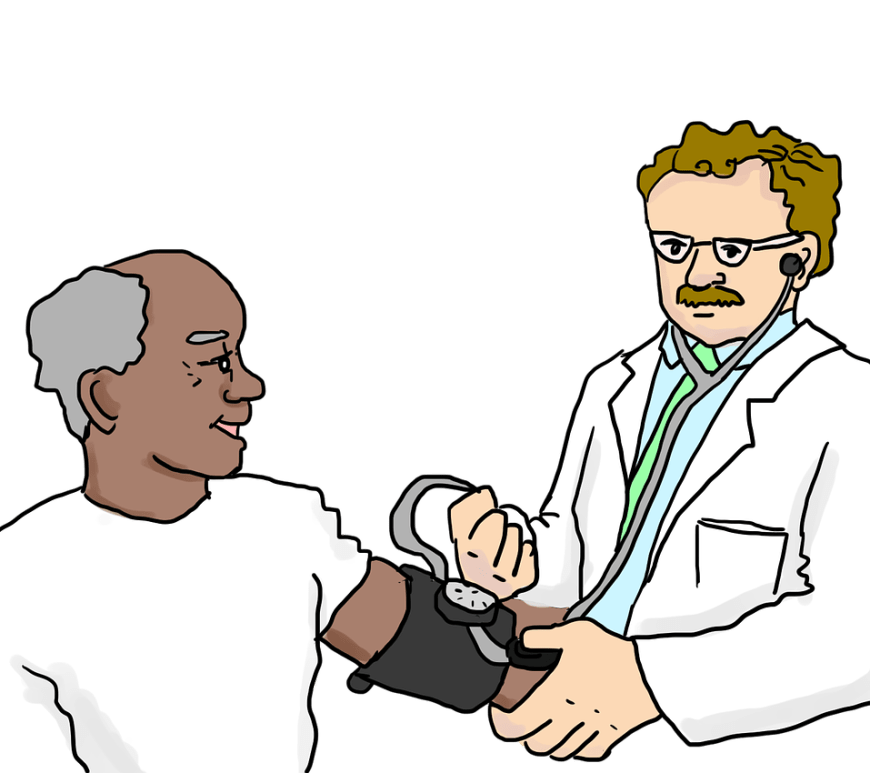
Ayesha Azeem ‘23 Doctors take an oath to treat all patients, regardless of their identity, equally. Unfortunately, this oath is often broken. While this may not be intentional, it still affects a large number of people who put their faith in the healthcare system. Psychologists have attributed this phenomenon to implicit bias, or our subconscious beliefs about other people, which can affect the way healthcare … Continue reading The Effects of Racial Discrimination in Health Care

Maternal Transfer of Allergies to Offspring

Aditi Kaveti ’23 It is estimated that anywhere from 10 to 30 percent of the world’s population is affected by allergies, with thousands more learning to manage their new condition every week. These allergies occur when the immune system, in response to a foreign substance, produces antibodies that bind to cells, which release chemicals that trigger a reaction. Many infants experience allergic responses closely linked … Continue reading Maternal Transfer of Allergies to Offspring

Effect of Radiation Exposure on Trabecular Bone

Aditi Kaveti ‘23 Radiation exposure is extremely harmful because it results in stem cell depletion and compromised bone marrow. These effects contribute to long-term deterioration of many physiological systems and cause the degradation of skeletal systems, which can lead to many fractures.   In a study done in part by Dr. Mei Lin Chan, an assistant professor at Stony Brook University, the interrelationship between the damaged … Continue reading Effect of Radiation Exposure on Trabecular Bone

The association between digital screen time and myopia: A systematic review

Sabah Bari ‘24 With the advancement of technology and the creation of new digital platforms, many individuals have experienced an increase in screen time, which may heighten the risk for many health-related issues, especially in the eyes. Myopia, also known as nearsightedness and shortsightedness, is a condition in which parallel rays are focused in front of the retina. Light rays converge to a focal point … Continue reading The association between digital screen time and myopia: A systematic review

Terahertz Spectroscopy to Improve Burn Injury Assessment

Aditi Kaveti ‘23 Burn injuries are painful, potentially life-threatening, and can often require long and complex treatment. Early and accurate assessment of burn injuries is important to determining the correct path of treatment. However, the severity of burns can be difficult to visually diagnose accurately, and clinical evaluations of burns only have about a 50 to 70 percent accuracy. This complexity allows for a significant … Continue reading Terahertz Spectroscopy to Improve Burn Injury Assessment

Loss of Sense of Smell Caused by COVID-19

Aditi Kaveti ‘23 The coronavirus pandemic has changed our lifestyles as we knew it. As we find ways to stay safe during the pandemic, research continues to bring us new information about COVID-19. One of the earliest and most commonly reported indicators of COVID-19 is the temporary loss of smell, or anosmia. Olfactory cells are the body’s smell nerve cells that are stimulated by the … Continue reading Loss of Sense of Smell Caused by COVID-19