
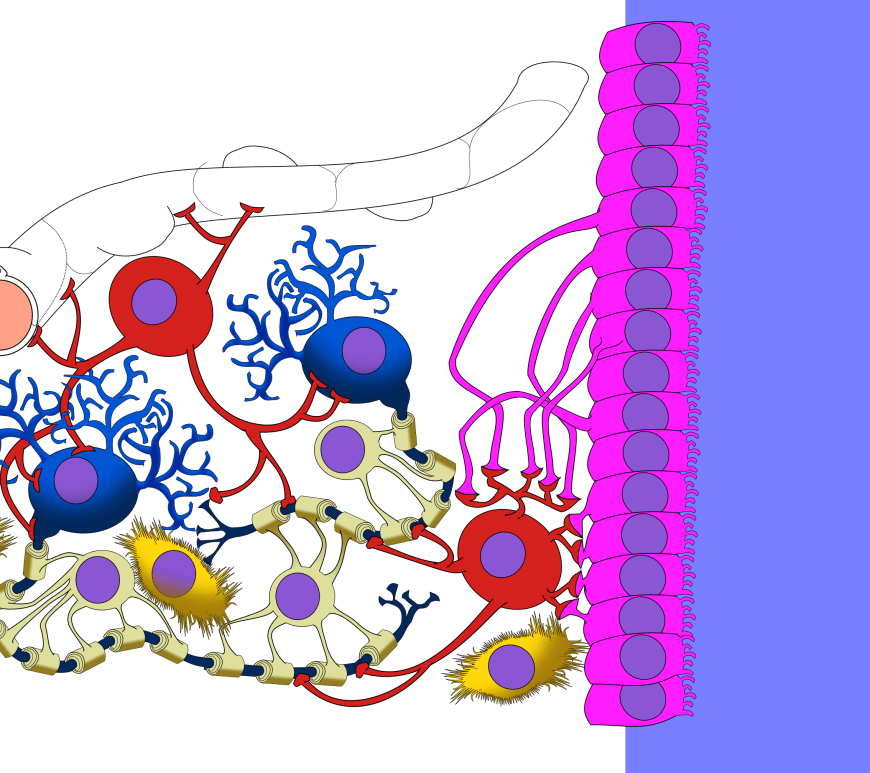
Loss of NG2 Glia Implicated in Emergence of Depression Symptoms

Vignesh Subramanian ’24 Glia are non-neuronal cells that host and provide a number of homeostatic ancillary functions in both the central (CNS) and peripheral (PNS) nervous systems. Though only recently discovered and characterized, glial cells vastly outnumber neurons and provide them with structural support and insular protection, driving their myelination (the process of forming coverings known as myelin sheaths that coat neurons’ signaling axons), facilitating … Continue reading Loss of NG2 Glia Implicated in Emergence of Depression Symptoms

Anti-NMDAR Autoantibodies Disrupt Ionotropic Receptor Signaling

Vignesh Subramanian ’24 N-methyl-D-aspartate receptors (NMDARs) are ligand-gated ion channels whose signaling enables higher-order functions, such as learning and memory, throughout the brain. They are activated by glutamate, the major excitatory neurotransmitter in the central nervous system, and are dynamically distributed across synaptic and extrasynaptic sites. The obligate composition of these protein receptors includes two subunits known as GluN1 paired with combinations of spliced regulatory … Continue reading Anti-NMDAR Autoantibodies Disrupt Ionotropic Receptor Signaling

Presynaptic Inhibition of GABAA Receptors Possible in Thalamocortical Circuits

Vignesh Subramanian ’24 A number of neurodegenerative disease processes, including those of temporal lobe epilepsy, GABA-transaminase deficiency, and traumatic brain injury, involve disruptions to the signalling pathway of gamma-aminobutyric acid (GABA), the chief inhibitory neurotransmitter of the central nervous system. Conventional understanding divides the ability of GABA to block neural signaling into ‘presynaptic inhibition’ – involving suppression of glutamate release,  an excitatory counterpart neurotransmitter – … Continue reading Presynaptic Inhibition of GABAA Receptors Possible in Thalamocortical Circuits