

By Adil Ali Khan, Class of 2029
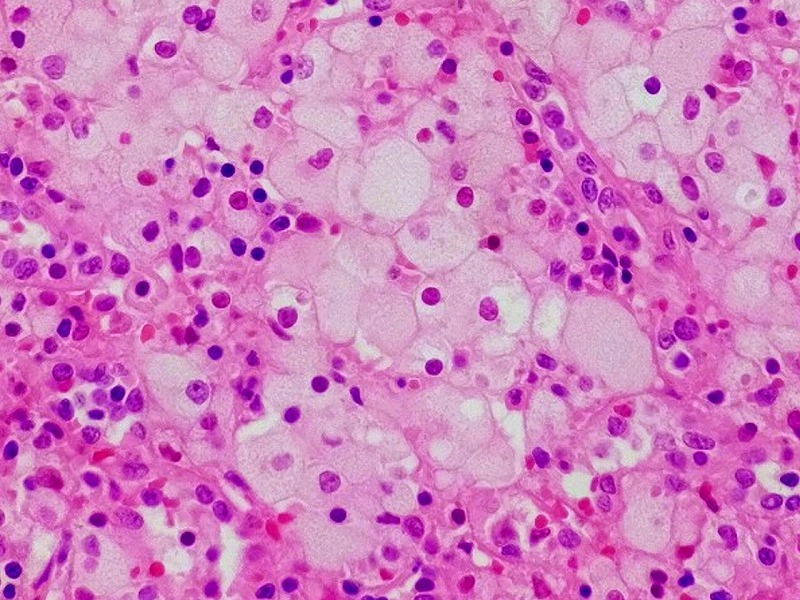
Figure 1: A Niemann Pick cell in the spleen
Acid sphingomyelinase (aSMase) is an enzyme that hydrolyzes sphingomyelin (SM) to ceramide and phosphocholine. Niemann-Pick Disease (NPD) is a lysosomal storage disorder caused by impairment or loss of aSMase. It presents in two forms: Type A, which is severe, and Type B, which is milder. The gene that codes for aSMase produces two different enzymes: lysosomal sphingomyelinase (L-SMase) and secretory sphingomyelinase (S-SMase), which is associated with inflammation. Researchers at Stony Brook University Biological Mass Spectrometry Shared Resource Core and the University of Arizona aimed to define the function of secretory-deficient aSMase variants in NPD. Patients with NPD lack both L-SMase and S-SMase; as do aSMase knockout mice, used as a model for NPD. NPD also causes neurodegeneration, including loss of Purkinje cells—specialized neurons in the cerebellum—which are responsible for motor coordination.
The researchers genetically modified human NPD fibroblasts using lentiviruses to express either normal or mutated forms of aSMase: S507A, S508A, or both. They also created a CRISPR-Cas9 knock-in mouse (S505A) that mimics human mutations, allowing the study of the effects in vivo. They then measured two forms of enzyme activity: L-SMase and S-SMase, through liquid chromatography and tandem mass spectrometry.
The study revealed that mutations eliminate S-SMase activity (even after inflammatory stimulation, which normally increases S-SMase activity), but retain L-SMase activity. S505A mice showed reduced S-SMase activity in blood and no major increase in sphingomyelin levels compared to knockout mice. Moreover, S505A mice retained ~12% L-SMase activity, which was enough to prevent sphingomyelin buildup in the brain and keep lipid levels similar to those of normal mice. Both S507A and S508A target specific serine residues on the aSMase protein involved in the secretion of S-SMase, leading to the selective elimination of S-SMase activity while leaving L-SMase activity mostly intact, similar to S505A. Unlike knockout mice, S505A mice displayed no foam cell accumulation, organ damage, or loss of Purkinje cells, while also displaying normal strength and coordination.
Therefore, the S505A mutation selectively eliminated harmful S-SMase activity associated with inflammation, while preserving enough L-SMase activity to prevent disease. Even low residual enzyme activity (~12%) was sufficient to avoid NPD symptoms. This study raises the possibility of therapeutic application, which could be tested by introducing the S505A mutation into aSMase knockout mice to reveal whether the mutant can reverse the disease rather than merely prevent it.
Work’s Cited:
[1] Beard, C. A., Hermanson, K. N., Snider, J. M., Hara, A., Dahl, B. K., Allopenna, J. J., Marron, M. T., Newcomb, B., Low, B. E., Wiles, M. V., Jenkins, R. W., Obeid, L. M., Hannun, Y. A., & Snider, A. J. (2025). Retention of lysosomal acid sphingomyelinase protects from Niemann-Pick Disease. Neurobiology of disease, 216, 107147. https://doi.org/10.1016/j.nbd.2025.107147
[2] Image retrieved from: https://commons.wikimedia.org/wiki/File:Niemann_pick_cell_in_spleen.jpg


