Light Therapy vs Cognitive Behavioral Therapy

By Meghan Bialt-DeCelie Image Acquired from: https://en.wikipedia.org/wiki/Light_therapy Figure 2: An example of a light source commonly used in light therapy to treat Seasonal Affective Disorder.   With shorter days and winter approaching, over 14 million Americans experience Seasonal Affective Disorder (SAD) or the “winter blues”. Commonly used, light therapy tackles the biological causes of SAD by exposing one to an artificial light for a period of … Continue reading Light Therapy vs Cognitive Behavioral Therapy


Sleeping on the Right Side of the Bed

By Meghan Bialt-DeCelie Image Acquired from: https://en.wikipedia.org/wiki/Sleep_and_weight Figure 1: The lateral sleeping position, found to be the best position for the efficiency of the glymphatic pathway. According to a recent study led by Hedok Lee, PhD and Helene Beneveniste, MD, PhD of Stony Brook University, the position you sleep in affects your body’s efficiency to remove metabolic wastes from the brain in a process called Glymphatic … Continue reading Sleeping on the Right Side of the Bed

Confirmation of Quantum Mechanics

By Shannon Bohman Image acquired from commons.wikipedia.org Figure 1 This picture shows the physics building at Delft University of Technology in the Netherlands.   Netherland scientists of Delft University of Technology claimed to have proven quantum entanglement, the idea that if two particles’ spins are aligned, they can still influence each other at all times, no matter the distance between them. Two diamonds, each containing … Continue reading Confirmation of Quantum Mechanics

Mysterious Die-Off of Saigas in Central Asia

By Shannon Bohman Image acquired from commons.wikipedia.org Figure 1 This picture shows a mother and child saiga in their native Central Asian Steppes.   This past May, the corpses of hundreds of saiga antelopes were found scattered across the Central Asian Steppes. This endangered species had been under close watch due to significant overhunting. Conservationists succeeded in replenishing the population, but over half of the … Continue reading Mysterious Die-Off of Saigas in Central Asia

SBU Research into the Effect of Prolonged Space Travel

By Shannon Bohman Image acquired from: commons.wikipedia.org Figure 1 This picture shows an artist’s rendition of space from a spacecraft. Researchers in Stony Brook’s Department of Psychiatry received two grants from NASA and are currently investigating the effect of long-term space travel on astronauts. The first grant is a three-year project investigating new ways to provide proper psychotherapy to astronauts. Extended voyages into space can cause … Continue reading SBU Research into the Effect of Prolonged Space Travel

New Study Helps Define “Stupidity”

By Lee Ann Santore The word stupid is used daily to describe a wide variety of actions. However, it is unclear of what constitutes something as stupid. A team of psychologists led by Balazs Aczel, from the Institute of Psychology at Eotvos Lorand University, completed a study to obtain a better understanding of the behavior patterns humans regard as “stupid.” Aczel’s team compiled a collection … Continue reading New Study Helps Define “Stupidity”

Targeting Non-Dividing Cells in Cancer

By Cerise Carey Invasive cells, ones that travel from tumor tissue to form new tumors elsewhere within the host, have been the focus of most cancer research. In a recent study, Dr. David Q. Matus, an Assistant Professor in the Stony Brook University Department of Biochemistry & Cell Biology, and his colleagues found that cells in the roundworm nematode C. elegans cannot divide and invade … Continue reading Targeting Non-Dividing Cells in Cancer

More Than a Structural Component: The Vast Biological Functions of Sphingolipids

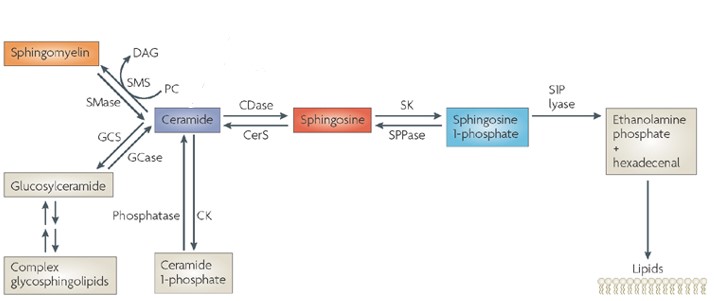
By Ashwin Kelkar Introduction What constitutes a cell?  In a very general sense, the first successful cell-like structures necessitated a biological barrier that would mediate the flow of molecules into and out of their “bodies.”  What developed was the phospholipid bilayer, a semi-permeable membrane intermeshed with various proteins to regulate the passage of important bioactive molecules – ones that regulate cellular responses – in order … Continue reading More Than a Structural Component: The Vast Biological Functions of Sphingolipids

Video Games as a Source for Neural Therapy

By Tasfinul Haque Introduction Invented in 1947, the Cathode Ray Tube Amusement Device allowed people to use an oscilloscope to shoot “missiles” at targets on overlaid transparencies. Since then, video games have become a multi-billion dollar industry, with game developers pushing the limits of graphic technology to create hyperrealistic visuals with engaging plots. The meteoric rise in popularity of video games since the late 1970s … Continue reading Video Games as a Source for Neural Therapy

The Ups and Downs of Undergraduate Research: A Reflection on my Undergraduate Research Experience

By Joshua Kantharia   One of the most common pieces of advice I’ve heard in college is “get into research.” It was a statement that was echoed over and over again and many of my friends took that advice to heart, only to find disappointment. They learned that research was neither easy to get into or be a part of. If you’re having trouble getting … Continue reading The Ups and Downs of Undergraduate Research: A Reflection on my Undergraduate Research Experience

Design and Testing of Amplification Frame for Piezoelectric Energy Harvester

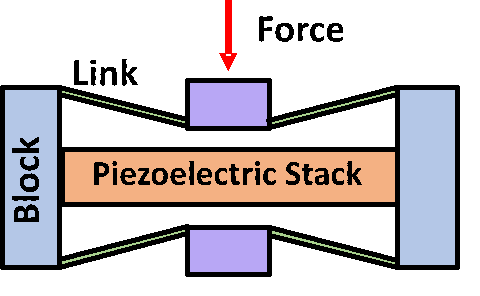
 By Plinio Guzman Department of Mechanical Engineering State University of New York, Stony Brook Stony Brook, NY 11767 Email: plinio.guzman@stonybrook.ed   By Wusi Chen Department of Mechanical Engineering State University of New York, Stony Brook Stony Brook, NY 11767 Email: wusi.chen@stonybrook.edu   Ya Wang Department of Mechanical Engineering State University of New York, Stony Brook Stony Brook, NY 11767 Email: ya.s.wang@stonybrook.edu   By Lei Zuo … Continue reading Design and Testing of Amplification Frame for Piezoelectric Energy Harvester

Dr. Lorna Role on Science, Sculpting, and Success

By Megan Chang Earning both her B.A. in Applied Mathematics and her Ph.D in Physiology from Harvard University, her full professor title at Columbia University, and more awards and honors than can be accounted for, it is safe to say that Dr. Lorna Role is accomplished beyond the norm. She has been a member of Stony Brook’s Department of Neurobiology and Behavior for six years … Continue reading Dr. Lorna Role on Science, Sculpting, and Success