Promoters of Neurodegeneration in ALS

 Sean Krivitsky ‘27 Figure 1. Drosophila melanogaster was used by the Dubnau lab as a model organism to characterize TDP-43 pathology in ALS. TAR-DNA-Binding protein (TDP-43) is an alternative splicing factor that, upon abnormal phosphorylation, can become mislocalized and aggregate in cells. This has been identified as a potential mechanism for the development of impactful neurodegenerative diseases such as amyotrophic lateral sclerosis (ALS), frontotemporal dementia … Continue reading Promoters of Neurodegeneration in ALS

Developing Antibodies to Combat Cancer

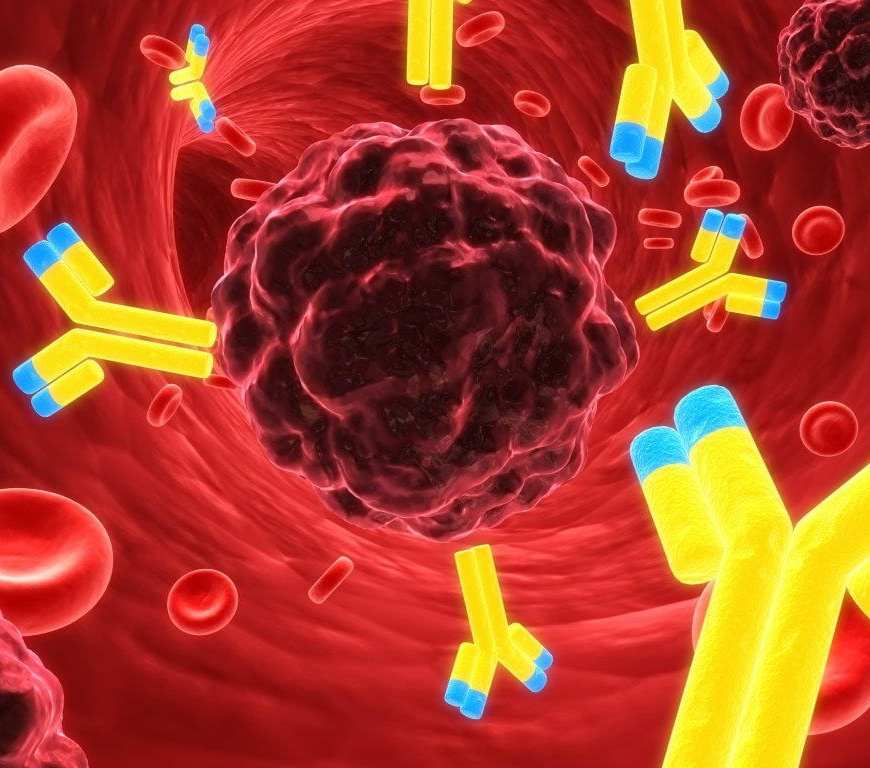
Sean Krivitsky ‘27 Figure 1. Antibodies traveling through the bloodstream. Protein tyrosine phosphorylation is a reversible process in which a phosphate group can be added or removed from tyrosine residues of various proteins by protein tyrosine kinases (PTKs) and protein tyrosine phosphatases (PTPs), respectively. This type of post-translational modification is responsible for regulating many signal transduction pathways in the cell. The activity of a specific … Continue reading Developing Antibodies to Combat Cancer

Urea-Resistability of Shark Myosin: Insights into Protein Stability and Potential Therapeutic Implications

Justin Lim ’26 Figure 1: White shark.jpg Urea, a common byproduct of protein metabolism, is excreted through urine in most urea-producing organisms due to its toxic properties in high concentrations. Specifically, urea’s nitrogen content can destabilize the structure of proteins by weakening their folded structure. Sharks have chemical countermeasures to halt the progression of protein denaturation through the use of trymethylamine N-Oxide (TMAO), a molecule … Continue reading Urea-Resistability of Shark Myosin: Insights into Protein Stability and Potential Therapeutic Implications

HIV Successfully Removed from Animal Genomes

Ellie Teng ‘21 The human immunodeficiency virus type one (HIV-1) is responsible for infecting millions worldwide. Currently, antiretroviral therapy (ART) is being used to slow HIV progression; however, as soon as this treatment is stopped, HIV-1 is reactivated and progresses to acquired immunodeficiency syndrome (AIDS). The reactivation of HIV-1 following the cessation of ART is as a result of the virus’ ability to integrate its … Continue reading HIV Successfully Removed from Animal Genomes

A Pill that Mimics the Immune System

By Anirudh Chandrashekar The role of Y-shaped antibodies to fight viruses, bacteria and different forms of cancers is a heavily researched field.  For many years, researchers have sought to develop and optimize antibodies and other protein-based therapies to supplement and  revitalize the host’s defense system. At the same time, these antibodies have multiple drawbacks; antibodies are generally extremely bulky and need to be administered intravenously. To … Continue reading A Pill that Mimics the Immune System

Engineering Escherichia coli cells to express Melittin in response to the detection of Pseudomonas aeruginosa

By Gurkamal Kaur, Janki Patel, Tenging Lama, Helen Liu, Gregory Poterewicz

Abstract

The growth of antibiotic resistance is quickly becoming a global public health concern. Infections caused by pathogenic bacteria are becoming increasingly difficult to treat due to the misuse, overuse and abuse of antibiotics. In addition, infections caused by some harmful strains of bacteria, particularly gram-negative bacteria, cannot easily be treated with antibiotics or other common forms of treatment. To combat this issue, E. coli were engineered to recognize the pathogenic bacteria Pseudomonas aeruginosa and produce the antimicrobial peptide melittin in response.  In order to do so, nonpathogenic E. coli were transformed with plasmids that control the production of melittin and the reception of communication signals from cells of Pseudomonas aeruginosa.

Continue reading “Engineering Escherichia coli cells to express Melittin in response to the detection of Pseudomonas aeruginosa”