From Sugar to Cancer

By Richard Liang ’18 Sugar has been a widely used household item for centuries. However, a recent study from the University of Texas MD Anderson Cancer Center indicates that this simple condiment can lead to increased cancer metastasis, the spreading of cancer cells to other parts of the body. The experiment focused on feeding mice two separate diets, one predominantly composed of starches and another … Continue reading From Sugar to Cancer

A Potential New Cure for Alzheimer’s

By Richard Liang ’18 Alzheimer’s disease is a chronic neurodegenerative illness that reveals itself primarily in elderly patients. The loss of synapses in the brain leads to memory loss and, more severely, the shutdown of bodily functions. The causes of Alzheimer’s are very poorly understood making early detection particularly difficult. With a lack of early detection, Alzheimer’s is usually discovered too late to be controlled. … Continue reading A Potential New Cure for Alzheimer’s

New Benefits to Lowering Normal Blood Pressure

By Lee Ann Santore ’19 Heart disease is often caused by extended periods of high blood pressure, but its occurrence is not restricted to those individuals with high blood pressure. Traditionally, high blood pressure medications have only been prescribed to patients with systolic blood pressures above the threshold level of 140 mmHg as issued by England’s National Institute for Health and Care Excellence.  However, a … Continue reading New Benefits to Lowering Normal Blood Pressure

Microbiome Technology Developed at Stony Brook

By Shannon Bohman ’19 Stony Brook University recently incorporated breakthrough microbiome technology into nutrient based compositions. The university incorporated these compositions into two patent applications filed to Ortek Therapeutics, Inc. Ortek had been seeking partners to develop and commercialize these compositions into over-the-counter and commercialized products. These nutrient based products, in particular, will efficiently prevent body odor and staph infections. Stony Brook’s Dr. Israel Kleinberg, … Continue reading Microbiome Technology Developed at Stony Brook

A Single-Pill HIV Treatment

By Richard Liang ’18 After extensive use of their multi-drug regimens, many HIV patients begin suffering from kidney impairment and decreased bone density. These pathologies have been recently associated with the chemical tenofovir in the medication regimens. As a response to this, the FDA approved Genvoya, a pill that minimizes tenofovir’s negative side effects. This novel pill combines dosages of active ingredients from standard medications, … Continue reading A Single-Pill HIV Treatment

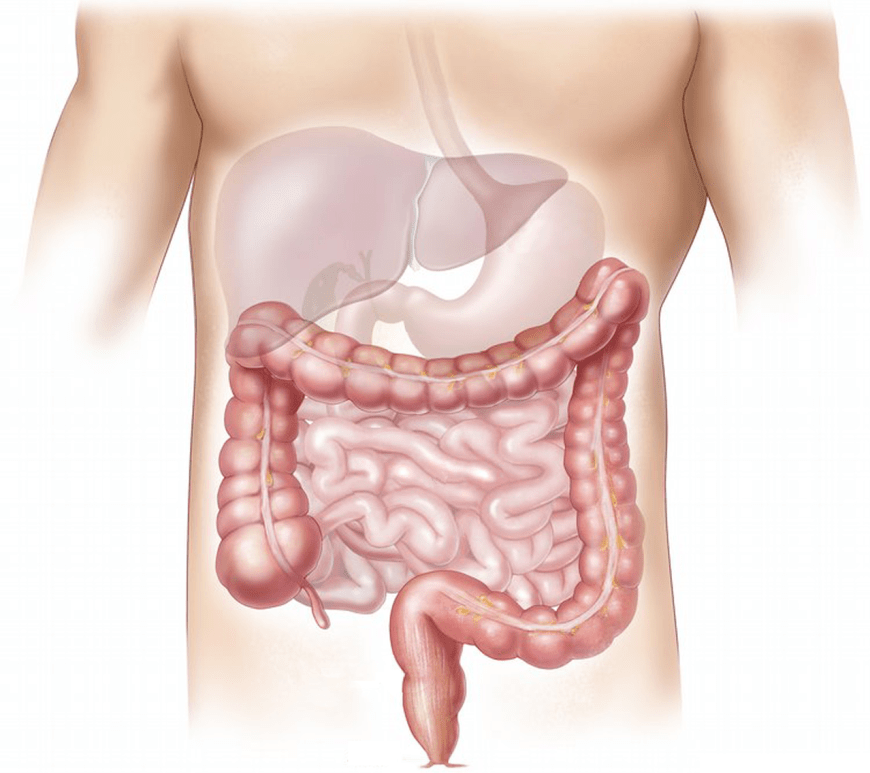
Are There Racial Differences in Cancer?

By Cerise Carey Americans of African descent are at a higher risk for developing gastrointestinal (GI) cancers than other individuals, but are there racially determined differences in the cancer itself? Dr. Ellen Li and her colleagues from Stony Brook University are teaming up with SUNY Downstate and Cold Spring Harbor Laboratory to try to find an answer to this question by looking into the biological … Continue reading Are There Racial Differences in Cancer?

Scientists Penetrate the Blood-Brain Barrier Using Microscopic Bubbles

By Lee Ann Santore The blood-brain barrier acts as a shield to the brain and prevents toxins from reaching the central nervous system. Unfortunately, it also prevents the passage of medicines into the brain. A team of Canadian researchers from the Sunnybrook Health Sciences Centre, led by Todd Mainprize, has developed a technique to penetrate the blood-brain barrier by injecting microscopic bubbles into the bloodstreams … Continue reading Scientists Penetrate the Blood-Brain Barrier Using Microscopic Bubbles

Amblyomma americanum and a New Disease

By Karis Tutuska As bloodsuckers and disease-carriers, ticks are many people’s worst nightmares. However, a recent study conducted by the American Society of Tropical Medicine and Hygiene has shown that the rapid spreading of an aggressively-biting, disease-carrying tick species may be a blessing in disguise. Rocky Mountain spotted fever is an often-deadly disease carried by American dog ticks. Since 2012, the number of reported cases has … Continue reading Amblyomma americanum and a New Disease

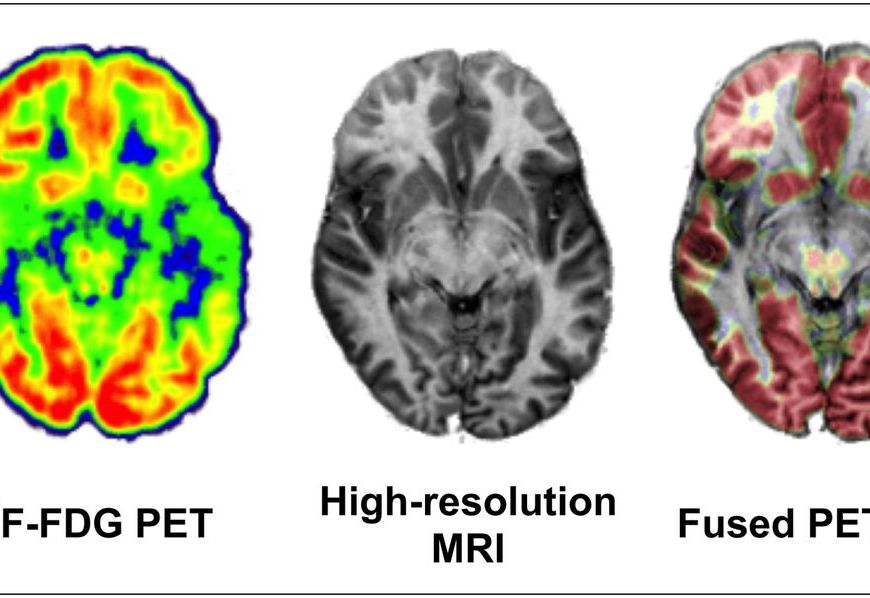
Stony Brook Medicine is among the first in the nation to offer simultaneous PET/MRI

By Surya Chalil As of October 2013, Stony Brook Medicine has become the first site in Long Island and tenth in North America to clinically offer simultaneous whole-body PET/MRI scans. In this new Siemens Biograph mMR hybrid imaging system, molecular information from positron emission tomography is combined with soft-tissue contrasts from magnetic resonance imaging (MRI).  This lowers the body’s exposure to radiation and further  enhances … Continue reading Stony Brook Medicine is among the first in the nation to offer simultaneous PET/MRI

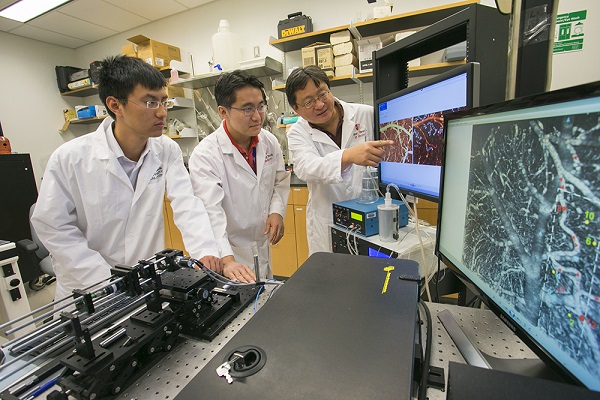
Cerebral Blood Flow Imaging Technique Can be Applied to Disease Diagnosis

By  Marianna Catege Dr. Yingtian Pan, Professor in the Department of Biomedical Engineering at Stony Brook, and his team, have discovered a new imaging technique that allows for a clearer picture of the direction, speed, and quantity of cerebral blood flow. This discovery expands upon and provides an ultrahigh-resolution picture for Stony Brook Medical scientists’ newly developed method for measuring how cocaine interrupts blood flow … Continue reading Cerebral Blood Flow Imaging Technique Can be Applied to Disease Diagnosis

The Immuno-Matrix Skin Patch: A Needleless Approach to Vaccination

By Preston Kung Kataryzna (Kasia) M. Sawicka, a postdoctoral research associate in the Department of Dermatology, won the national Collegiate Inventors Competition for her “Immuno-Matrix” in November 2014. The Immuno-matrix is a skin patch held together by nanofibers to deliver a vaccine through skin absorption; it’s a needleless vaccination that’s as simple and painless as putting on a Band-Aid. The Immuno-matrix has the potential to … Continue reading The Immuno-Matrix Skin Patch: A Needleless Approach to Vaccination

Mechanisms of General Anesthetics

By Sherin Kuriakose What is Anesthesia? The discovery of general anesthetics in 1846 has advanced the work of physicians and surgeons in medical science and clinical care, and has also eased the trauma that surgery can cause for patients. In the past, surgery without anesthesia was the only option, and only the simplest and quickest of operations could be tolerated such as amputations, bladder stones … Continue reading Mechanisms of General Anesthetics