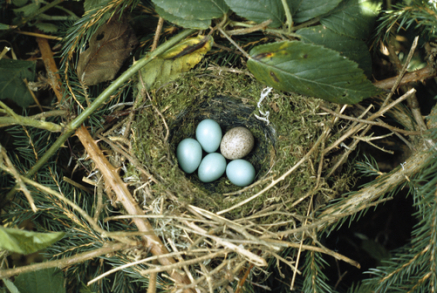
A Cuckoo Bird’s Egg Trick

By Julia Newman ’19 Robins lay blue eggs, sparrows lay speckled eggs, and cuckoos – well, it depends. Cuckoo birds have the ability to lay different colored eggs over time depending on the other common birds in their environment. For example, if robins are abundant in an ecosystem, the cuckoo birds eventually evolve to lay blue eggs.  However, according to studies done at the Norwegian … Continue reading A Cuckoo Bird’s Egg Trick

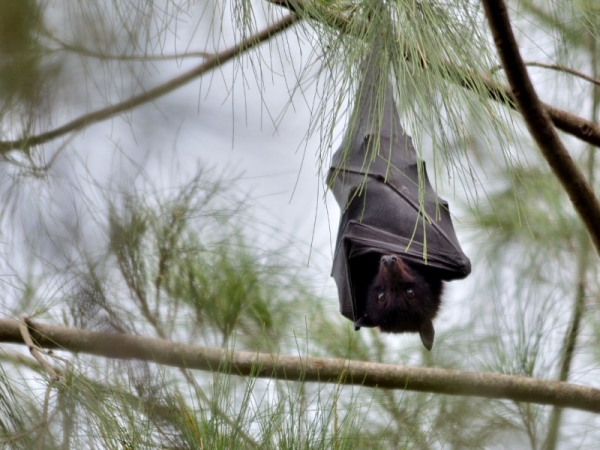
Bat Immune Systems Could Strengthen Our Own

By Julia Newman ’19 Immunologist Dr. Baker, working at the Australian Animal Health Laboratory, has recently discovered something about bats that can protect humans from multiple deadly diseases. Bats are known to be carriers of various diseases such as Ebola and Middle Eastern Respiratory Syndrome.  However, unlike humans, the bats are not affected as carriers, prompting research into their immunological responses. Studies have shown that … Continue reading Bat Immune Systems Could Strengthen Our Own

From Sugar to Cancer

By Richard Liang ’18 Sugar has been a widely used household item for centuries. However, a recent study from the University of Texas MD Anderson Cancer Center indicates that this simple condiment can lead to increased cancer metastasis, the spreading of cancer cells to other parts of the body. The experiment focused on feeding mice two separate diets, one predominantly composed of starches and another … Continue reading From Sugar to Cancer

An Interview with Dr. Harvard Lyman

By Eman Kazi ’15 Professor Harvard Lyman has been a member of the Stony Brook community since 1968.  He’s become a bit of a legend in the Department of Biochemistry and Cell Biology and was the lecturer for the course BIO 310, Cell Biology, for a number of years until he retired in the Spring 2015. 1. Where did you complete your undergrad, graduate school … Continue reading An Interview with Dr. Harvard Lyman

Suppressing Our Sweet Tooth

By Richard Liang ’18 Sugar is something most people cannot live without. Although it can bring happiness to individuals that indulge in its sweetness, it can present a serious problem for diabetics and those suffering from obesity. A study recently published in Cell Metabolism by a research group at the University of Iowa has discovered a hormone that can suppress sugar cravings in mice. Hepatokine … Continue reading Suppressing Our Sweet Tooth

A Potential New Cure for Alzheimer’s

By Richard Liang ’18 Alzheimer’s disease is a chronic neurodegenerative illness that reveals itself primarily in elderly patients. The loss of synapses in the brain leads to memory loss and, more severely, the shutdown of bodily functions. The causes of Alzheimer’s are very poorly understood making early detection particularly difficult. With a lack of early detection, Alzheimer’s is usually discovered too late to be controlled. … Continue reading A Potential New Cure for Alzheimer’s

Performing Under Pressure

By Meghan Bialt-DeCelie ’19 According to new research led by Dr. Michiko Yoshie of the University of Sussex, performing on a stage with an audience is more stressful than practicing alone for professional performers. The research involved the study of several cases. In one case, participants were asked to perform a task while watching a video of two people observing them. In another case, they performed … Continue reading Performing Under Pressure

The Virtual Path to Assessing Alzheimer’s in Humans

By Meghan Bialt-DeCelie ’19 Scientists have reported that they have developed an analogous rodent test that could aid in Alzheimer research for humans. The Morris Maze Test assesses the ability of rodents with Alzheimer’s disease to reach a pedestal in a water-filled arena. During the assessment, rodents attempt to reach the pedestal in a number of trials. In the first trial, the pedestal is shown … Continue reading The Virtual Path to Assessing Alzheimer’s in Humans

Tegu Lizard Displays Seasonal Endothermy

By Shannon Bohman ’19 Most mammals are endothermic, meaning they generate their own body heat. Some creatures, called ectotherms, are unable to self-sustain a body temperature above the surrounding temperature. However, researchers at the University of Alberta in Canada and the University of Melbourne in Australia have found a particular ectotherm, the tegu lizard, that often displays endothermic characteristics. During their reproductive season, tegu lizards … Continue reading Tegu Lizard Displays Seasonal Endothermy

Possible Ninth Planet in the Outer Solar System

By Shannon Bohman ’19 Planetary scientists, Konstantin Batygin and Mike Brown, of the California Institute of Technology, claim to have solid evidence of a new, ninth planet in our solar system. This planet, like other objects in space, is too far to be observed directly. Instead, its existence has been inferred. Six predetermined bodies on the outskirts of our solar system that are roughly the … Continue reading Possible Ninth Planet in the Outer Solar System

2015 Named Hottest Year on Record

By Shannon Bohman ’19 The National Oceanic and Atmospheric Association reported that 2015 has replaced 2014 as the hottest year on historical record. An unusually large El Niño pattern in the Pacific Ocean contributed to these record temperatures. However, most of this can be explained by global warming created due to the emission of greenhouse gases. As the atmosphere warms, it holds more water vapor. … Continue reading 2015 Named Hottest Year on Record

Positive Body Image Campaign Causes Decline in Women’s Health

By Lee Ann Santore ’19 Many researchers suggest that it is in the best interest for consumers to ignore the “body size issue” for the sake of their physical and mental health. An experiment conducted by Lily Lin, of California State University, and Brent McFerran, of Simon Fraser University, investigated how strongly advertisements can influence a woman’s health choices. Women participating in the study were … Continue reading Positive Body Image Campaign Causes Decline in Women’s Health