Algae May Be The Key To Curing Cancer

By Julia Newman ’19 Newly discovered properties of blue-green algae may make it a better treatment for brain tumors than any method or drug used in the past. Although this type of algae, also known as cyanobacteria, can be traced back over two billion years, the effect of the coibamide A found within cyanobacteria has only been discovered now. Most cancer cells undergo a process … Continue reading Algae May Be The Key To Curing Cancer

Antibiotics Do Not Affect Gene Swapping In Bacteria

By Meghan Bialt-DeCelie ’19 Antibiotics are becoming increasingly ineffective as bacteria rapidly develop resistance to them. Scientists once believed that antibiotics promote conjugation, a process in which the DNA of bacteria can be swapped for more helpful genes in order to develop a resistance. In a study led by Dr. Lingchong You of Duke University, researchers were able to determine that antibiotics actually do not increase … Continue reading Antibiotics Do Not Affect Gene Swapping In Bacteria

Filtering Power Plant Exhaust with a CO2 Fastlane

By Meghan Bialt-DeCelie ’19   With the increasing amount of carbon dioxide gas contributing to global climate change, scientists are struggling to find strategies to reduce it. The usage of hybrid polymer-MOF membranes is being explored as a possible strategy because of their energy and cost efficiency in comparison to previous methods of gas separation. However, these membranes need to be improved in their carbon dioxide … Continue reading Filtering Power Plant Exhaust with a CO2 Fastlane

Hormone Producing Microbes Protects from Plant Pathogens

By Meghan Bialt-DeCelie ’19 Using microbes is one of the more unique ways of protecting plants from abiotic and biotic stresses of the environment. Researchers from the University of Copenhagen discovered a novel method for bacteria to produce a plant hormone called cytokinin that can biocontrol plants. Cytokinin is responsible for a wide range of functions including cell division, nutrient mobilization, and seed germination. There are … Continue reading Hormone Producing Microbes Protects from Plant Pathogens

Factors affecting disaster preparedness in tsunami-prone areas

By Shannon Bohman ’19 Following the 2012 Indian Ocean earthquakes, Dr. Witvorapong and his colleagues surveyed 557 households in tsunami-prone areas of Phang Nga, Thailand. They focused on the relationship between social participation and disaster risk reduction actions, such as stockpiling supplies, making family emergency plans, and promoting risk reduction actions via community involvement. To analyze the data, the scientists employed a multivariate probit model. … Continue reading Factors affecting disaster preparedness in tsunami-prone areas

Parental phenotype may affect offspring phenotype

By Shannon Bohman ’19 An individual’s genotype, composed of the maternal and paternal’s genomes, is expressed physically as a phenotype.  A team of Netherland geneticists found that the phenotype of an offspring depends partly on the environmental factors experienced by his or her parents. One species in which such transgenerational effects are evident is Arabidopsis thaliana, a plant species whose small genome and short generation … Continue reading Parental phenotype may affect offspring phenotype

The Math of Conspiracy Theories

By Shannon Bohman ’19 Fig. 1 Almost everyone has heard of or even bought into a conspiracy theory. A conspiracy, or the idea that certain groups secretly manipulate important events and power structures, can be political, scientific, or even supernatural. Some conspiracies involving the innate belief that vaccines are dangerous have serious allegations and have sparked great public interest for the truth. Dr. David Robert … Continue reading The Math of Conspiracy Theories

Breaking Barriers for DNA Insertion

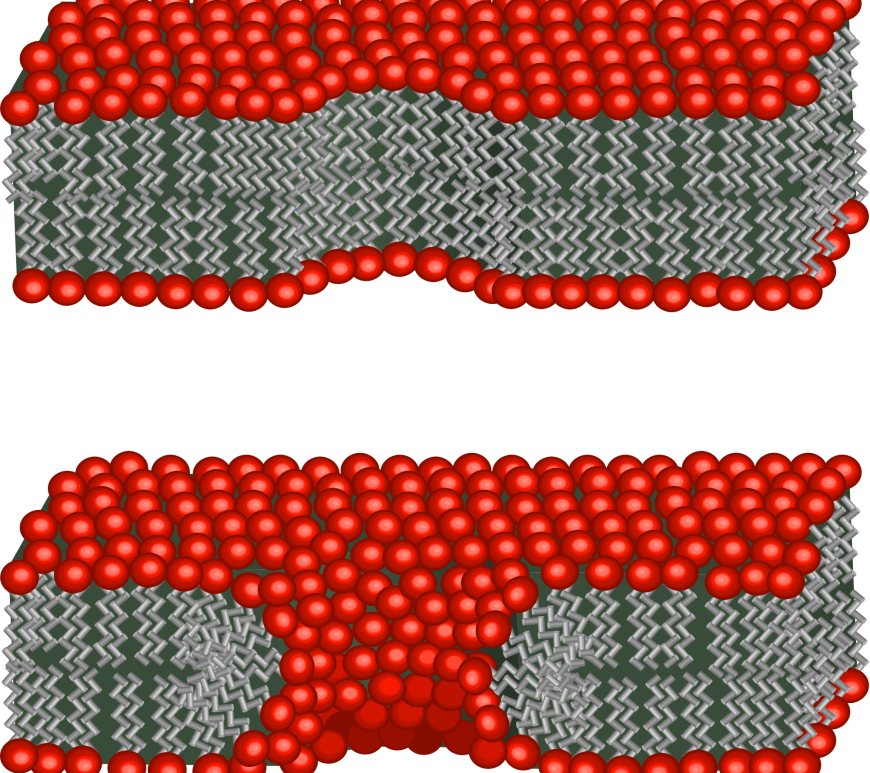
By Meghan Bialt-DeCelie ’19 Fig. 1: To insert foreign DNA, electroporation is used to form pores on the cell membrane. Genetic engineering involves inserting foreign DNA into cells to perform new functions. In order for DNA to pass the cell membrane, cells are put in a specifically calibrated electric field that opens pores in the membrane in a process called electroporation. Each organism has a … Continue reading Breaking Barriers for DNA Insertion

Graphene Optimization with Common Glass

By Meghan Bialt-DeCelie ’19 Graphene, a material made of a two-dimensional sheet of carbon, is effective in durability and the conductivity of electricity. However, it has had trouble being commercialized. In a process called grapheme doping, chemicals were introduced to improve the electron density of grapheme and it eventually made the material more vulnerable do degradation. In collaboration with researchers from Department of Energy’s (DOE) Brookhaven … Continue reading Graphene Optimization with Common Glass

A New View of Cancer Cells

By Meghan Bialt-DeCelie ’19 Most scientists study live cancer cell samples by preparing them on a glass slide and coverslip. However, this method often compresses the sample. Since cancer cells are very sensitive to their surroundings, the compression of the slide affects their behavior and may interfere with the results and overall understanding of cancer cell interactions. Researchers from UT Southwestern Medical Center have designed a … Continue reading A New View of Cancer Cells

Tardigrades Survive & Thrive After Deep Freeze

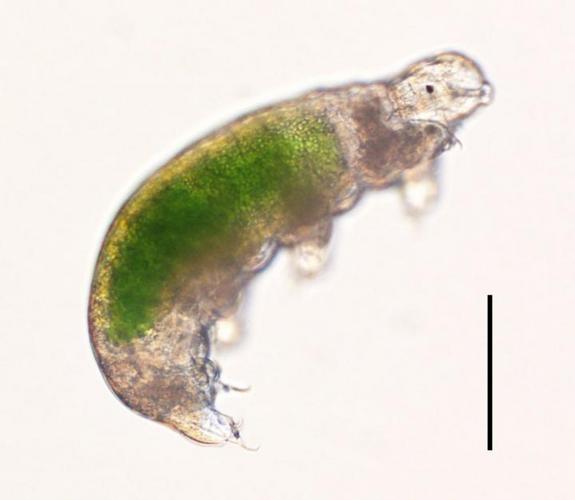
By Julia Newman ’19 After thirty years of a frozen, hibernation-like state, two tardigrades have not only “awakened” but have already begun to reproduce. Back in 1983, these microscopic water bears were found living in an Antarctic moss at temperatures as low as -20 degrees Celsius. Scientists that previously knew of the tardigrades’ ability to survive in extreme conditions experimented with two specimen and an … Continue reading Tardigrades Survive & Thrive After Deep Freeze

Bat Immune Systems Could Strengthen Our Own

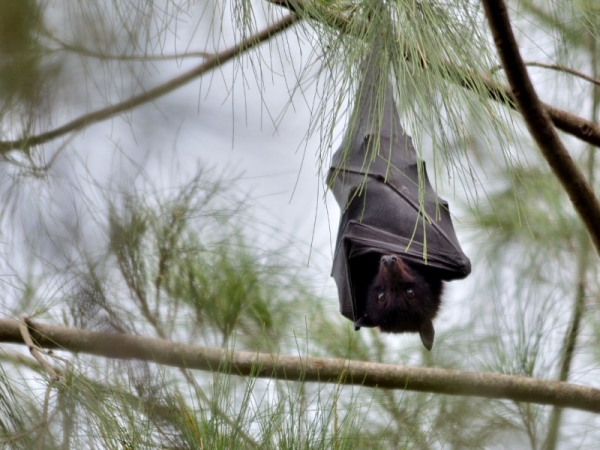
By Julia Newman ’19 Immunologist Dr. Baker, working at the Australian Animal Health Laboratory, has recently discovered something about bats that can protect humans from multiple deadly diseases. Bats are known to be carriers of various diseases such as Ebola and Middle Eastern Respiratory Syndrome.  However, unlike humans, the bats are not affected as carriers, prompting research into their immunological responses. Studies have shown that … Continue reading Bat Immune Systems Could Strengthen Our Own