Assessing the Risk: The Susceptibility of a Cancer Patient to Acute Kidney Injury

By Riya Gandhi ‘22 Due to their ability to purify blood and remove wastes, the kidneys are regarded as the filtration system for the human body. As such, they are one of the most crucial organs. However, what happens one or both of your kidneys are damaged, or worse, fail completely? Such an occurrence is known as acute kidney injury (AKI) and can transpire within … Continue reading Assessing the Risk: The Susceptibility of a Cancer Patient to Acute Kidney Injury

Invasion of the Gboxins: Inhibiting the Proliferation of Glioblastoma Cells

By Riya Gandhi ‘22 The aggressive proliferation of glioblastoma cells is characteristic of glioblastoma multiforme (GBM), a fatal cancer of the brain. As much as treatments may help, patients with this cancer typically relapse. Furthermore, radiotherapy and chemotherapy unintentionally target and poison normal proliferating cells, thereby harming the wellbeing of the patients. However, under principle investigator Dr. Yufeng Shi, researchers at the Cancer Biology & … Continue reading Invasion of the Gboxins: Inhibiting the Proliferation of Glioblastoma Cells

Reducing Exhaustion in Entrepreneurs Through Mindfulness Exercises

Raymond Cheung ‘22 Entrepreneurs play an essential role in developing innovations and redefining the way businesses operate. However, entrepreneurship is arduous and often causes entrepreneurs to work until they are exhausted to achieve their goals. Although it may not be possible to prevent exhaustion, mindfulness exercises can potentially mitigate the effect of exhaustion. Researchers at Oregon State University present promising findings of the effect of … Continue reading Reducing Exhaustion in Entrepreneurs Through Mindfulness Exercises

Neutrophils Escort Circulating Tumor Cells and Increase Metastatic Potential

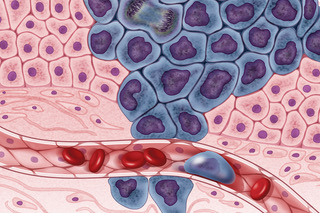
By Nicole Zhao ’20 Numerous cancer research projects are dedicated to investigating the primary tumor and its microenvironment. Though this is undoubtedly important, the role of immune cells during cancer dispersion in the blood cells is largely uncharacterized. Circulating tumor cells (CTCs) lead to metastasis of several types of cancers and its levels are often a predictor of survival rate. These cells are often found … Continue reading Neutrophils Escort Circulating Tumor Cells and Increase Metastatic Potential

South Asians Have the Highest Rates of Heart Disease

By Nicole Zhao ’20 Heart disease is the leading cause of death for both men and women worldwide. However, people of South Asian descent have a higher death rate from heart disease than any other group. Following a variety of diets, from omnivorous to vegetarian, South Asians are four times more likely to be diagnosed with heart disease even at normal body weight and tend … Continue reading South Asians Have the Highest Rates of Heart Disease

Sleep Modulates Hematopoiesis and Protects Against Atherosclerosis

By Nicole Zhao ’20 Numerous pathological conditions such as obesity, diabetes, cancer, and cardiovascular disease have been connected to insufficient or interrupted sleep. However, little is known about the specific mechanisms by which sleep maintains health. In this study, it was found that sleep regulates hematopoiesis and protects against atherosclerosis in mice. Hematopoiesis is the process of forming blood cellular components from stem cells. Research … Continue reading Sleep Modulates Hematopoiesis and Protects Against Atherosclerosis

How audio training can impact the spatial cognition of visually impaired children

By Kavindra Sahabir ‘21 One of the biggest challenges for helping anyone with a sensory impairment is training the brain in making up for the missing sense. In the case of people born with a sensory impairment, it is easier to undergo such training successfully at earlier ages due to the plasticity of the brain, which allows for changes to take effect quicker. A study … Continue reading How audio training can impact the spatial cognition of visually impaired children

The effect of diabetes on fingernail quality

By Kavindra Sahabir ‘21 In our current public understanding, Type 2 diabetes (T2D) is associated with the need for sugar-free foods and blood sugar monitors. Beyond a high blood sugar level however, it also causes chronic degradation and damage to nerves, joints, and other bodily tissues. A study done by Dr. Silhota and team endeavored to determine whether the fingernail could be a useful site … Continue reading The effect of diabetes on fingernail quality

Metabolic Reactions Activated During 58-hour Fasting

By Ellie Teng ‘21 Fasting is an ancient component in numerous religions and cultures. Individuals seeking weight loss often practice fasting, making it a prominent topic in the nutrition field. A team of scientists from the Okinawa Institute of Science and Technology Graduate University and Kyoto University recently found that fasting comes with innumerable health benefits. Blood samples from four healthy individuals who fasted for … Continue reading Metabolic Reactions Activated During 58-hour Fasting

Fruit and Vegetable Consumption and Well-being

By Ellie Teng ‘21 Fruits and vegetables have always been linked to good physical health, but results from the UK Household Longitudinal Survey demonstrate a positive association between fruits and vegetables, and psychological well being. Controlling for diet, health, and lifestyle, researchers found a clear relationship between the amount of fruits and vegetables consumed and mental state. In conducting the survey, researchers identified the three … Continue reading Fruit and Vegetable Consumption and Well-being

Protein WTp53: Fights Tumors or Boosts Cancer?

By Ellie Teng ‘21 A prominent protein in cancer research, p53, is known for its cancer fighting abilities. p53 suppresses the initiation of tumor growth by inhibiting the cancer metabolic switch from oxidative phosphorylation to glycolysis. Glycolysis is attributed to cancer metabolism and is required for tumorigenesis, or the formation of tumors. Essentially, p53 protects the genome against mutations and prevents the mutations from being … Continue reading Protein WTp53: Fights Tumors or Boosts Cancer?

BH4’s Role in T- Cell Proliferation in Autoimmunity and Cancer

By Allan Mai ‘20 BH4 is an important regulator of many bodily functions. Among its most important functions are its involvement in the production of monoamine neurotransmitters, its generation of nitric oxide, and its role in pain. However, Shane Cronin and his team recently uncovered another important function of this cofactor: proliferation of T cells, which are an integral part of the immune response. Inhibitions … Continue reading BH4’s Role in T- Cell Proliferation in Autoimmunity and Cancer