Color Adaptation in the Brown Shrimp Crangon crangon

Zhifei Zeng ’23 Many animals have the ability to rapidly change color as a means to adjust to different environments, thermoregulate, and even communicate with other members of their species. This color adaptation is a complex subject, often related to environmental factors, animal behavior, visual perception, and cellular physiology. Specifically, for crustaceans living in intertidal systems where biological and environmental factors vary on multiple spatial … Continue reading Color Adaptation in the Brown Shrimp Crangon crangon

Dancing: The Secret to Reducing Childbirth Pain

Peter Gillespie ’25 Birth is a psychologically traumatic experience for more than 40% of women. In fact, pain during labor has been linked to depression in the weeks after birth. Current methods to reduce pain predominantly focus on pharmacological and physical support, neglecting the psychologically taxing aspect of childbirth. To maximize comfort, it is vital to incorporate emotional support into pain relief for mothers as … Continue reading Dancing: The Secret to Reducing Childbirth Pain

The Role of OCD in Oral Health of Affected Individuals

Thumyat Noe ’23 Obsessive-compulsive disorder (OCD) is a mental health disorder characterized by disturbing thoughts and repetitive behaviors. Presentations of OCD include excessive cleaning and extreme fixation with symmetry or order. Psychiatrists treat OCD through prescribing antidepressants and selective serotonin uptake inhibitors. According to previous studies, mental health disorders can reduce oral health by increasing inflammatory biomarkers. However, OCD patients exhibit unique obsessions with cleaning … Continue reading The Role of OCD in Oral Health of Affected Individuals

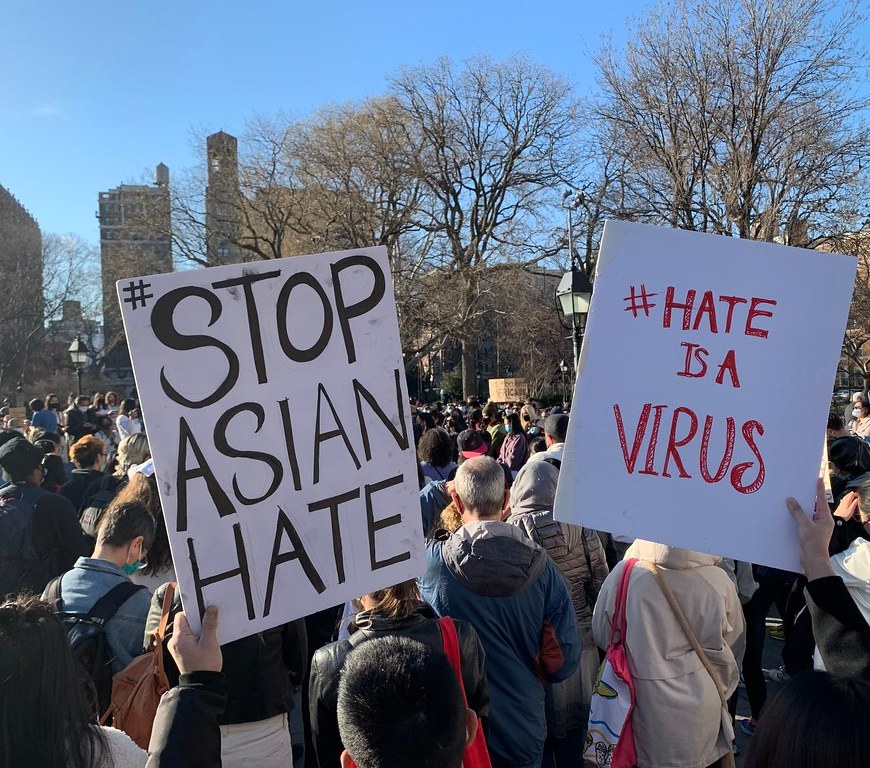
Discrimination During COVID-19 Exacerbates Academic Disconnect of Asian Students

Zhifei Zeng ’23 Since January 2020, the world has been suffering from a pandemic brought about by COVID-19. In addition to the direct health threat posed by the virus, a survey showed that the rate of racist and xenophobic attacks against Asians increased all over the globe, especially in the United States. In fact, the Stop AAPI Hate Reporting Center has reported 3,800 hate crimes … Continue reading Discrimination During COVID-19 Exacerbates Academic Disconnect of Asian Students

Novel Early Childhood Predictors for Eating Disorders Give Hope for Improved Treatment

Peter Gillespie ’25 Eating disorders are dangerous and severely impairing mental illnesses that have become extremely prevalent in our youth, affecting up to 13% of young women in particular. Previous studies have identified risk factors, such as sleeping habits and parental eating tendencies, but these findings are inconsistent and focus solely on adolescents, limiting their scope. Dr. Garbrielle Carlson at Stony Brook University researches risks … Continue reading Novel Early Childhood Predictors for Eating Disorders Give Hope for Improved Treatment

South Asians Have the Highest Rates of Heart Disease

By Nicole Zhao ’20 Heart disease is the leading cause of death for both men and women worldwide. However, people of South Asian descent have a higher death rate from heart disease than any other group. Following a variety of diets, from omnivorous to vegetarian, South Asians are four times more likely to be diagnosed with heart disease even at normal body weight and tend … Continue reading South Asians Have the Highest Rates of Heart Disease

Edible Hydrogel Pill as Alternative to Implantation

By Mariam Malik ‘22 Hydrogels are known for absorbing significant amounts of water and having a high biocompatibility, while also possessing a high level of mechanical conformity and the ability to self-heal. Devices that physiologically monitor the body are usually made from materials with a high biocompatibility, including certain metals, silicon, and ceramics. But installing these devices require intrusive procedures. However, researchers at the Massachusetts … Continue reading Edible Hydrogel Pill as Alternative to Implantation

Social Interactions Possibly Linked to Cerebellum

By Mariam Malik ‘22 The cerebellum, a five-centimeter wide part of the hindbrain, was initially thought of as having one major function: coordinating motor functions and balance. But new research on mice from the Albert Einstein College of Medicine in New York City shows that the remarkable cerebellar cortex may play a part in our social interactions as well. Kamran Khodakhah and colleagues were aware … Continue reading Social Interactions Possibly Linked to Cerebellum

Cancer Cells Hijack Immune Cells

By Allan Mai ‘20 A sure sign of the progression of cancer occurs when tumor cells from the initial site of development breaks off and enters the bloodstream, invading other healthy tissue. A recently published study conducted by Barbara Szczerba and her team from the Cancer Metastasis Lab at the University of Basel found that circulating tumor cells (CTCs) are associated with white blood cells, … Continue reading Cancer Cells Hijack Immune Cells

Global Disease Outbreaks Linked to El Niño

By Allan Mai ‘20 El Niño is a complex series of weather patterns that occurs off the coast of South America. While the last El Niño occurred three years ago, the unusually warm weather and nutrient-poor water caused a series of events that continues to affect plant and animal and life, especially those that are responsible for transmitting a disease from one organism to another. … Continue reading Global Disease Outbreaks Linked to El Niño

The Unlikely Relation Between Gut and Brain

By Allan Mai ‘20 With the high selectivity of the blood-brain barrier, it appears unlikely that microorganisms in the stomach could ever be able to reach the brain. However, past studies that have suggested major correlation between depression and specific gut bacteria and even correlation between social behavior and the activities of certain gut bacteria have sparked intense research regarding the “gut-brain” axis. Among these … Continue reading The Unlikely Relation Between Gut and Brain

Protecting You from Yourself: The Function of Interleukin-22 Against Genotoxic Stress

By Riya Gandhi ‘22 Genotoxic stress is defined as an agent that disrupts or impairs genetic information within a cell and leads to mutations. If not repaired, these mutations often develop into cancer. Within epithelial stem cells, for example, there is a pathway called the DNA damage response (DDR) that halts the cell cycle and induces DNA repair or destruction of impaired cells through apoptosis. … Continue reading Protecting You from Yourself: The Function of Interleukin-22 Against Genotoxic Stress