
Mature Oligodendrocytes Demonstrate Delayed Cell Death by Alternate Mechanism

By Vignesh Subramanian, Class of 2024 Figure 1: A myelinating oligodendrocyte in a murine brain.  Oligodendrocytes are specialized glial cells in the central nervous system primarily responsible for myelination, the process of ensheathing the axons of neurons in a lipid-rich membrane known as myelin, which insulates the nerve fibers and speeds up the transmission of the action potentials they conduct. Oligodendrocytes are the products of … Continue reading Mature Oligodendrocytes Demonstrate Delayed Cell Death by Alternate Mechanism

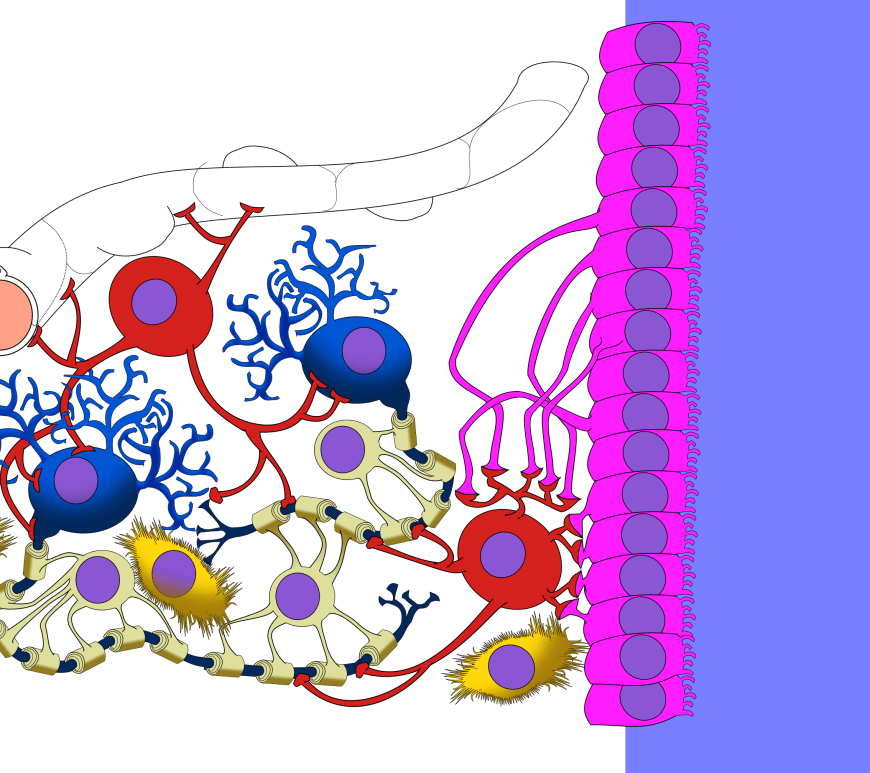
Loss of NG2 Glia Implicated in Emergence of Depression Symptoms

Vignesh Subramanian ’24 Glia are non-neuronal cells that host and provide a number of homeostatic ancillary functions in both the central (CNS) and peripheral (PNS) nervous systems. Though only recently discovered and characterized, glial cells vastly outnumber neurons and provide them with structural support and insular protection, driving their myelination (the process of forming coverings known as myelin sheaths that coat neurons’ signaling axons), facilitating … Continue reading Loss of NG2 Glia Implicated in Emergence of Depression Symptoms

NSC-Derived Antibody Proves a Selective NSC Marker

Vignesh Subramanian ’24 Neural stem cells (NSCs) are multipotent cells capable of differentiating into the major types of mature cells in the central nervous system (CNS) – neurons and glia – and giving rise to unlimited generations of those cells. Alongside progenitor cells, which are descended from NSCs and differentiate into specific target cells, NSCs are critical in advancing neurogenesis, the development of neurons from … Continue reading NSC-Derived Antibody Proves a Selective NSC Marker