A New Drug For Kidney Disease

by Sahil Rawal (’19) Type 2 diabetes is a serious disease that has been connected with organ failures throughout the body. One example of this is kidney disease, which has been shown to develop in 35% of people with Type 2 diabetes. Current treatments for kidney disease involve glucose-controlling systems and RAAS-blocking agents, but these therapies still leave patients at a high risk for death. … Continue reading A New Drug For Kidney Disease

New Vaccines Are Stronger Than Ever

by Julia Newman (’19) A vaccine developed by a new technique at the University of Buffalo in New York has capabilities beyond any previously created vaccine. These new vaccines, unlike their predecessors, have both natural bacterial and man-made polymer components, which allow them to have multiple mechanisms for the delivery of antigens within the vaccine. They can now be delivered not only actively, as they … Continue reading New Vaccines Are Stronger Than Ever

Predictors of Tuberculosis Found in HIV/AIDS Patients

by Jenna Mallon (’18) Although the dangers of tuberculosis (TB) are widely known, many people do not know that a large percent of tuberculosis patients are also HIV positive. This issue is especially prevalent in Africa, Ethiopia specifically, where TB has been a large public health issue for over fifty years. This large health epidemic prompted Mulugeta Dalbo of the Arba Minch Health Science College … Continue reading Predictors of Tuberculosis Found in HIV/AIDS Patients

Chromosomal Studies Lead to Advancements for Alzheimer’s Disease

by Sahil Rawal (’19) Alzheimer’s disease is a well-known neurodegenerative disease that commonly affects people of older age. Although scientists have been able to connect different lifestyle factors with the onset of Alzheimer’s, the basic molecular mechanisms are still not completely understood. Currently, there are many ongoing studies that aim to gain more information on Alzheimer’s disease and the etiologies behind the devastating disease. Studies … Continue reading Chromosomal Studies Lead to Advancements for Alzheimer’s Disease

The Health Consequences of Eating Potatoes

by Sahil Rawal (’19)   Potatoes have been a staple in our diet for a very long time; they were recently added to the US healthy meals program after they were shown to increase potassium levels and lower blood pressure. Despite this, the effect of increased consumption of potatoes on blood pressure is still unclear. As a result, researchers from Brigham and Women’s Hospital decided … Continue reading The Health Consequences of Eating Potatoes

Antibiotics Do Not Affect Gene Swapping In Bacteria

By Meghan Bialt-DeCelie ’19 Antibiotics are becoming increasingly ineffective as bacteria rapidly develop resistance to them. Scientists once believed that antibiotics promote conjugation, a process in which the DNA of bacteria can be swapped for more helpful genes in order to develop a resistance. In a study led by Dr. Lingchong You of Duke University, researchers were able to determine that antibiotics actually do not increase … Continue reading Antibiotics Do Not Affect Gene Swapping In Bacteria

Breaking Barriers for DNA Insertion

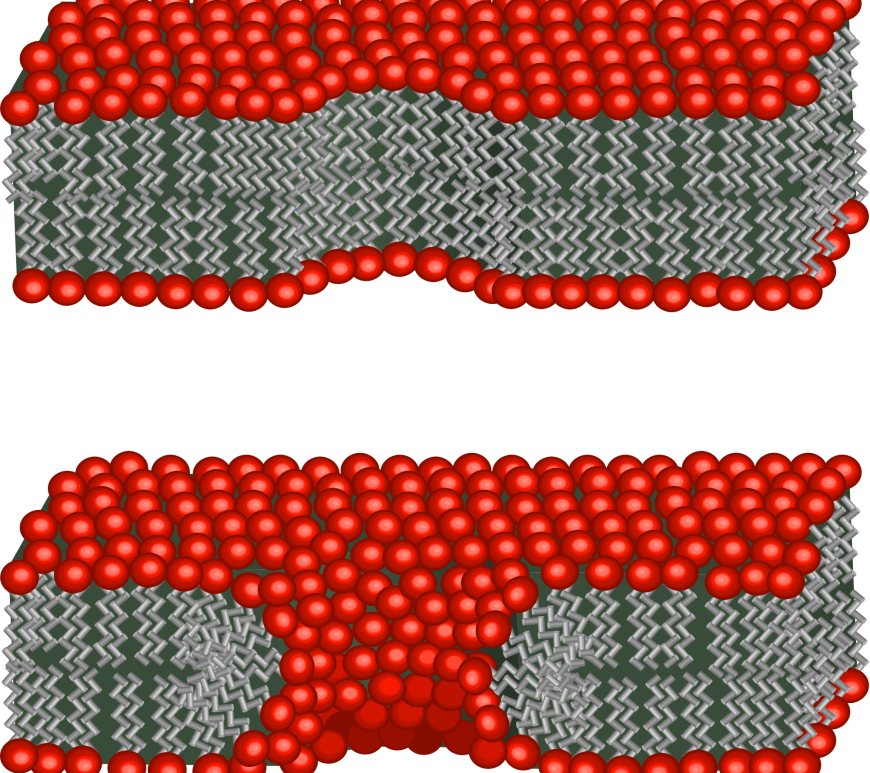
By Meghan Bialt-DeCelie ’19 Fig. 1: To insert foreign DNA, electroporation is used to form pores on the cell membrane. Genetic engineering involves inserting foreign DNA into cells to perform new functions. In order for DNA to pass the cell membrane, cells are put in a specifically calibrated electric field that opens pores in the membrane in a process called electroporation. Each organism has a … Continue reading Breaking Barriers for DNA Insertion

A New View of Cancer Cells

By Meghan Bialt-DeCelie ’19 Most scientists study live cancer cell samples by preparing them on a glass slide and coverslip. However, this method often compresses the sample. Since cancer cells are very sensitive to their surroundings, the compression of the slide affects their behavior and may interfere with the results and overall understanding of cancer cell interactions. Researchers from UT Southwestern Medical Center have designed a … Continue reading A New View of Cancer Cells

From Sugar to Cancer

By Richard Liang ’18 Sugar has been a widely used household item for centuries. However, a recent study from the University of Texas MD Anderson Cancer Center indicates that this simple condiment can lead to increased cancer metastasis, the spreading of cancer cells to other parts of the body. The experiment focused on feeding mice two separate diets, one predominantly composed of starches and another … Continue reading From Sugar to Cancer

A Potential New Cure for Alzheimer’s

By Richard Liang ’18 Alzheimer’s disease is a chronic neurodegenerative illness that reveals itself primarily in elderly patients. The loss of synapses in the brain leads to memory loss and, more severely, the shutdown of bodily functions. The causes of Alzheimer’s are very poorly understood making early detection particularly difficult. With a lack of early detection, Alzheimer’s is usually discovered too late to be controlled. … Continue reading A Potential New Cure for Alzheimer’s

New Benefits to Lowering Normal Blood Pressure

By Lee Ann Santore ’19 Heart disease is often caused by extended periods of high blood pressure, but its occurrence is not restricted to those individuals with high blood pressure. Traditionally, high blood pressure medications have only been prescribed to patients with systolic blood pressures above the threshold level of 140 mmHg as issued by England’s National Institute for Health and Care Excellence.  However, a … Continue reading New Benefits to Lowering Normal Blood Pressure

Microbiome Technology Developed at Stony Brook

By Shannon Bohman ’19 Stony Brook University recently incorporated breakthrough microbiome technology into nutrient based compositions. The university incorporated these compositions into two patent applications filed to Ortek Therapeutics, Inc. Ortek had been seeking partners to develop and commercialize these compositions into over-the-counter and commercialized products. These nutrient based products, in particular, will efficiently prevent body odor and staph infections. Stony Brook’s Dr. Israel Kleinberg, … Continue reading Microbiome Technology Developed at Stony Brook