Caption: C-reactive protein levels can provide possible treatment for depression.

CRP Protein Levels Help Determine Depression Treatment

Meghan Bialt-DeCelie – ’19 When diagnosed with depression, patients are often left to trial and error with anti-depressant drugs. Incompatible prescriptions along the search can lead to potential issues with side effects, which can be ineffective as well as costly. A study led by Madhukar Trivedi, M.D. assessed a patient’s level of C-reactive protein (CRP) and related it to selection of antidepressant drugs escitalopram, a … Continue reading CRP Protein Levels Help Determine Depression Treatment


Figure 1: DeepStack rises above the rest for Artificial Intelligence algorithms when it comes to going against professional poker players in Texas Holdem.

Algorithm Defeats Pro Poker Players

Meghan Bialt-DeCelie – ’19 Artificial Intelligence (AI) has improved significantly in recent years in games involving perfect information. This means all players are aware of all the elements in the current state of a game. The next milestone for AI is creating an algorithm that can defeat humans at games with imperfect information, a game where players can be uncertain of certain game elements. An … Continue reading Algorithm Defeats Pro Poker Players

Figure 1: Through Interspecies blastocyst complementation, the blood glucose levels of diabetic mice were successfully lowered with mice pancreatic cells that were transplanted from rats.

Interspecies Pancreas Transplant

Meghan Bialt-DeCelie – ’19 Currently in the United States, 76,000 patients are deprived of potentially life-saving organ transplants. The supply of donated organs relies heavily on the number of recently deceased individuals, limiting the supply’s availability. Dr. Yomoyuki Yamaguchi and his team of researchers from Stanford University and the University of Tokyo are exploring more sustainable methods of generating functional tissues and organs to help … Continue reading Interspecies Pancreas Transplant

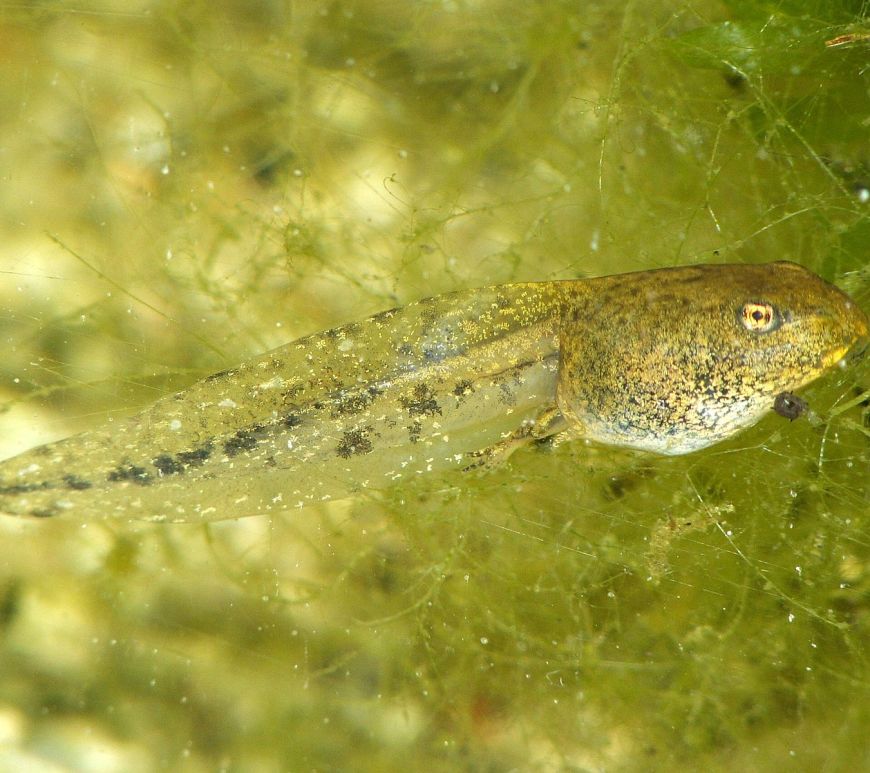
Caption: Researchers demonstrate the improvement of innervation between the central nervous system and a grafted eye on the tails of tadpoles with Zolmitriptan.

Improved Functionality of Grafted Eyes on Blind Tadpoles

Meghan Bialt-DeCelie – ’19 The major flaw faced by research in tissue regeneration is proper development of a nervous system as well as its functionality in the new host. Researchers led by Douglas J. Blackiston, Ph.D from Tufts University attempted to improve communication between a graft and the central nervous system of a host. The researchers used the tadpoles of Xenopus laevis to observe the … Continue reading Improved Functionality of Grafted Eyes on Blind Tadpoles

Figure 1: DNA Fountain allows data to be stored in DNA more densely with reliable retrieval.

Data Storage on DNA

Meghan Bialt-DeCelie – ’19 Scientists have explored the concept of data storage in DNA, one of the most fundamental biological molecules to living things. According to the Shannon information capacity, a nucleotide can ideally contain 2 bits of data. However, DNA does not currently have this capacity due to difficulties and errors associated with high GC content and areas with long runs of the same … Continue reading Data Storage on DNA

Antibiotics Do Not Affect Gene Swapping In Bacteria

By Meghan Bialt-DeCelie ’19 Antibiotics are becoming increasingly ineffective as bacteria rapidly develop resistance to them. Scientists once believed that antibiotics promote conjugation, a process in which the DNA of bacteria can be swapped for more helpful genes in order to develop a resistance. In a study led by Dr. Lingchong You of Duke University, researchers were able to determine that antibiotics actually do not increase … Continue reading Antibiotics Do Not Affect Gene Swapping In Bacteria

Filtering Power Plant Exhaust with a CO2 Fastlane

By Meghan Bialt-DeCelie ’19   With the increasing amount of carbon dioxide gas contributing to global climate change, scientists are struggling to find strategies to reduce it. The usage of hybrid polymer-MOF membranes is being explored as a possible strategy because of their energy and cost efficiency in comparison to previous methods of gas separation. However, these membranes need to be improved in their carbon dioxide … Continue reading Filtering Power Plant Exhaust with a CO2 Fastlane

Hormone Producing Microbes Protects from Plant Pathogens

By Meghan Bialt-DeCelie ’19 Using microbes is one of the more unique ways of protecting plants from abiotic and biotic stresses of the environment. Researchers from the University of Copenhagen discovered a novel method for bacteria to produce a plant hormone called cytokinin that can biocontrol plants. Cytokinin is responsible for a wide range of functions including cell division, nutrient mobilization, and seed germination. There are … Continue reading Hormone Producing Microbes Protects from Plant Pathogens

Graphene Optimization with Common Glass

By Meghan Bialt-DeCelie ’19 Graphene, a material made of a two-dimensional sheet of carbon, is effective in durability and the conductivity of electricity. However, it has had trouble being commercialized. In a process called grapheme doping, chemicals were introduced to improve the electron density of grapheme and it eventually made the material more vulnerable do degradation. In collaboration with researchers from Department of Energy’s (DOE) Brookhaven … Continue reading Graphene Optimization with Common Glass

A New View of Cancer Cells

By Meghan Bialt-DeCelie ’19 Most scientists study live cancer cell samples by preparing them on a glass slide and coverslip. However, this method often compresses the sample. Since cancer cells are very sensitive to their surroundings, the compression of the slide affects their behavior and may interfere with the results and overall understanding of cancer cell interactions. Researchers from UT Southwestern Medical Center have designed a … Continue reading A New View of Cancer Cells

Performing Under Pressure

By Meghan Bialt-DeCelie ’19 According to new research led by Dr. Michiko Yoshie of the University of Sussex, performing on a stage with an audience is more stressful than practicing alone for professional performers. The research involved the study of several cases. In one case, participants were asked to perform a task while watching a video of two people observing them. In another case, they performed … Continue reading Performing Under Pressure

The Virtual Path to Assessing Alzheimer’s in Humans

By Meghan Bialt-DeCelie ’19 Scientists have reported that they have developed an analogous rodent test that could aid in Alzheimer research for humans. The Morris Maze Test assesses the ability of rodents with Alzheimer’s disease to reach a pedestal in a water-filled arena. During the assessment, rodents attempt to reach the pedestal in a number of trials. In the first trial, the pedestal is shown … Continue reading The Virtual Path to Assessing Alzheimer’s in Humans