Having Older Siblings May Change Symptoms of Autism

By Amanda Ng ’17 Children of all ages, regardless of their development, are affected by their relationships with their siblings. This is also true of children with autism, a life-long disorder that causes social deficits. Although autism can cause children to have trouble interacting in social settings, some previous research has suggested that having siblings can increase their social communication skills, causing them to act … Continue reading Having Older Siblings May Change Symptoms of Autism

Authenticity is Key for Successful Relationships

By Amanda Ng ’17 Past research has been consistent in acknowledging the importance of open communication in relationships. However, it is often debated whether self-expression must be authentic to benefit the relationship, or whether a perception of authenticity is enough. Research in this field has shown that authenticity is positively linked with attachment security and caregiving responsiveness. However, this work has depended largely on an … Continue reading Authenticity is Key for Successful Relationships

Anxious Anxiety Related to Financial Stress Vulnerability

By Amanda Ng ’17 Past research has shown that for most people, financial stress can lead to certain maladaptive behaviors, such as negative feelings or aversion of this stress altogether. However, some individuals seem to be more susceptible to financial stress than others. Psychologists have explored several theories concerning this susceptibility, one of which involves analyzing an individual’s level of attachment anxiety and higher levels … Continue reading Anxious Anxiety Related to Financial Stress Vulnerability

Erasing Fear via Reconditioning of the Brain

by Rideeta Raquib ’19 Fear is an unpleasant emotion that can cause someone to be afraid. Although a small amount of fear has been evolutionarily helpful to organisms for preventing predation, too much fear can be mentally harmful. In fact, phobias and post-traumatic stress disorders can negatively impact the daily lives of many people. A study conducted by neuroscientists from the University of Cambridge, Japan, and … Continue reading Erasing Fear via Reconditioning of the Brain

Caffeine May Protect Against Cognitive Impairments and Dementia

by Patrick Yang   The United States has the highest caffeine consumption in the world. In the U.S. alone, 54% of adults consume caffeine every day. Although caffeine does a fine job in keeping consumers alert, caffeine’s curative powers may go beyond just remedying morning grumpiness. According to animal studies, there is an inverse correlation between caffeine consumption and cognitive impairment and dementia. Although literature … Continue reading Caffeine May Protect Against Cognitive Impairments and Dementia

Hormonal Birth Control May Lead to Depression

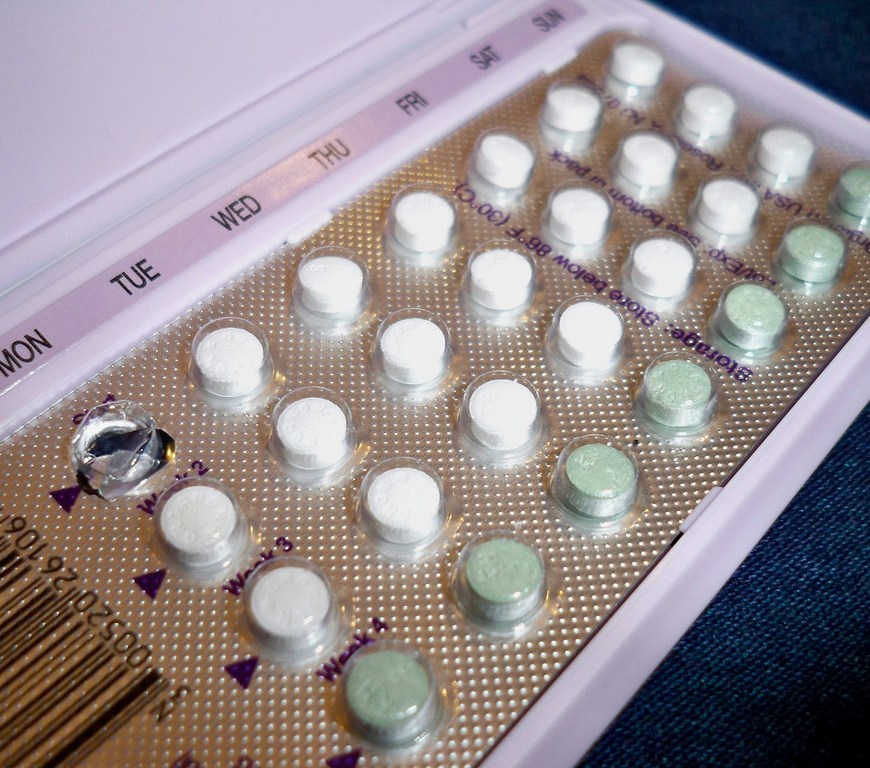
by Patrick Yang   Approximately 62% of women aged 14-44 in the U.S. are using a method of contraception, and 27% of those women are using hormonal contraception, according to a National Health Statistics report. The key to hormonal contraception’s mass appeal lies in its convenience and reversibility; it can be found in pill or patch form and does not have permanent effects. However, the estrogen … Continue reading Hormonal Birth Control May Lead to Depression

Infectious Disease Information and Emotional Responses

by Megan Tan   Infectious disease outbreaks cause individuals to react differently in response to this kind of emotional news. Professor Scott Clifford and Professor Jennifer Jerit, from the Department of Political Science at the University of Houston and Loyola University respectively, research two of these reactions to infectious disease outbreaks: disgust and anxiety. In the first study, a questionnaire was distributed to three sample … Continue reading Infectious Disease Information and Emotional Responses

Learning Quantifiers Across Different Languages

by Megan Tan   Researchers understand what it takes to learn a new language, but the acquisition of numerical words is unknown. In order to test this problem, Professor Napolean Katsos, from the Department of Theoretical and Applied Linguistics at University of Cambridge, and her team of researchers conducted an experiment on a group of children who spoke one of 31 languages. There were 768 children … Continue reading Learning Quantifiers Across Different Languages

Language Stimulation Correlated with Childhood Depression

by Patrick Yang   According to the Federal Center for Mental Health Services, depression affects one in thirty-three children and one in eight adolescents aged 12-18. As of 2014, approximately 2.8 million adolescents aged 12 to 17 experienced at least one major depressive episode. This childhood depression is often correlated with social, emotional, and academic impediments that can transition into adulthood.  Although early intervention is … Continue reading Language Stimulation Correlated with Childhood Depression

Cognitive Function and Eating Behavior in Young Women

by Jenna Mallon (’18) Eating behavior, what you eat and how often you eat, plays a large role in your health, and many cognitive factors play a role in a person’s eating habits. Effortful control, the ability to inhibit a dominate response, and working memory, the ability to apply short-term memories to goal-oriented tasks, both play a role in how well a person can manage … Continue reading Cognitive Function and Eating Behavior in Young Women

The Self-Fulfilling Prophecy of Wishful Thinking

by Amanda Ng (’17) While love for most people is a positive experience, what is often desired above all is to have that love reciprocated. This desire can sometimes be so strong that it can alter perceptions of a platonic encounter to a romantic one. These perceptions can cause individuals to exhibit more romantic behaviors, such as flirting or physical affection, that can change their … Continue reading The Self-Fulfilling Prophecy of Wishful Thinking

The Connection Between Anxiety and Autism

by Amanda Ng (’17)   Past research has shown that many psychological and developmental disorders can be comorbid, or can occur together. In particular, there has been a connection found between the diagnoses of Autism Spectrum Disorder (ASD) and anxiety. Previous work has researchers believing that Autism patients’ inability to interact and communicate socially can lead to heightened levels of social anxiety. It has been theorized … Continue reading The Connection Between Anxiety and Autism