GMO-less GMOs

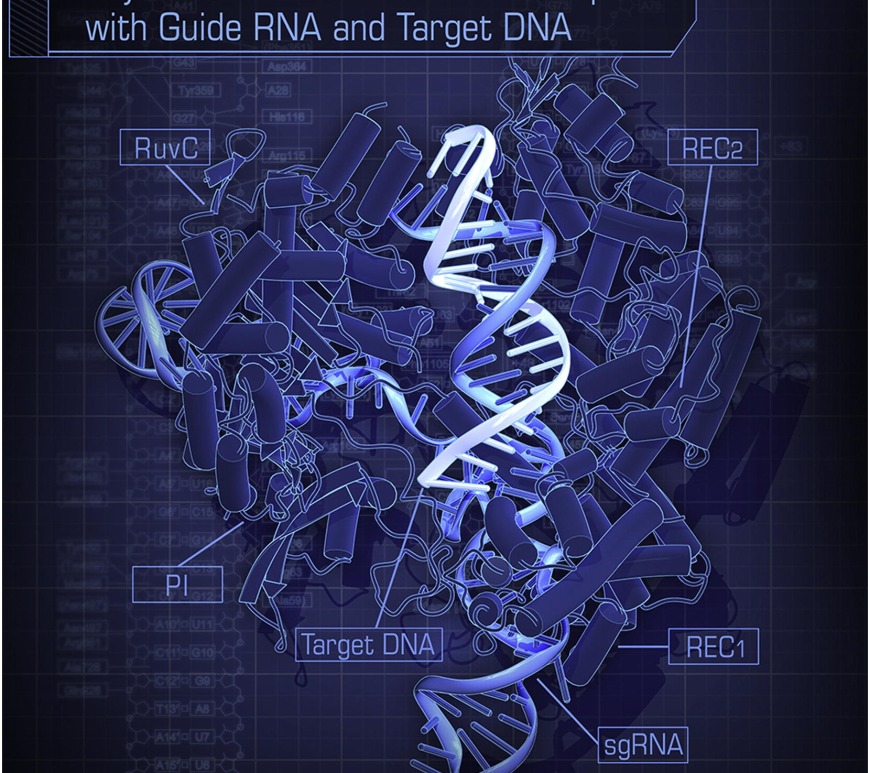
By Meghan Bialt-DeCelie Image Acquired from: https://en.wikipedia.org/wiki/Cas9 Figure 3: The Cas9 complex can be used for modifying the genome of edible plants without introducing foreign DNA   Although genetically modified organisms with DNA from another species (GMOs) have effectively maintained food supply, recently, there have been concerns about the safety of consuming them. To avoid the shunned upon and highly regulated label of GMO, researchers from … Continue reading GMO-less GMOs

Light Therapy vs Cognitive Behavioral Therapy

By Meghan Bialt-DeCelie Image Acquired from: https://en.wikipedia.org/wiki/Light_therapy Figure 2: An example of a light source commonly used in light therapy to treat Seasonal Affective Disorder.   With shorter days and winter approaching, over 14 million Americans experience Seasonal Affective Disorder (SAD) or the “winter blues”. Commonly used, light therapy tackles the biological causes of SAD by exposing one to an artificial light for a period of … Continue reading Light Therapy vs Cognitive Behavioral Therapy

Sleeping on the Right Side of the Bed

By Meghan Bialt-DeCelie Image Acquired from: https://en.wikipedia.org/wiki/Sleep_and_weight Figure 1: The lateral sleeping position, found to be the best position for the efficiency of the glymphatic pathway. According to a recent study led by Hedok Lee, PhD and Helene Beneveniste, MD, PhD of Stony Brook University, the position you sleep in affects your body’s efficiency to remove metabolic wastes from the brain in a process called Glymphatic … Continue reading Sleeping on the Right Side of the Bed

Confirmation of Quantum Mechanics

By Shannon Bohman Image acquired from commons.wikipedia.org Figure 1 This picture shows the physics building at Delft University of Technology in the Netherlands.   Netherland scientists of Delft University of Technology claimed to have proven quantum entanglement, the idea that if two particles’ spins are aligned, they can still influence each other at all times, no matter the distance between them. Two diamonds, each containing … Continue reading Confirmation of Quantum Mechanics

Mysterious Die-Off of Saigas in Central Asia

By Shannon Bohman Image acquired from commons.wikipedia.org Figure 1 This picture shows a mother and child saiga in their native Central Asian Steppes.   This past May, the corpses of hundreds of saiga antelopes were found scattered across the Central Asian Steppes. This endangered species had been under close watch due to significant overhunting. Conservationists succeeded in replenishing the population, but over half of the … Continue reading Mysterious Die-Off of Saigas in Central Asia

SBU Research into the Effect of Prolonged Space Travel

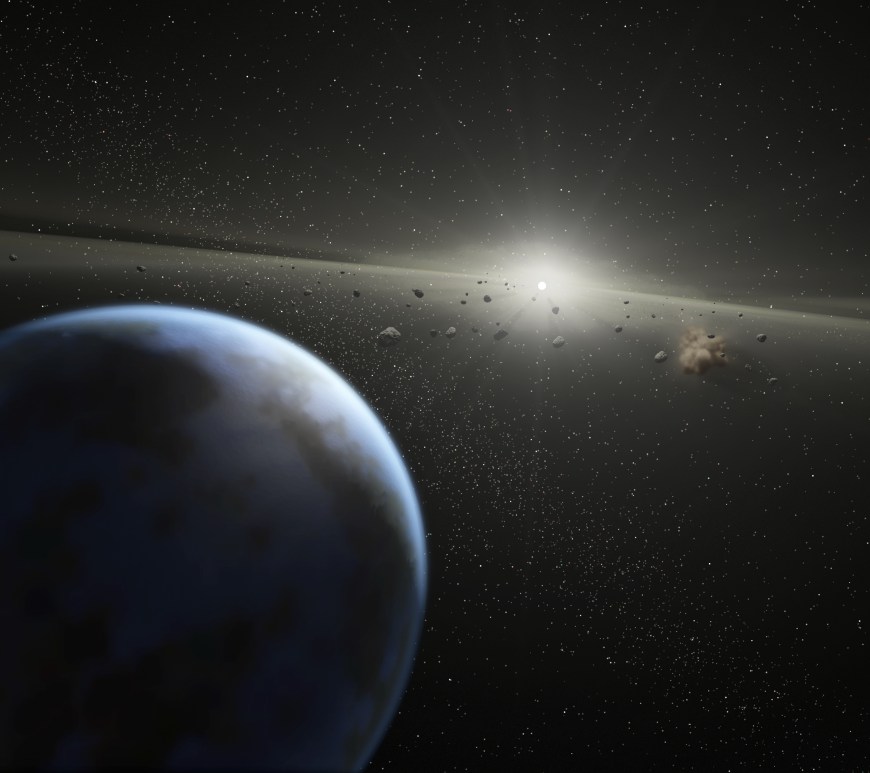
By Shannon Bohman Image acquired from: commons.wikipedia.org Figure 1 This picture shows an artist’s rendition of space from a spacecraft. Researchers in Stony Brook’s Department of Psychiatry received two grants from NASA and are currently investigating the effect of long-term space travel on astronauts. The first grant is a three-year project investigating new ways to provide proper psychotherapy to astronauts. Extended voyages into space can cause … Continue reading SBU Research into the Effect of Prolonged Space Travel

New Study Helps Define “Stupidity”

By Lee Ann Santore The word stupid is used daily to describe a wide variety of actions. However, it is unclear of what constitutes something as stupid. A team of psychologists led by Balazs Aczel, from the Institute of Psychology at Eotvos Lorand University, completed a study to obtain a better understanding of the behavior patterns humans regard as “stupid.” Aczel’s team compiled a collection … Continue reading New Study Helps Define “Stupidity”

Targeting Non-Dividing Cells in Cancer

By Cerise Carey Invasive cells, ones that travel from tumor tissue to form new tumors elsewhere within the host, have been the focus of most cancer research. In a recent study, Dr. David Q. Matus, an Assistant Professor in the Stony Brook University Department of Biochemistry & Cell Biology, and his colleagues found that cells in the roundworm nematode C. elegans cannot divide and invade … Continue reading Targeting Non-Dividing Cells in Cancer

Evaluations of the First Dissolvable Cardiovascular Stent

By Jessica Desamero Heart disease in the U.S. is one of the leading causes of death. The most common type is coronary heart disease (CAD), which can lead to heart attacks. It is caused by plaque buildup in arteries that supply the heart with blood, causing them to narrow. To this day, bare-metal stents have been inserted in CAD patients to counter-act this blockage. But … Continue reading Evaluations of the First Dissolvable Cardiovascular Stent

Aristolochic Acid, used in herbal remedies, linked to urothelial cancers and neuropathic diseases

By Katherine Maiorisi Dr. Grollman of Stony Brook University was honored in 2011 with the Environmental Mutagen Society (EMS) award for his work on aristolochic acid (AA) and its relation to cancer and neuropathy [1]. Throughout the past fifty years studies have been done on the effect of environmental agents on neuropathy. Aristolochia poisoning was first proposed in 1969 by Ivi´c, but was disregarded, until … Continue reading Aristolochic Acid, used in herbal remedies, linked to urothelial cancers and neuropathic diseases