Pick a Card, Any Card

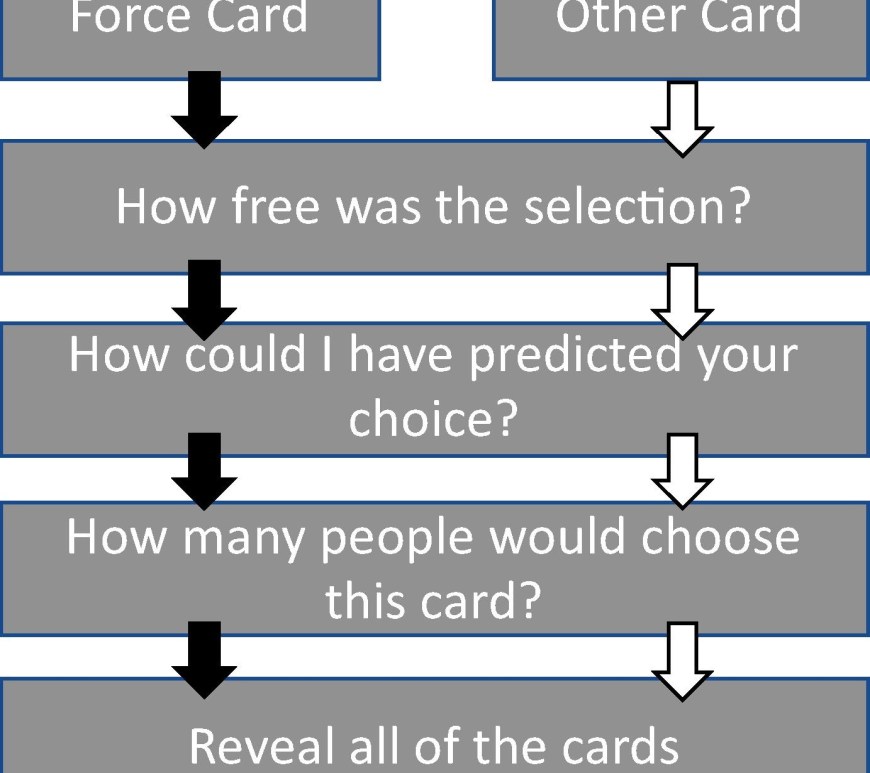
Wendy Wu ’22 Magicians around the world have fascinated their audiences by performing the impossible. One of their signature acts is being able to predict a card randomly chosen. Rather than magical intuition, the magician’s predictive prowess is more likely due to an understanding of human nature. Gustav Kuhn, a Reader in Psychology at Goldsmiths, University of London, sought to apply this understanding to the … Continue reading Pick a Card, Any Card

Antibody Conditioning Enables Tolerance of Glial Grafting

Vignesh Subramanian ’24 In the central nervous system (CNS) and peripheral nervous system (PNS), glia are supportive cells that form myelin sheaths, or coatings, that insulate and protect neurons. Activated glial cells are also capable of producing growth factors such as BDNF and bFGF that trigger neuroinflammation, inducing a prolonged state of pain which alerts an organism to potential nerve injury. As such, various subtypes … Continue reading Antibody Conditioning Enables Tolerance of Glial Grafting

Developmental History Skews Alzheimer’s Diagnosis

Vignesh Subramanian ’24 Alzheimer’s disease (AD) is a neurodegenerative disease that, alongside related dementias, afflicts nearly 50 million people worldwide with incidence rates increasing with age. Alzheimer’s is particularly debilitating in areas of language and memory, contributing to progressive cognitive decline that is frequently diagnosed using neuropsychological tests evaluating recall, visual processing and executive function. Yet while such assessments are meant to ascertain whether patients … Continue reading Developmental History Skews Alzheimer’s Diagnosis

Announcing Sensescape!

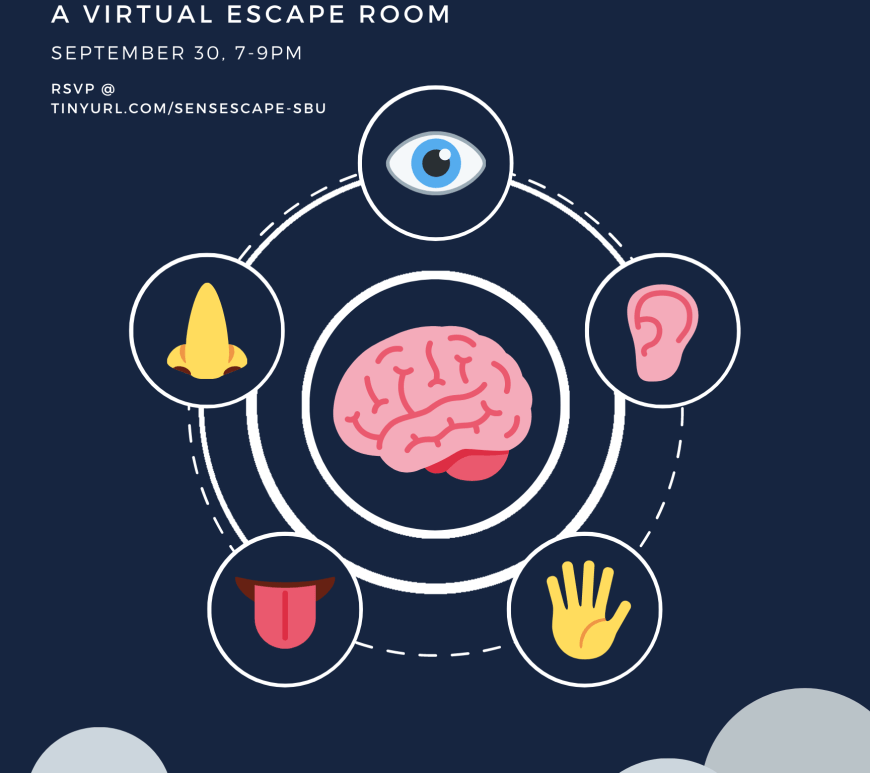
Become a neuron and piece together memory fragments like a detective! The Stony Brook Young Investigators Review and the Neuroscience Axis will be hosting a virtual escape room on September 30th from 7-9 pm. Join in on the fun and bring your friends to solve our sensory themed escape room! All students are welcome. To RSVP for the event, you can go on tinyurl.com/sensescape-sbu! Continue reading Announcing Sensescape!

Majority Rule and Minority Rights

Wendy Wu ’22 Humans are social animals; it is in our nature to communicate and to cooperate. We live with the understanding that we not only act in our individual interests, but also in the interests of the community. The problem is that not all members of the group will benefit from community decisions all the time. How, then, should we make collective decisions? Many … Continue reading Majority Rule and Minority Rights

How the Mental Health of College Students in China has been Affected by COVID-19

Yukta Kulkarni ’22 The COVID-19 pandemic has taken over the world in a way that disrupts almost everyone’s previous way of life. People can no longer leave their house without wearing a mask, socialize within 6 feet of friends and family, or go to work/school. These inconveniences are minor, though, compared to those that people diagnosed with, or know someone with, COVID-19 experience. This can … Continue reading How the Mental Health of College Students in China has been Affected by COVID-19

Fears and How Priming Can Help Overcome Them

Yukta Kulkarni ’22 Some of the most important topics covered by neuroscience research encompass memory retention. This type of research helps explain how much information brains can retain and how easily it is learned. However, does prior learning affect the ability to learn in the future? To answer this, Cole et al. blocked protein-kinase A (PKA) and extracellular signal-related mitogen-activated protein-kinase (ERK/MAPK) within the basolateral … Continue reading Fears and How Priming Can Help Overcome Them

Child anxiety disorders and symptoms closely associated with specific maternal anxiety disorders

Priyanshi Patel ’22 Social anxiety disorder (SAD) is one of the most prevalent and disabling anxiety disorders with an onset age of 13 years. SAD is a chronic disorder with adverse psychiatric, social, and educational outcomes, which is why it is important to prevent it by understanding its risk factors. One known risk factor is behavioral inhibition (BI), the withdrawal from unfamiliar situations, environments, and … Continue reading Child anxiety disorders and symptoms closely associated with specific maternal anxiety disorders

World Trade Center first responders with PTSD and cognitive impairment at high-risk for developing dementia

Priyanshi Patel ’22 According to two studies presented by Stony Brook University at the Alzheimer’s Association International Conference, World Trade Center (WTC) first responders with signs of cognitive impairment (CI) exhibited neurological abnormalities and anomalies in their blood, which are normally attributed to Alzheimer’s disease patients. The first study investigated MRI results of WTC responders that showed significant gray matter atrophy compared to individuals of … Continue reading World Trade Center first responders with PTSD and cognitive impairment at high-risk for developing dementia

Effects of distractive and target stimuli on auditory neurons within mice brains

Joyce Chen ’23 Biological organisms are naturally stimulated by their environment. To avoid being overstimulated, animals use selective attention. By simply focusing on one thing, humans and other animals can essentially drown out other irrelevant stimuli. This phenomenon requires sensory regulation, especially auditory. To gain insight on how auditory neurons react to both irrelevant and target stimuli, Stony Brook University researcher Pan-tong Yao and his … Continue reading Effects of distractive and target stimuli on auditory neurons within mice brains

Can video games enhance auditory processing? New research dives deeper into the effects of video gaming on visual and auditory cognitive functions.

Joyce Chen ’23 Within the past few decades, video games have become one of the most universally treasured forms of entertainment among players of all ages. Amongst various genres, action games are widely popularized across the United States. Despite the notable effects that video games have on visual processing, there is a lack of evidence regarding the effect of video games on auditory function. Researcher … Continue reading Can video games enhance auditory processing? New research dives deeper into the effects of video gaming on visual and auditory cognitive functions.

Expectation-induced modulation of metastable activity underlies faster coding of sensory stimuli

Sabah Bari ’24 Expectation is what drives the human brain to perceive our senses. Perception is connected to sensory processing, and the recognition of the stimuli is what determines how accurately and how fast individuals are able to understand it. In the gustatory cortex, the pre-stimulus activity is the anticipation of a specific taste before even consuming a food. The anticipation is a trigger to … Continue reading Expectation-induced modulation of metastable activity underlies faster coding of sensory stimuli