Enzyme in Soil Bacteria Inhibits Biofilm Formation

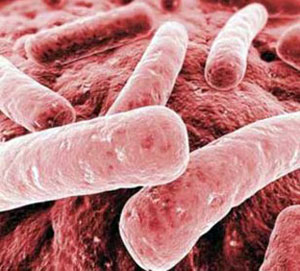
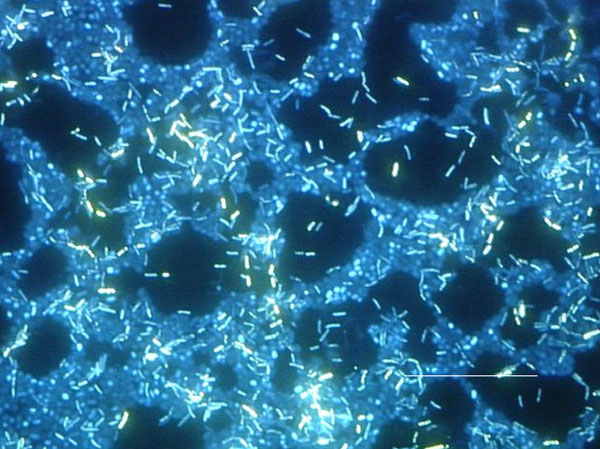
      Patrick Yang ‘20 Pseudomonas aeruginosa is a multidrug resistant bacterium responsible for serious medical illnesses, such as pneumonia, sepsis, and cystic fibrosis. The bacterium produces a metabolite called pyocyanin, which largely contributes towards the pathogen’s toxicity. A recent discovery found that pyocyanin also aids in the aggregation of bacteria to form biofilm. Biofilm, a community of microorganisms that is resistant to conventional … Continue reading Enzyme in Soil Bacteria Inhibits Biofilm Formation

The Epidemiology and Genetic Diversity of Coxsackievirus A16 in Peru

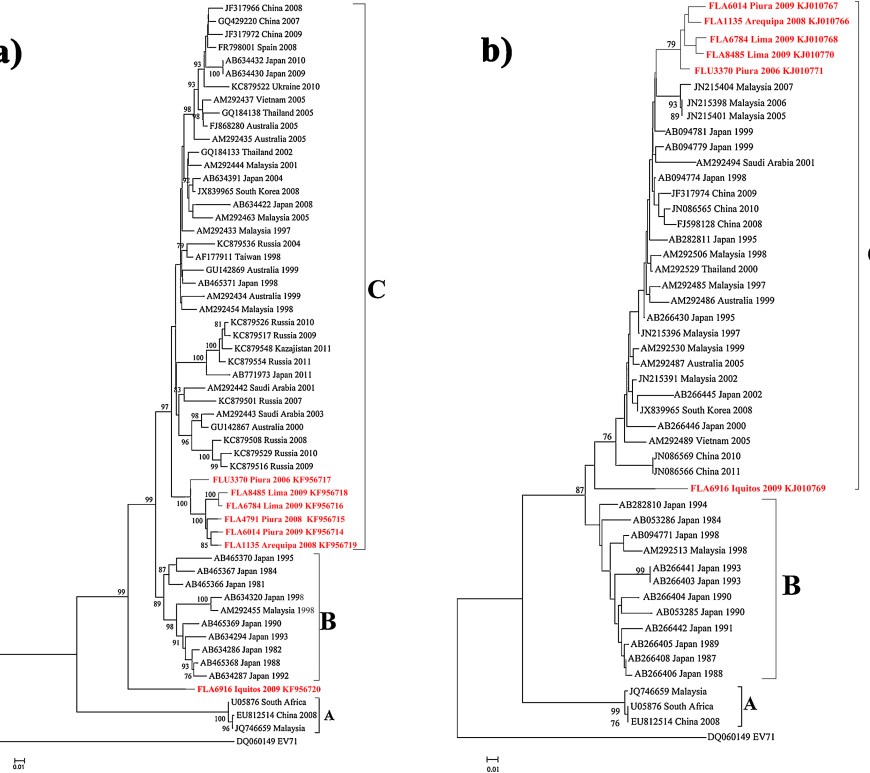
By Caleb Sooknanan These are the most likely trees of coxsackievirus A16 isolates based on the full-length VP1 and VP4 sequences.             Coxsackievirus A16 (CVA16) is an RNA virus that often affects young children and causes rashes and ulcerating blisters. The epidemiology of CVA16 is mostly unknown. Dr. Gladys Carrion and researchers from US Naval Medical Research Unit No. 6 — along with the Peruvian … Continue reading The Epidemiology and Genetic Diversity of Coxsackievirus A16 in Peru

Genetic Vulnerability in Alzheimer’s Disease

by Richard Liang ’18   Alzheimer’s disease is a major neurodegenerative condition, with individuals usually developing symptoms at ages above 65. Symptoms include impaired memory, speech, and other mental functions. Alzheimer’s has shown a correlation with increasing aggregates of Amyloid-β plaques and neurofibrillary tangles (NFTs). However, it is difficult to predict whether and at what time these plaques and tangles will be expressed in an individual. … Continue reading Genetic Vulnerability in Alzheimer’s Disease

Memory and the Stages of a Women’s Menstrual Cycle

    by Rideeta Raquib Previous psychological studies have suggested that women have a good memory, but a new study implies that this may be due to the impact of hormones. Other studies that tested rodents showed that there was a correlation between low estradiol (E2) levels and an increase in striatal mediated response strategies. The striatum is a region of the forebrain associated with … Continue reading Memory and the Stages of a Women’s Menstrual Cycle

Tackling Contraction of Infections from Healthcare Facilities

by Rideeta Raquib   Healthcare-acquired infections or HAI are illnesses acquired from healthcare environments, such as hospitals or rehabilitation clinics. It is a serious issue which affects thousands of people every year and multiplies healthcare costs significantly. Klebsiella Pneumoniae, a harmful HAI agent has been attributed to causing illnesses through colonizing and transmitting infection. One of the strains of Klebsiella Pneumoniae, known as ST258, is … Continue reading Tackling Contraction of Infections from Healthcare Facilities

A New Genome-Editing Technique

by Jalwa Afroz Developmental biology explores how cells differentiate from a fertilized egg into a complex multicellular organism. Although the idea of marking cells to track their development is not new, scientists at Harvard University and the University of Washington developed a CRISPR genome-editing system that offers far more specificity and versatility by tracing cells with fluorescent proteins. In order for a technology to trace … Continue reading A New Genome-Editing Technique

The Origin of Dogs Traces Back to Two Separate Locations

by Jenna Mallon (’18) Although it is a common fact that domestic dogs originated from wolves, there are still speculations concerning the geographical and temporal origins of man’s best friend. There are disagreements over when and where dogs were domesticated. Despite evidence that points to the Paleolithic Era, some archeologists argue that dogs could have been independently domesticated in two separate regions: Eastern and Western … Continue reading The Origin of Dogs Traces Back to Two Separate Locations