Urea-Resistability of Shark Myosin: Insights into Protein Stability and Potential Therapeutic Implications

Justin Lim ’26 Figure 1: White shark.jpg Urea, a common byproduct of protein metabolism, is excreted through urine in most urea-producing organisms due to its toxic properties in high concentrations. Specifically, urea’s nitrogen content can destabilize the structure of proteins by weakening their folded structure. Sharks have chemical countermeasures to halt the progression of protein denaturation through the use of trymethylamine N-Oxide (TMAO), a molecule … Continue reading Urea-Resistability of Shark Myosin: Insights into Protein Stability and Potential Therapeutic Implications
Understanding how the Aging of Germline Cells “Resets” in Offspring

Sean Krivitsky ‘27 Figure 1. Section of a DNA double helix People have long been fascinated by the process of aging as well as the potential to reverse or prevent it. In particular, ribosomal DNA (rDNA) has been found to potentially play a role in aging. As aging occurs, rDNA repeats in the germline are gradually lost over time, as evidenced by the lab’s work … Continue reading Understanding how the Aging of Germline Cells “Resets” in Offspring

Exciting New Approach to Targeting the Mitochondria to Fight Cancer

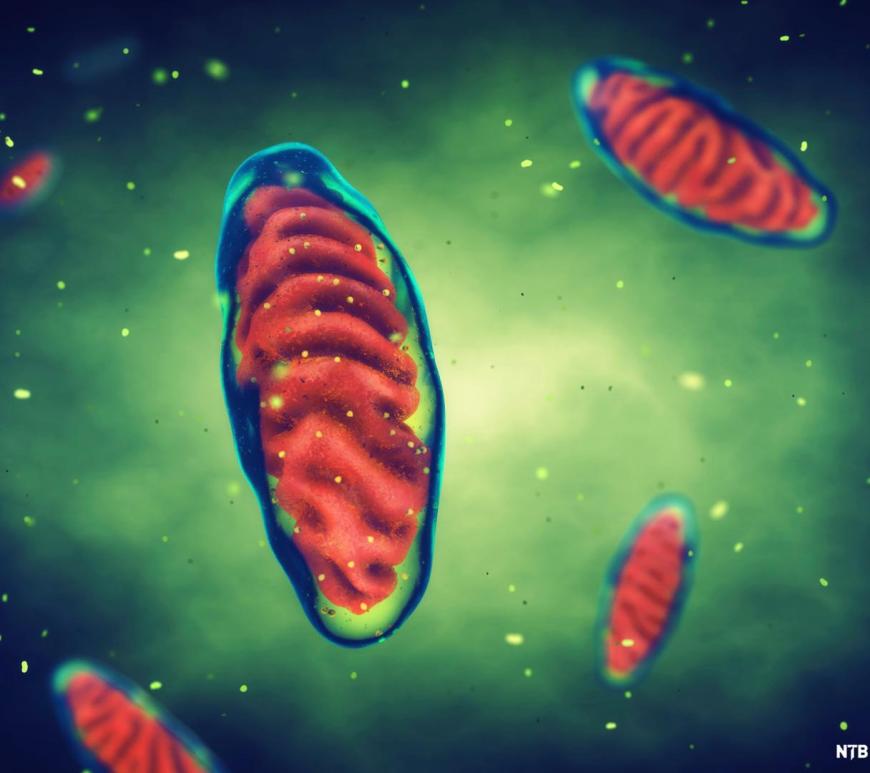
Sean Krivitsky ‘27 Figure 1. Visualization of the mitochondria Unbeknownst to many, the mitochondria plays a significant role in carcinogenesis given the importance of metabolic processes in the formation and maintenance of tumors. CPI-613, more commonly known as devimistat, is a recently developed drug that targets a key metabolic cycle that takes place in the mitochondria of cancer cells, the tricarboxylic acid (TCA) cycle. The … Continue reading Exciting New Approach to Targeting the Mitochondria to Fight Cancer

Improved initial assessments of severe skin burns allow for more accurate assertion of whether or not surgical intervention is required for healing

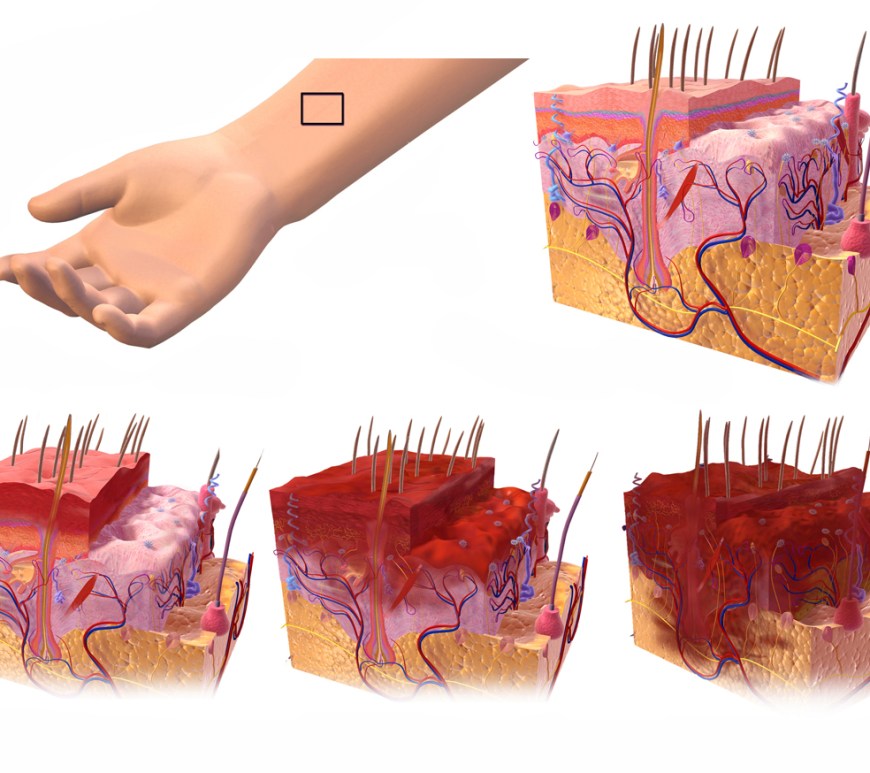
Maria Sazonova ’26  Burn injuries can result in significant skin necrosis and deep tissue damage. Severe skin burn injuries are dynamic and hard to predict; therefore, initial assessment is paramount because it forms the basis for a subsequent treatment plan. A group of Stony Brook University scientists led by M. Hassan Arbab, funded by The National Institute of General Medical Sciences, created a neural network … Continue reading Improved initial assessments of severe skin burns allow for more accurate assertion of whether or not surgical intervention is required for healing

The Influence of Epigenetic Age on Cognitive Decline

 Julia Chivu ’23 As people age, their cognitive abilities tend to decline. While chronological age is commonly cited as a reason for this decline, it often fails to explain why some individuals have higher cognitive performance than others of the same age. To address this, epigenetic clocks, which analyze DNA methylation at specific genomic sites correlated with aging, are emerging as useful tools for predicting … Continue reading The Influence of Epigenetic Age on Cognitive Decline

Careful, It’s Hot! How Particle Collisions Help us Understand Quark-Gluon Soup

Sidney Padmanaban ‘ 26 Figure 1 Quarks are building blocks of matter, and by studying them, we can understand larger concepts of physics. Large aspects of life cannot be studied without understanding the small building blocks that contribute to every part of the universe. Entire fields of physics and chemistry are dedicated towards the study of particles. Recently, two professors at Stony Brook University, Roy … Continue reading Careful, It’s Hot! How Particle Collisions Help us Understand Quark-Gluon Soup

Investigating the Unexpected Results of Ape1 Inhibitors

Julia Chivu ’23 Figure 1  DNA strand unwinding causing the formation of the replication fork followed by DNA replication. Genomic DNA is constantly at risk of molecular decay. To address this issue, base excision DNA repair (BER) plays a critical role in fixing the minor DNA damage. In particular, Ape1 (or apurinic/apyrimidinic endonuclease) is a multifunctional protein that is a key component in BER. Ape1 … Continue reading Investigating the Unexpected Results of Ape1 Inhibitors

Enhancing Cell Production Using Low Intensity Vibration (LIV)

Julia Chivu ’23 Figure 1   Scientist with blue gloves adding hot pink cell growth medium using a transfer pipette into a six-well plate, with culture flask and centrifuge tube also filled with hot pink cell growth medium in the background. Biomanufacturing is a field of study which produces various biotechnology-based products including vaccines, biofuels, and genetically modified crops by using living organisms and cells. The cells … Continue reading Enhancing Cell Production Using Low Intensity Vibration (LIV)

Insight on Histone Modification Mechanism Using Arabidopsis thaliana Flower 

Julia Chivu ’23 Histone modifications play an essential role in the development and adaptation of plants. Histones are proteins that are involved in the packaging of DNA into chromatin. Histone modification can result in the regulation of gene expression in response to stress, temperature, light, and pathogen attack. The majority of histone-modifying enzymes– such as histone deubiquitinases– are not able to bind DNA. As a … Continue reading Insight on Histone Modification Mechanism Using Arabidopsis thaliana Flower 

A Genetic Change Delivered via Gel Treatment for Epidermolysis bullosa Patients Shows Promise

Melanie Karniewich ’25 Epidermolysis bullosa (EB) is a rare genetic condition that causes serious blisters to the skin from minor occurrences like rubbing or scratching the skin. In severe cases, blistering can happen inside the body like the mouth or lining of the stomach. Mutations in EB disable genes for the specific proteins that allow the layers of someone’s skin and the lining of organs … Continue reading A Genetic Change Delivered via Gel Treatment for Epidermolysis bullosa Patients Shows Promise

Mosquito Magnets: Coincidence or Chemicals?

Peter Gillespie ’25 Mosquitos continue to become a burden on global health as rampant vectors for disease, embedding threatening viruses beneath itchy welts that are a nuisance in themselves. However, while one person might return from a mosquito-laden environment riddled with these welts, another might escape unscathed. New research from De Olbadia et al. reveals that this phenomenon is not mere unlucky coincidence, but rather … Continue reading Mosquito Magnets: Coincidence or Chemicals?

When Twins Collide: The Role of Genetics in the Risk of Osteopathic Injuries

Peter Gillespie ’25 Why do some people experience one broken bone after another, while others could go their whole lives without a single fracture? Is the likelihood of an osteopathic injury just a coincidence, or is one’s genetic makeup rolling the dice for them? To answer this question, Hyo Geun Choi and his colleagues at Hallym University compared the histories of osteopathic injuries and bone … Continue reading When Twins Collide: The Role of Genetics in the Risk of Osteopathic Injuries