Why Do Some Young People Develop Severe COVID-19?

Zhifei Zeng ’23 COVID-19, which has ravaged the world, is still a public health concern and there are multiple theories about the cause of severe COVID-19 infection in young people. Previous research on genetic factors associated with severe COVID-19 has been limited to the gene pool of European populations. Coincidentally, while comparing the gene pools of Japanese and European patients, a large Japanese genetic research … Continue reading Why Do Some Young People Develop Severe COVID-19?

Lack of CLOCK Regulator Protein May Predict Focal Seizure Susceptibility

By Vignesh Subramanian ’24 Focal seizure activity originates at particular foci﹣those being lobes, regions or hemispheres – of abnormal brain tissue and may emanate outward.  Epilepsy is a chronic central nervous system disorder characterized by uncontrolled electrical activity in the brain that triggers recurrent, spontaneous seizures. The majority of new epilepsy cases involve focal epilepsy, in which seizure activity originates in a particular “focus” or … Continue reading Lack of CLOCK Regulator Protein May Predict Focal Seizure Susceptibility

Are Doppelgängers Really Just a Coincidence?

Lydia Wang ’26 Human faces and the ability to recognize different facial identities have played a key role in evolution. It has been observed that human faces have evolved to uniquely distinguish themselves from others. However, many people know someone they resemble; some comparisons are so similar that they are labeled as a doppelgänger, or a living double. Doppelgängers have been an ongoing phenomenon that … Continue reading Are Doppelgängers Really Just a Coincidence?

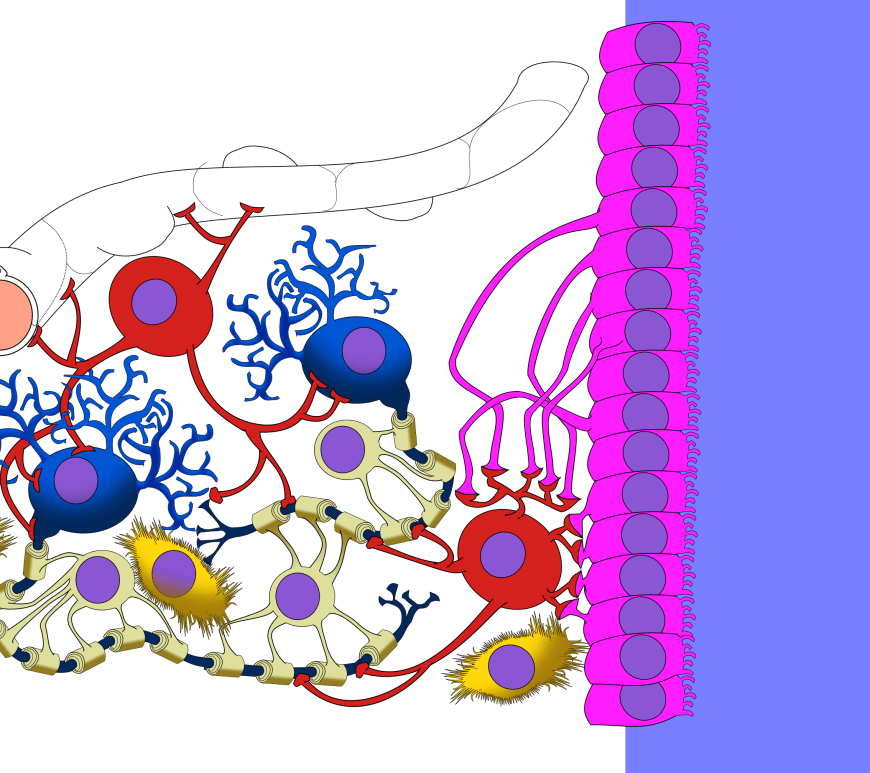
Loss of NG2 Glia Implicated in Emergence of Depression Symptoms

Vignesh Subramanian ’24 Glia are non-neuronal cells that host and provide a number of homeostatic ancillary functions in both the central (CNS) and peripheral (PNS) nervous systems. Though only recently discovered and characterized, glial cells vastly outnumber neurons and provide them with structural support and insular protection, driving their myelination (the process of forming coverings known as myelin sheaths that coat neurons’ signaling axons), facilitating … Continue reading Loss of NG2 Glia Implicated in Emergence of Depression Symptoms

Stabilization of BBB Junction Protein Attenuates Epileptic Brain Activity

Vignesh Subramanian ’24 Epilepsy is a chronic central nervous system disorder characterized by abnormal neuronal activity in the brain that triggers repeated, spontaneous seizures. Treatment-resistant epilepsy has previously been linked to disruption of the blood-brain barrier (BBB), a semipermeable network of close-packed endothelial (border) cells and capillaries that controls the influx of solutes circulating in the bloodstream into the extracellular fluid of the brain. The … Continue reading Stabilization of BBB Junction Protein Attenuates Epileptic Brain Activity

A New Treatment Can Reprogram Macrophages to Kill Cancer Cells

Yukta Kulkarni ’22 Cancer is a disease in which there is uncontrollable cell growth in any part of the body. The migration of the cancer cells from the origin to other parts of the body is called metastasis, causing malignant tumors. Cancerous cells can be aided by other cells found in tissues such as tumor-associated macrophages (TAMS) that stimulate tumor growth, prompt metastasis, and promote … Continue reading A New Treatment Can Reprogram Macrophages to Kill Cancer Cells

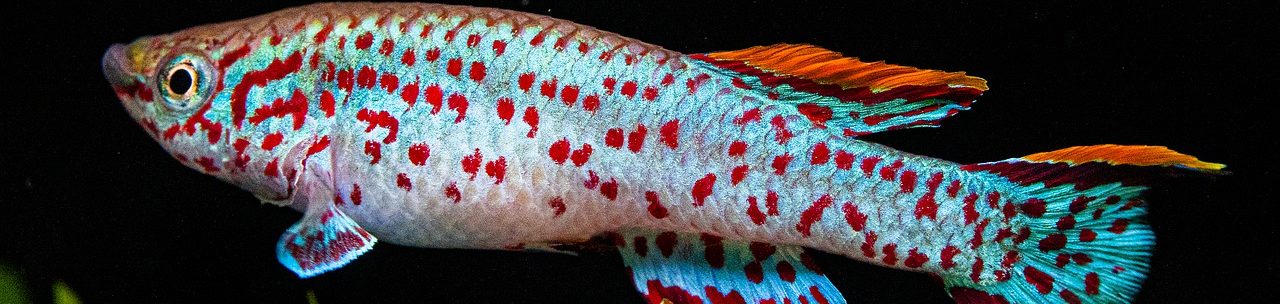
Fish Out of Water: Uncovering the Mechanisms for Survival in Extreme Environments

Peter Gillespie ’25 Most fish, when left without water, will simply not survive. However, research from Dr. Chi-Kuo Hu from Stony Brook University reveals how the embryos of the African turquoise killifish can survive eight-month long droughts in a dormant state known as diapause. Diapause is a state of suspended animation during which a fully developed killifish may temporarily halt its development. Dr. Hu and … Continue reading Fish Out of Water: Uncovering the Mechanisms for Survival in Extreme Environments

An Enzyme-Activating Protein may be a Switch for Invasive Cancer

Zhifei Zeng ’23 Many breast cancer (BC) patients suffer from complications of metastatic disease. In order to form metastasis, cancer cells must switch from a proliferative to an invasive state and overcome several physical barriers to reach another site. Interestingly, increased invasiveness of the tumor is accompanied by a decrease in its cell proliferation capacity. For breast cancer, some proteins may help this proliferative-to-invasive switch … Continue reading An Enzyme-Activating Protein may be a Switch for Invasive Cancer

NSC-Derived Antibody Proves a Selective NSC Marker

Vignesh Subramanian ’24 Neural stem cells (NSCs) are multipotent cells capable of differentiating into the major types of mature cells in the central nervous system (CNS) – neurons and glia – and giving rise to unlimited generations of those cells. Alongside progenitor cells, which are descended from NSCs and differentiate into specific target cells, NSCs are critical in advancing neurogenesis, the development of neurons from … Continue reading NSC-Derived Antibody Proves a Selective NSC Marker

Labeling High-ranking ADHD Genes for Future Diagnosis and Treatment

Yukta Kulkarni ’22 Attention deficit hyperactivity disorder (ADHD) is a common disorder prevalent in both children and adults with symptoms such as inattention, hyperactivity, and impulsiveness. The identification of certain genes associated with ADHD can improve both the understanding of the neural mechanisms that transpire and the ability to accurately diagnose and treat people with ADHD. By researching and integrating data from various research publications, … Continue reading Labeling High-ranking ADHD Genes for Future Diagnosis and Treatment

The Future of Synthetic Biology

Aditi Kaveti ‘23 Natural genetic processes can lose their function over long-term evolution if that function requires too many resources to continue throughout generations. Scientists have been studying evolutionary reversibility, which is the ability to regain a lost function, in order to repair natural systems that have lost such valuable evolutionary processes. To this end in the field of synthetic biology, researchers employ and manipulate … Continue reading The Future of Synthetic Biology

Neuroanatomical Variation in Dogs

Panayiota Siskos ’23 The selective breeding of dogs by humans has led to variation in the brain across different breeds. Selectively breeding dogs for traits and abilities has been a recent occurrence  in evolution, and genetic research shows behavioral variation is heritable. Behavioral specializations depend on neural specializations, and strong selection pressure exhibits that brain differences between dog breeds correlate with differences in behavior. Selection … Continue reading Neuroanatomical Variation in Dogs