Maternal Empathetic Cortical Responses Synchronize with Neonatal Pain Perception

Vignesh Subramanian ‘ 24 Figure 1: The heel prick of an infant’s foot, which often induces momentary pain for the infant. The early psychophysical development of newborns relies heavily on having strong emotional bonds with caregivers. Compared to other animals, human infants are born highly dependent on their parents, undergoing a prolonged period of extensive neural organization and brain development that requires greater parental sensitivity … Continue reading Maternal Empathetic Cortical Responses Synchronize with Neonatal Pain Perception

Understanding the Neurobiology of Love and Deception

Julia Chivu ’23 Figure 1  Couple holding hands walking towards a multi-colored sunset Recent scientific research has been increasingly focused on better understanding the complex relationship between deception and love. The study of deception within relationships and across genders is essential for interpreting the correlation between human behavior, neural mechanisms, and trust. A research team from Zhejiang Normal University investigated the neurological mechanisms of deception … Continue reading Understanding the Neurobiology of Love and Deception

Development of Innovative Burn Assessment Technique Using Neural Network

Julia Chivu ’23 The current burn injury evaluation methods available for clinical use are ineffective and outdated. These circumstances are problematic as the initial injury assessment is necessary to ensure the best clinical treatment plan for the patient. Burns can lead to deep tissue damages, necrosis, and severe scarring. Without a proper course of action, the injury can negatively impact the patient’s quality of life, … Continue reading Development of Innovative Burn Assessment Technique Using Neural Network

Selective Striatal Neuron Degeneration in HD Linked to Autophagy Impairment

Vignesh Subramanian ’24 Huntington’s disease (HD) is an inherited neurodegenerative disease that causes the progressive breakdown of neurons over time, resulting in the development of involuntary movements (chorea), psychiatric disorders, and cognitive decline. HD is caused by the dominant mutation of the HTT gene encoding huntingtin, a protein whose normal function is unknown but is linked to projection neuron death in the striatum of the … Continue reading Selective Striatal Neuron Degeneration in HD Linked to Autophagy Impairment

AI-Assisted Readings May Greatly Improve Fracture Diagnosis

Sooraj Shah ’24 The detection of fractures via radiography is one of the most highly used practices in clinical settings such as the emergency room, urgent care, orthopedic and rheumatology offices. The missed fracture diagnosis rate is between 1-3%, accounting for almost 1,200 of every 100,000 patients. A major cause of missed fractures is erroneous initial readings by residents or non-radiologists, which are only corrected … Continue reading AI-Assisted Readings May Greatly Improve Fracture Diagnosis

Use of Retinoid Therapy May Restore Vision in Blind Adults

Sooraj Shah ’24 Leber congenital amaurosis (LCA) is a family of retinal disorders, which result in severe vision loss from birth. LCA is one of the most common causes of childhood blindness, affecting approximately 2-3 infants for every 100,000 births. Currently, no direct cure for LCA exists, but recent developments in gene replacement therapy have shown promise in partially restoring retinal light-sensing ability with variability … Continue reading Use of Retinoid Therapy May Restore Vision in Blind Adults

Lack of CLOCK Regulator Protein May Predict Focal Seizure Susceptibility

By Vignesh Subramanian ’24 Focal seizure activity originates at particular foci﹣those being lobes, regions or hemispheres – of abnormal brain tissue and may emanate outward.  Epilepsy is a chronic central nervous system disorder characterized by uncontrolled electrical activity in the brain that triggers recurrent, spontaneous seizures. The majority of new epilepsy cases involve focal epilepsy, in which seizure activity originates in a particular “focus” or … Continue reading Lack of CLOCK Regulator Protein May Predict Focal Seizure Susceptibility

Analysis of Female Pupillary Response as a Potential Reflection of “Cuteness”

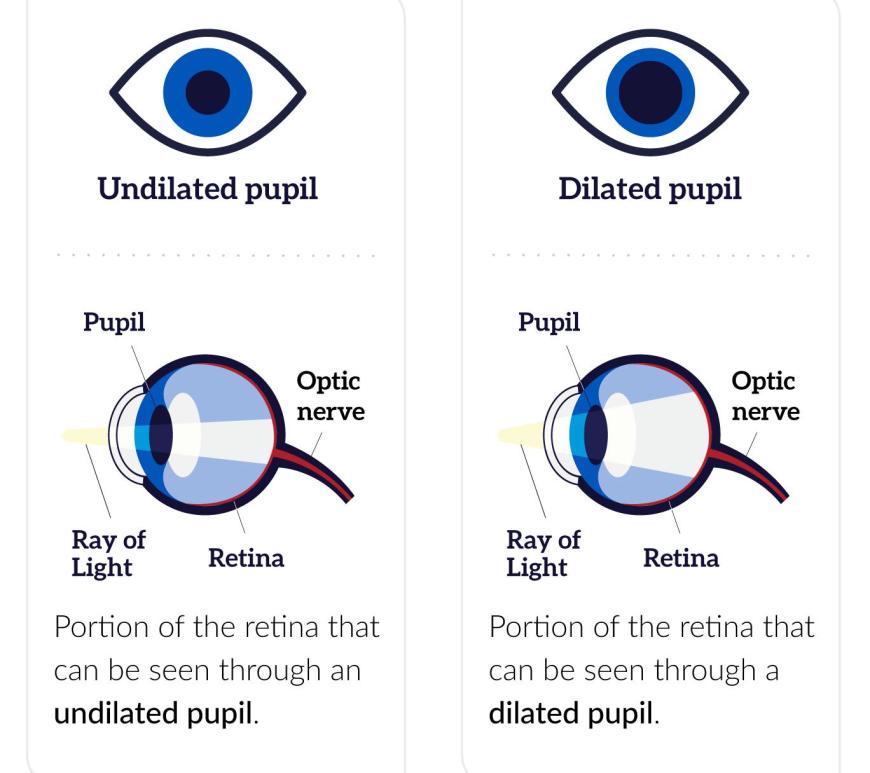
Ayesha Azeem ’23 Observing something “cute” facilitates communication, as perceiving cuteness narrows perceptual attention and makes it difficult to focus on peripheral vision. Previous research has indicated that female reproductive hormones allow women to be more sensitive and attuned to perceiving cuteness. Because women have historically played the role of primary caregiver, evolutionary psychology suggests that cuteness motivates people to raise a child, which may … Continue reading Analysis of Female Pupillary Response as a Potential Reflection of “Cuteness”

Similar but Different: The Potential Role of Spatial Differentiation in Memory Retrieval

Robyn Rutgers ’24 Researchers have long been interested in establishing how the brain remembers spatial environments and avoids confusion in similar environments, such as in a new supermarket. A recent study from University of Arizona researchers investigates how the processes of spatial memory retrieval are implemented in the brain and how the brain differentiates memory representations that involve overlapping features. The study recruited 27 participants … Continue reading Similar but Different: The Potential Role of Spatial Differentiation in Memory Retrieval

Glial Cells May Shape Brain Tumor Microenvironments

Alex Moir ’23 Glial cells, located in the central nervous system (CNS), support neurons by clearing extracellular waste and mounting an immune response against potential pathogens. Glioma are tumors occurring in the CNS that originate from these glial cells. As glioma tumors progress and become more aggressive, they invade surrounding tissue and develop a hospitable tumor microenvironment (TME). Two types of resident CNS immune cells, … Continue reading Glial Cells May Shape Brain Tumor Microenvironments